

Back to Oz
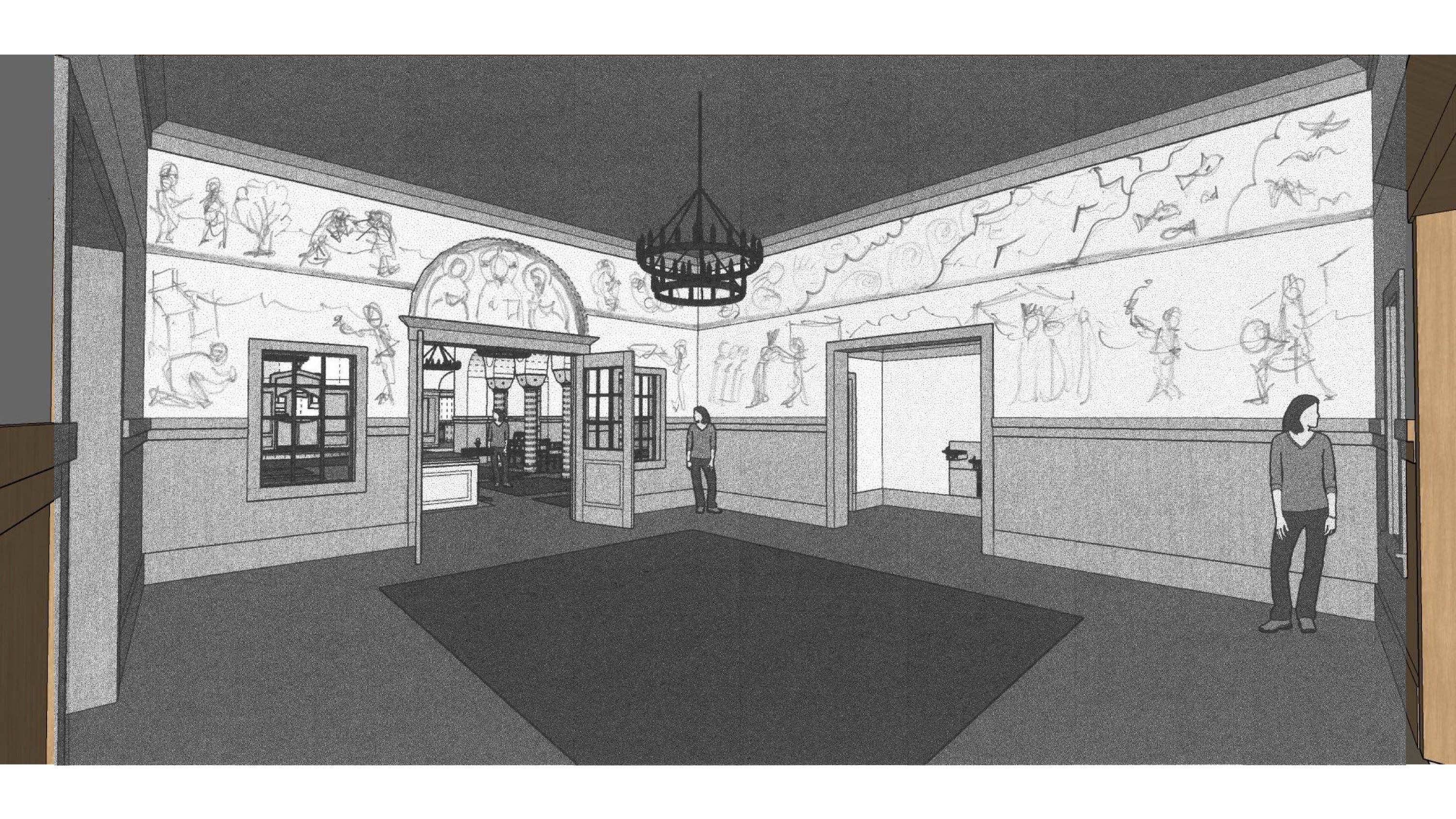
We’ve been talking about the narthex of our new temple.
There’s a lot that goes on in that space—some of it is liturgical; some of it is practical; all of it leads to and supports what happens in the Divine Liturgy.
But, in this post, we’re going to focus on a part of the narthex that you cannot actually see in the architectural renderings. We’re going to talk about the Calming Room.
If you’ll look at the image included above, the Calming Room is going to be located to the left of that area.
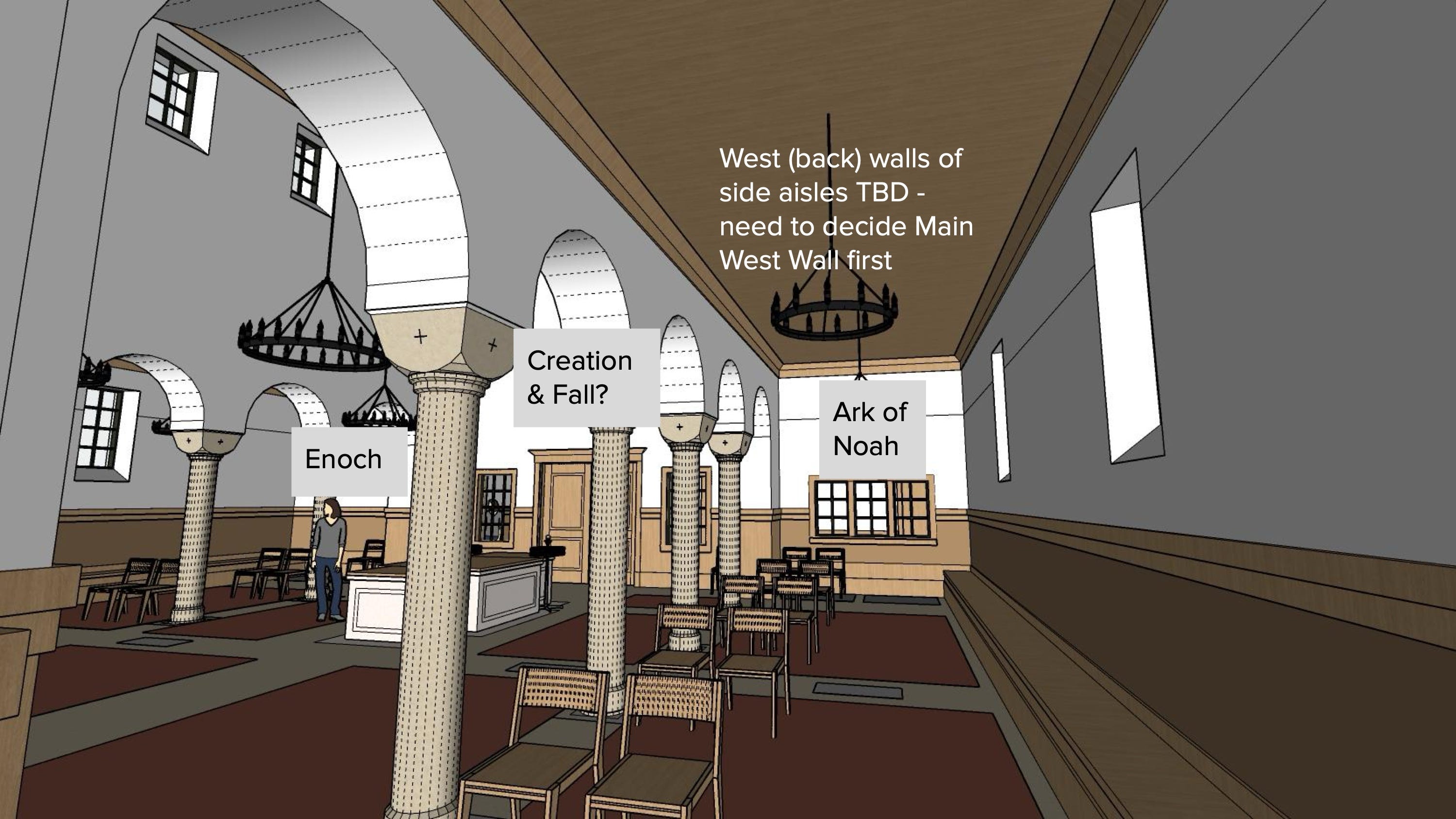
On the right side of this next image, what you are going to see is the windows of the Calming Room that look out on to the nave.
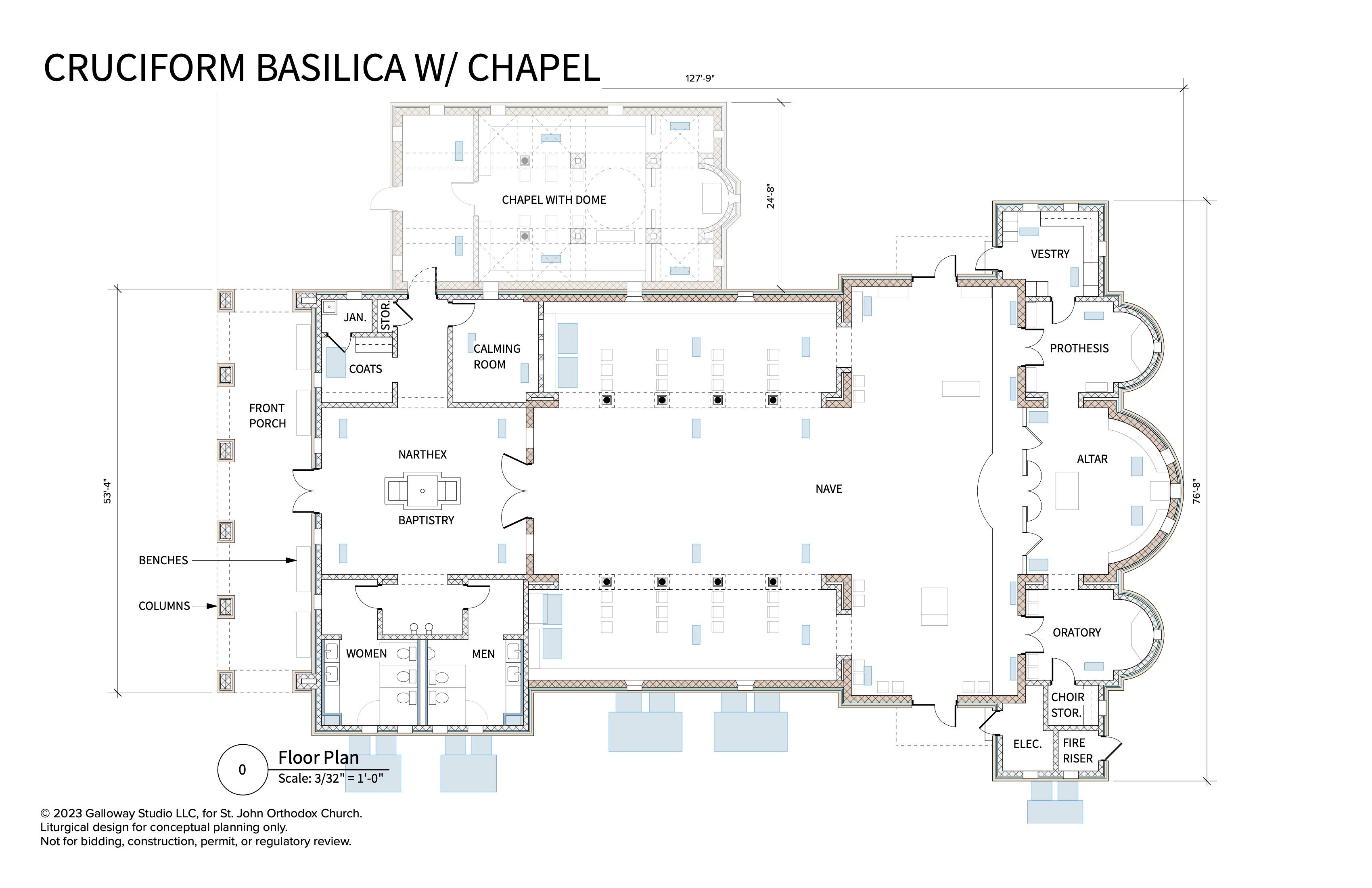
And here’s an overhead view of the temple: the Calming Room is up at the top of the image, just below the Chapel.
Now, just about everyone knows what happens in a Calming Room: parents are able to soothe infants and redirect toddlers; moms can nurse babies; grandparents and godparents can hold a young child who is sleeping.
In an Orthodox community, there’s nothing remarkable about any of those activities, because our children should always be included in the Divine Services. However, in our temple, there will also be no spaces that are strictly functional—again, everything will lead to and support what happens in the Divine Liturgy.
So, as we noted in a recent popular post, just as our bathrooms will be adorned with murals, our Calming Room will be, too.
The theme that we will be using for those murals is Noah’s Ark. Despite the serious nature of the Old Testament story, that’s a set of images that is often used in spaces that are dedicated to children. But we’re going to add a couple of additional dimensions to that common approach, one that involves the spiritual life and one that involves fundraising.
Let’s start with the spiritual life.
One of the most attractive aspects of Orthodox spirituality is how connected it is to the natural world. In fact, last year, we did a whole series of posts demonstrating how all the creatures of this cosmos participate in our worship of the Most Holy Trinity and how all those creatures are, therefore, invested in our project to build a new temple.
We called that series of posts Greener Than Oz, so it only made sense to title this post Back to Oz
But titles aside, if those creatures are welcome to join with us in our adoration of the Father, Son, and Holy Spirit, then, within that same Triune adoration, there ought to be a way to remember those creatures once they have departed this life.
So, in our murals of Noah’s Ark, we are going to have space for the images of actual animals that people have known: pets, farm animals, zoo creatures that were visited multiple times a year throughout someone’s childhood.
Now, these images are not going to be icons; the icons of the Church bear not only the likeness of the subject depicted, but also the subject’s name. It’s the likeness and the name that connect the viewer to the subject or the event that the image depicts.
However, the images of animals in our Noah’s Ark murals will not include names; that means the images themselves will not be iconic; they will only be decorative.
And, while the (Orthodox) internet erupts, I’ll further explain what we’re not going to do:
These images will not require anyone to take any position on whether animals have souls or what kind of soul an animal might possibly have
These images will not require anyone to take a position on whether animals will be in heaven
While these images will be in the temple, they will not be located in a liturgical space
I don’t expect that those clarifications will forestall anyone who just really wants to argue, but it should, at least, reassure folks who wonder if we’ve thought through all this. Because we most certainly have. And what we have decided is that we want our children to understand, from the earliest possible age, that no creature that we love is ever, ultimately, lost.


When it comes to animals, there are plenty of examples of this principle within Holy Tradition: St Seraphim and his bear; St Mamas and his lion; St Melangell and her rabbit; St Bridget and her wolf—but, if we Orthodox aren’t too proud to admit it, perhaps the best modern expression of this truth comes from Professor C.S. Lewis and his lovely novella, The Great Divorce.
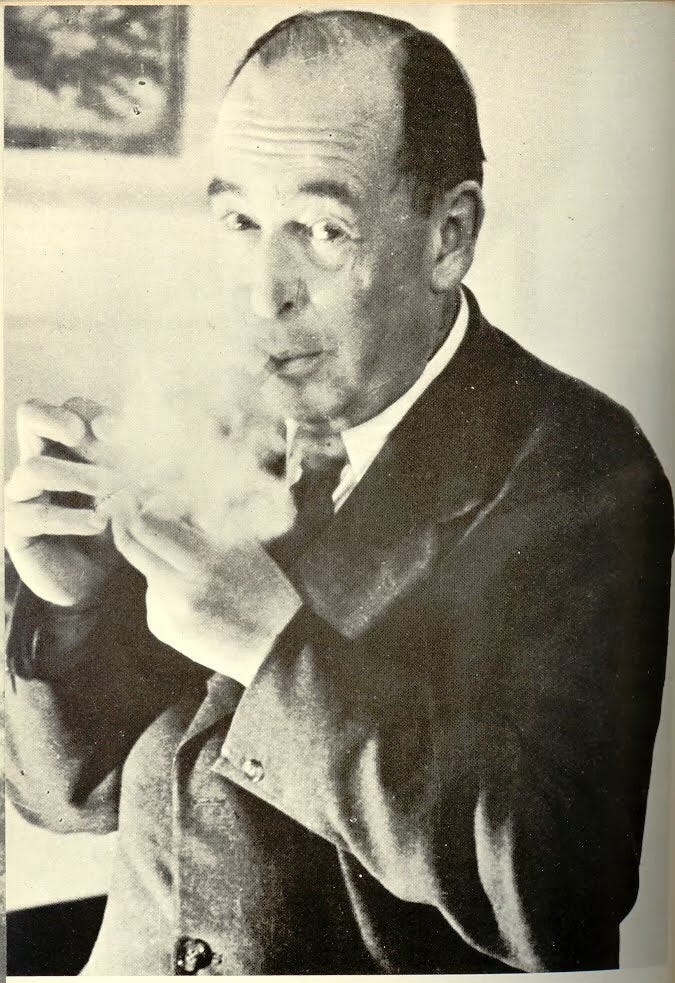
The narrator is on the outskirts of the Kingdom of Heaven, and his guide is the Scottish pastor and writer, George Macdonald.
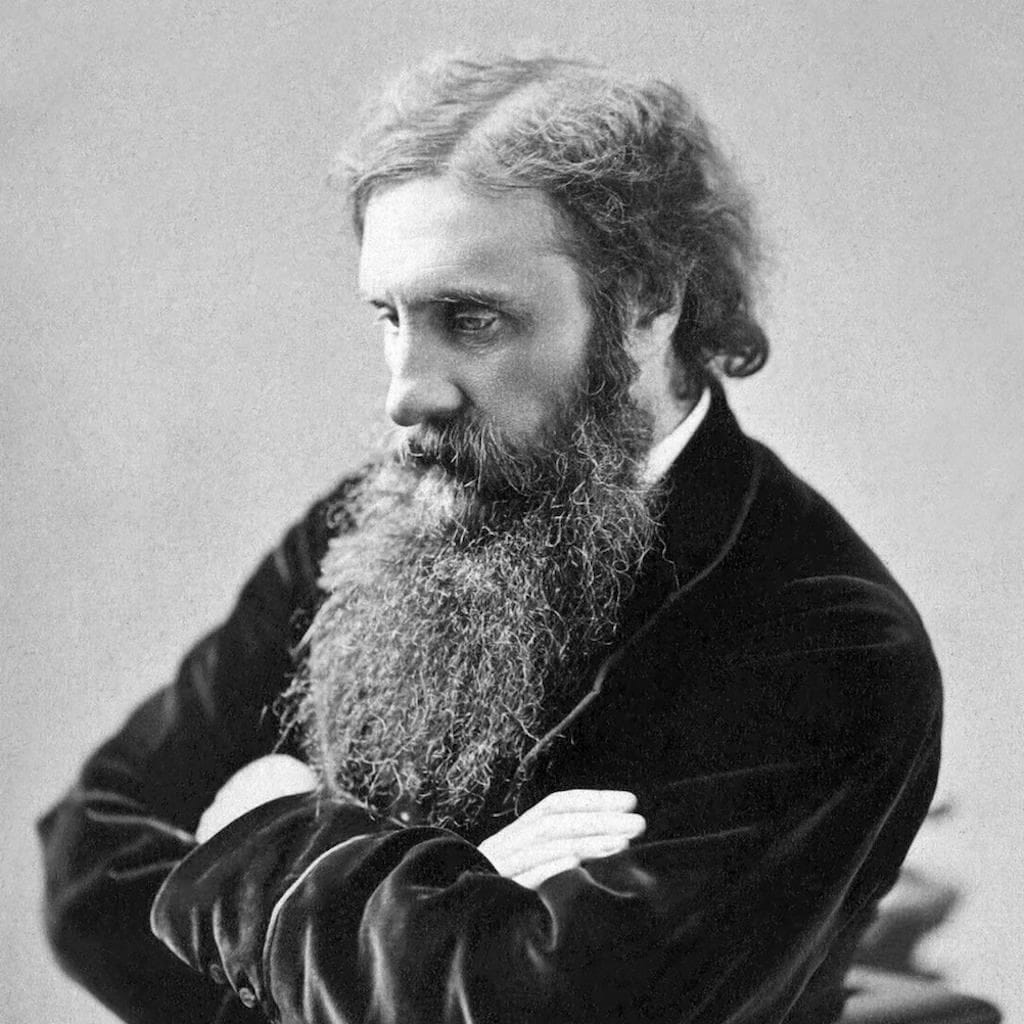
Together, they encounter a number of souls, but, for our purposes, Lewis’ description of this woman is especially helpful:
“I cannot now remember whether she was naked or clothed. If she were naked, then it must have been the almost visible penumbra of her courtesy and joy which produces in my memory the illusion of a great and shining train that followed her across the happy grass. If she were clothed, then the illusion of nakedness is doubtless due to the clarity with which her inmost spirit shone through the clothes… But I have forgotten. And only partly do I remember the unbearable beauty of her face…"
“‘And how ... but hullo! What are all these animals? A cat-two cats-dozens of cats. And all those dogs . . . why, I can’t count them. And the birds. And the horses.’ ‘They are her beasts.’ ‘Did she keep a sort of zoo? I mean, this is a bit too much.’ ‘Every beast and bird that came near her had its place in her love. In her they became themselves. And now the abundance of life she has in Christ from the Father flows over into them.’ I looked at my Teacher in amazement. ‘Yes,’ he said. ‘It is like when you throw a stone into a pool, and the concentric waves spread out further and further. Who knows where it will end? Redeemed humanity is still young, it has hardly come to its full strength. But already there is joy enough in the little finger of a great saint such as yonder lady to waken all the dead things of the universe into life.’”
In the same way, we want to bring all that we love into our new temple, and that includes the memory of the animals who, in the words of that beautiful line from the Akathist “Glory to God for All Things” “in their humbleness have served” and cheered and comforted us and put up with us when no one else would.
In that respect, remembering the creatures whom we have befriended is not all that different from the memorial plaques that we often place throughout our temples or the photographs of departed parishioners that we frequently display in our facilities—it’s just an additional way that we can bring before the Most Holy Trinity all those that we love.
But along with the fact that we want to teach our children, from their earliest months, about this important dimension of the Orthodox spiritual life, we’re also going to use this as an opportunity for fundraising.
What? You didn’t know that is what this Substack is all about?
And, no, we haven’t figured out all the details or exactly how many of these images might be available, but, yes, by donating a specific amount to our temple project, you will be able to place in the presence of the Most Holy Trinity, an image of the cat that welcomed you home night after night when you lived alone or the horse that you rode every summer on your uncle’s ranch or the turtle that you fed by hand once a month when your grandparents took you to the zoo.
Just head for the comments, and let us know you’re interested, and we’ll go from there.
But if this is the kind of work you want to support, we hope you will do even more: Pray along with us as we offer the Akathist for a New Temple (PDF/video); become a paid subscriber; purchase something from our clothing line or donate directly to our temple fund.
And speaking of the kind of work we support, we’re going to sign off with our dear friend Benedict Sheehan, and a portion of his original composition based on the Akathist “Glory to God for All Things”:
Glory, indeed.