

Buildings That are Real
We’ve been talking about how important it is to build temples that are real.
Which, sure, sounds funny, because it’s not like anyone out there is putting up Potemkin Orthodox Buildings.
Grigory Potemkin was a member of the Russian Empress Catherine the Great’s court, and the story is that, when she toured the Crimea, he had fake villages constructed and staffed with fake villagers in order to impress her. That’s where the whole idea of Potemkin construction comes from.

But, apparently, that whole story is also fake, so what, exactly, are we talking about here? How are we supposed to determine whether a structure is real or authentic or genuine?
Well, the best way to do that is to just look at some realtime examples from actual construction projects. And here in Cedar Park, Texas, that kind of construction project is going on just down the road from us: The Church of Jesus Christ of Latter-day Saints is building a temple about three miles from our property.
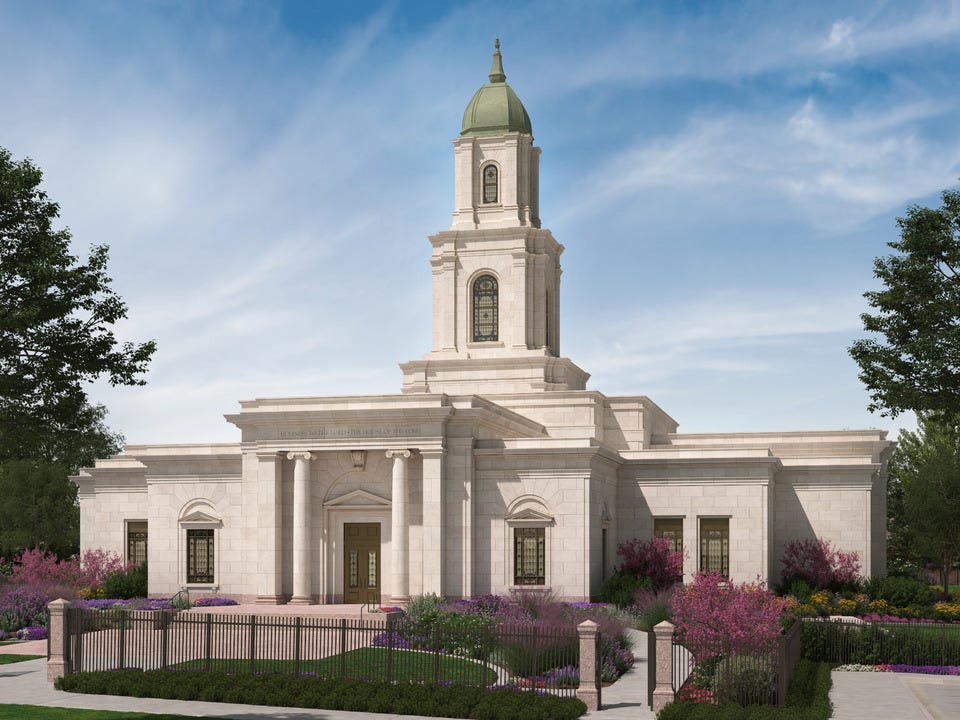
Of course, those folks don’t do the same things in their temples that we Orthodox do in our temples, but our LDS neighbors are using the same construction methods that most Orthodox communities now use.


Notice: The architectural rendering for the structure appears to show a building made of stone. However, the building is actually a steel frame with light metal studs that is sheathed in gypsum board. The stone on the exterior is a single-wythe masonry veneer that is used as a rainscreen on top of the gypsum board.
Now let’s contrast that approach with what is going on at Holy Cross Monastery in West Virginia. That community is also building a temple.
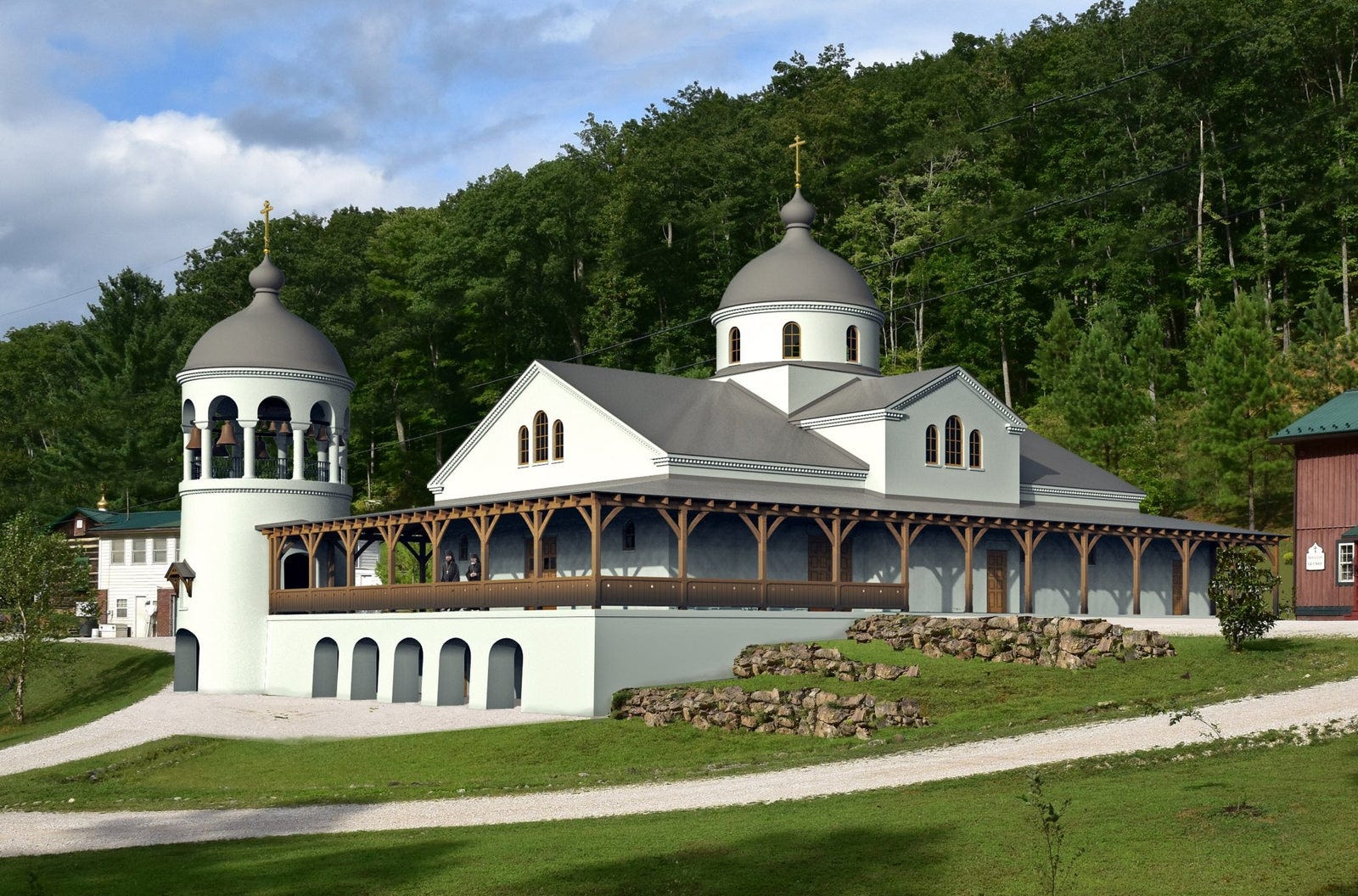
However, the fathers in that community are using traditional methods to build their temple. As we noted in our last post, using traditional methods doesn’t mean the monks are working with draft animals and hauling on pulleys with ropes; it means they are using modern tools to erect a structure that will be around for centuries.
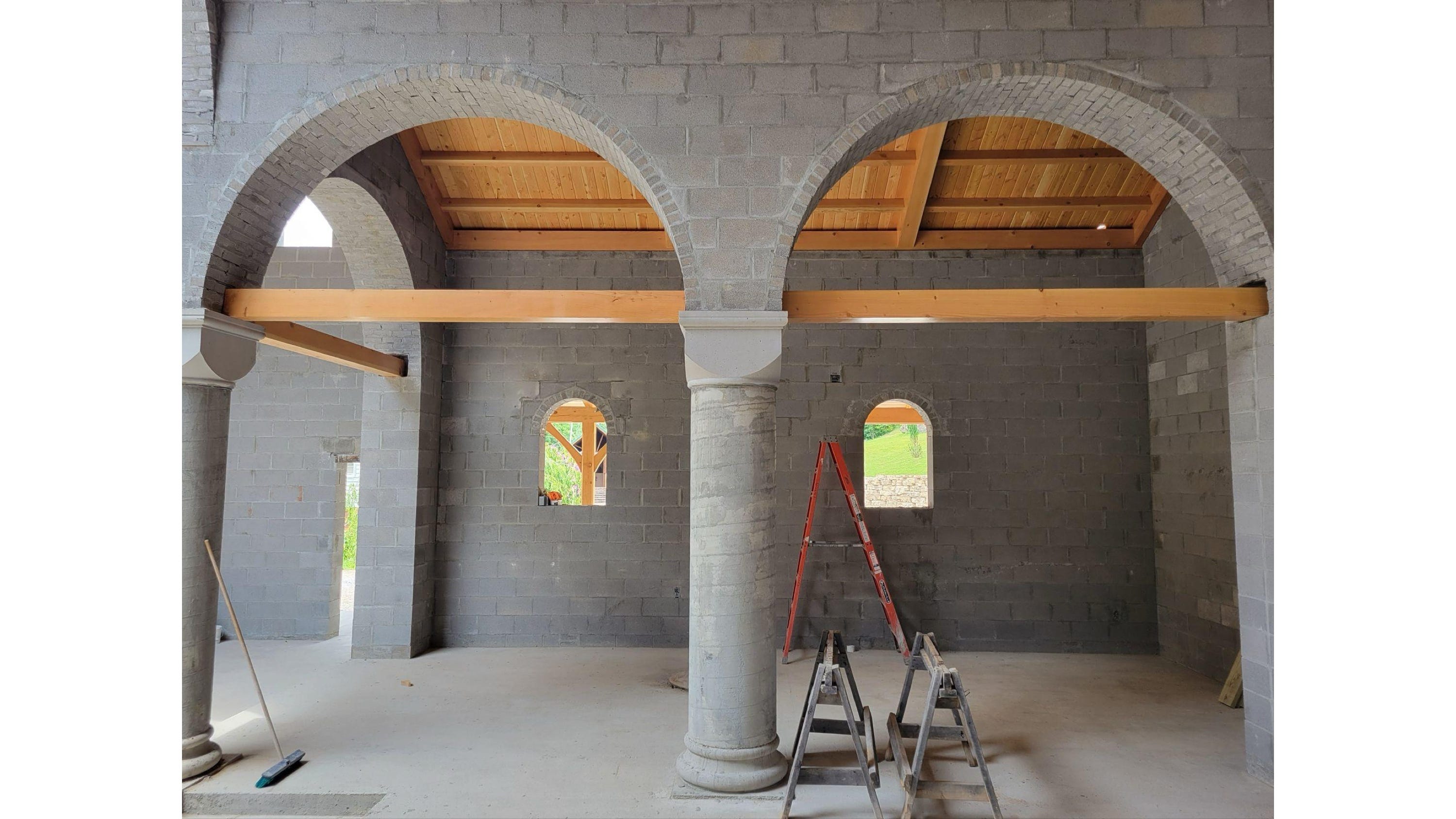
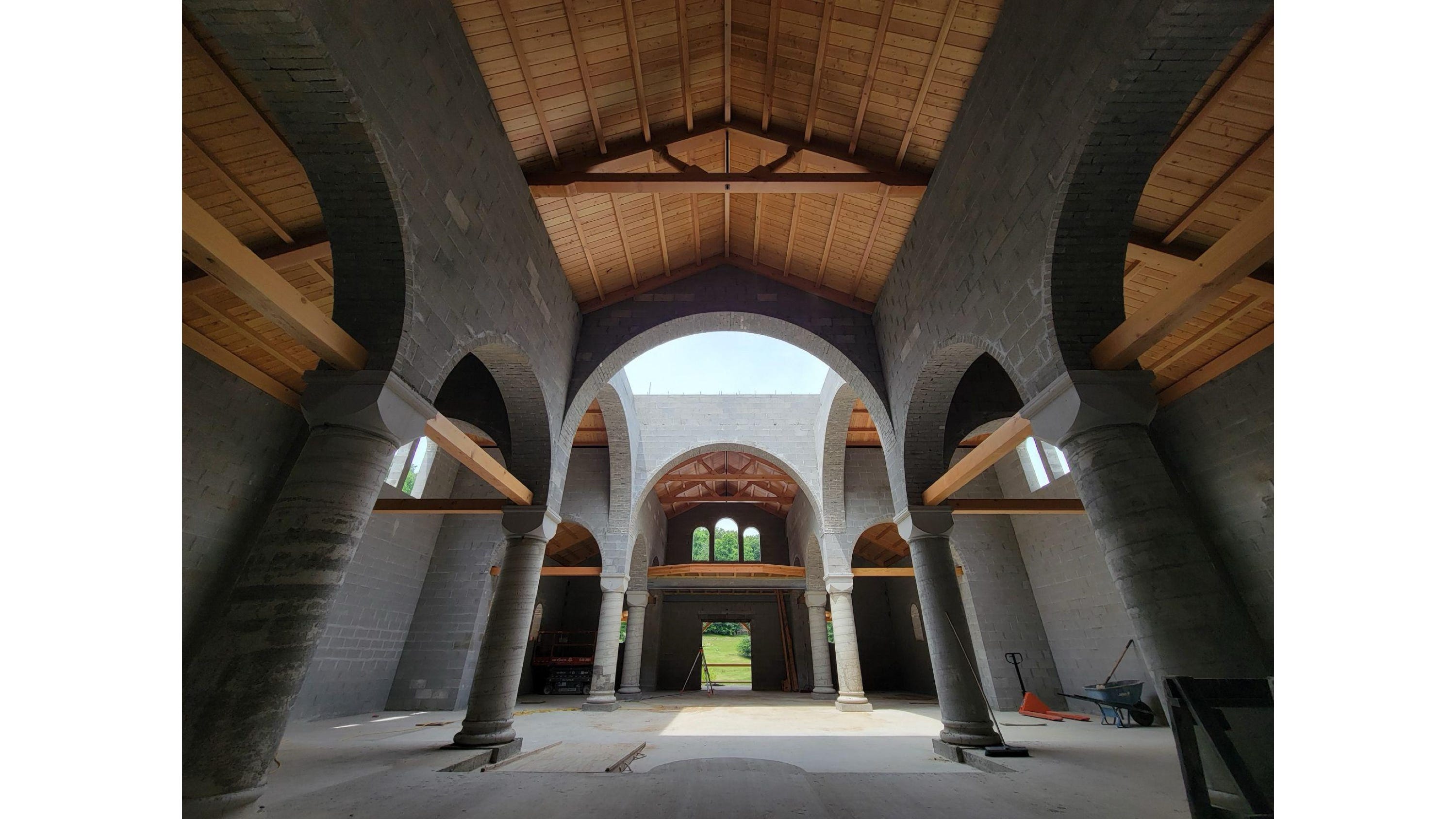
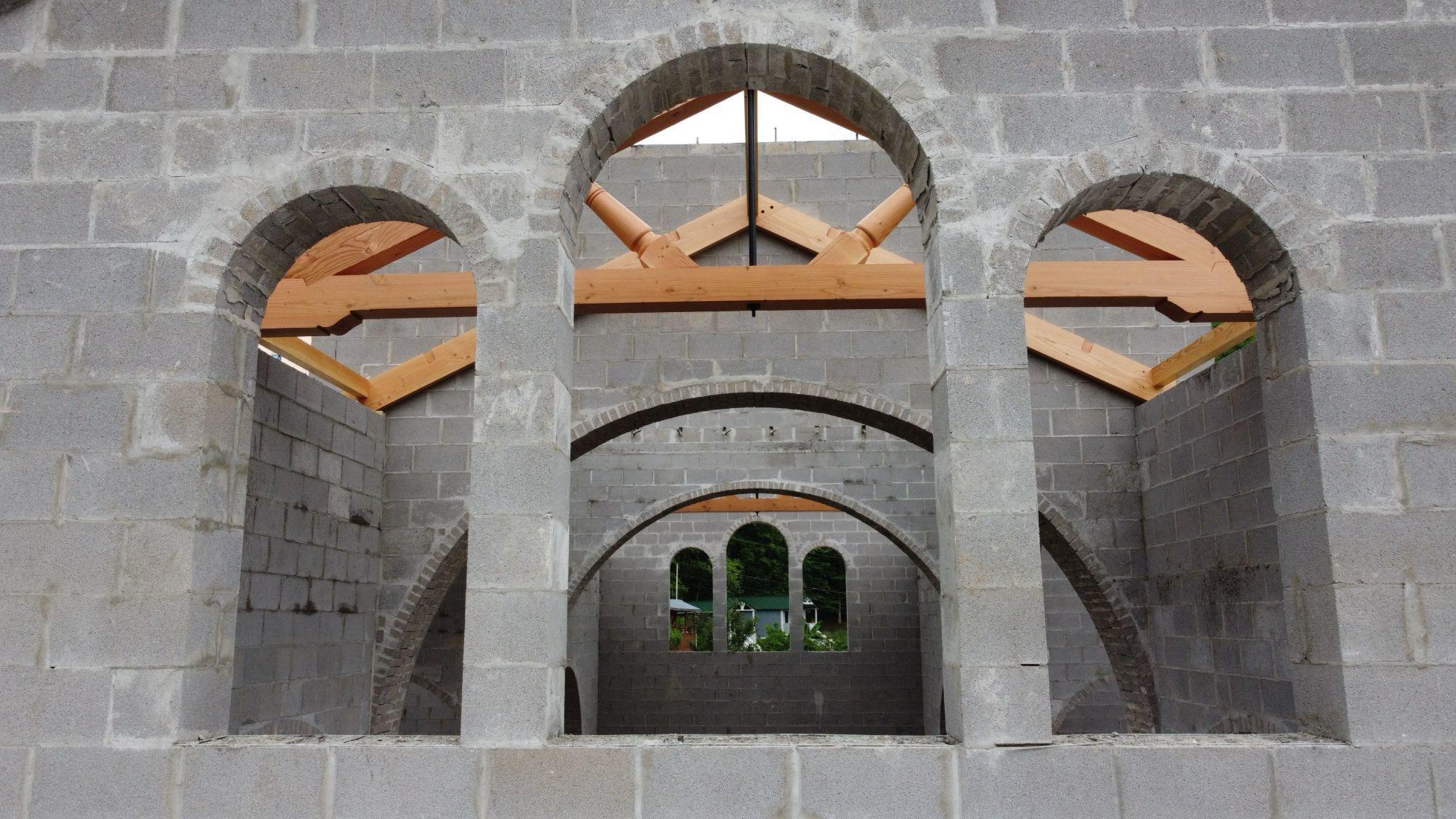
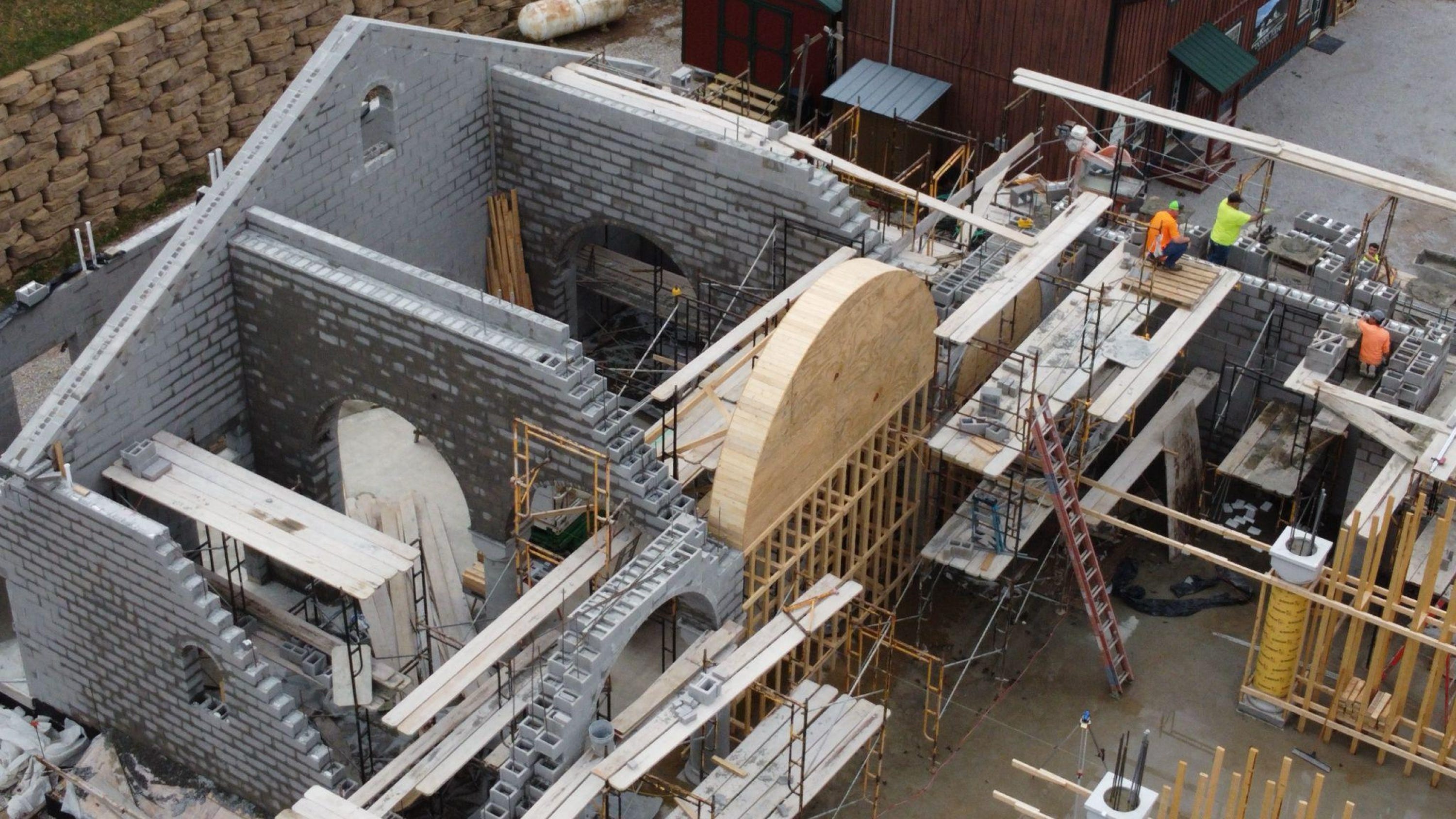
So, whereas the LDS folks here in Texas are using steel and gypsum board and a masonry veneer to put up a temple that looks just like a building made entirely of stone, the Orthodox monks in West Virginia are using concrete and wood and stone to put up a temple that is actually made of concrete and wood and stone.
In other words, one approach involves a degree of astroturfing, but with the other approach, what you see is exactly what you get.
And since we Orthodox proclaim the One Who is Himself Truth Incarnate, which method of construction is more appropriate to that proclamation: the method that produces a building that is, itself, a kind of cosplay, or the method that produces a building that is as real as the One Whom we proclaim?
Now, to the credit of our LDS neighbors, they are using a stone veneer that is actually stackable and load-bearing. But, unfortunately, more often than not, when we Orthodox use masonry, we go a lot cheaper: rather than use a product that can stand by itself, we use thin brick or manufactured thin stone adhered directly to a stick-framed wall with mortar.


These kinds of tiles are popular in the restaurant and hospitality industry for their low cost when it comes to both installation and demolition. But our old friends Entropy and Gravity, along with the freeze/thaw cycle, really do a number on these tiles, and it’s very common for the adhesive to start coming off within ten to fifteen years.


And speaking of the passage of time, as we’ve pointed out before, a big part of a building being real is how long it’s going to last. The Church of Jesus Christ of the Latter-day Saints takes really good care of their facilities—I mean, say what you will about their home-grown American theology, I’ve never driven past an LDS building where the lawn wasn’t carefully manicured and the facilities weren’t in tip-top shape.
That’s not the case with us Orthodox. So, whereas the construction our LDS neighbors are using may only have a sixty-to-seventy-year lifespan, their buildings tend to last longer because they take really good care of them. But since we Orthodox tend to only fix things that are broken (after we’ve spent weeks arguing about which contractor or repairman to use), our cavity-walled, sheetrocked, thin bricked (or, in a lot of cases, stuccoed) buildings will not be around when we kick off the next century.
We realize that if you’re new to CSSB, this post is going to generate all sorts of questions: What if all your community can afford is rental space in an office complex? What if your parish has purchased land, and you want to get something up as quickly as possible? What if your community worships in an aging Protestant building that isn’t worth repairing, but the vice president of your parish council has a cousin in the construction business, and he’s telling everyone that his cousin can get you into a new steel frame building within a couple of months?
In the past eight months, we’ve already addressed a lot of those scenarios and issues, so just check our archives.
But the main thing is this: Don’t get impatient; don’t get frustrated; don’t make everyone around you miserable. Say your prayers; participate in the services, and, sure, send us an email. We won’t have all the answers (shoot, we might not have any answers), but we’ll certainly talk with you and pray for you and help you figure out what the (godly) options are.
To remind all of us that there’s no need to get in a hurry about any of this, as we’re signing off, we’ll put on the Stones—and Ed Sullivan:
And since we have all that time, why not take a minute and offer the Akathist for a New Temple with us (PDF/video)? You could also become a paid subscriber to this Substack—or donate directly to our Building Fund. Remember: every bit of the money we raise from this site is going to fund a building that will be real.
Happy to find there is a Substack to follow. I’ve been peripherally aware of this project, and increasingly it gives me hope. May it inspire others in the proper Spirit. Glory to Jesus Christ.