

It's time to talk about the Children
Here in Orthodox Land, we’re still celebrating. In fact, we’re going to keep the party going a full forty days, all the way up to the Feast of Presentation on February 2.
Which, when you think about it, only makes sense: after all, we did a forty day fast leading up to Nativity, so we should also spend at least that same amount of time celebrating.
Now there are several other feasts that fall within that forty-day season. This coming Thursday, January 1, we will celebrate the Circumcision of our Lord and Master. Next week, on Tuesday, January 6, we will keep the Great Feast of Theophany, and, as we already noted, Monday, February 2, is the Presentation of Christ Jesus in the Temple.


We’ll spend some time talking specifically about Theophany in the weeks ahead. But all of the other celebrations during this forty-day festal season celebrate events that took place when Christ Jesus was a very young child: on the Nativity, we honor His Birth; on the Circumcision, we commemorate His Name Day; on the Presentation, we remember the day when His Most Holy Mother and St Joseph the Betrothed took Him to the Temple in Jerusalem.
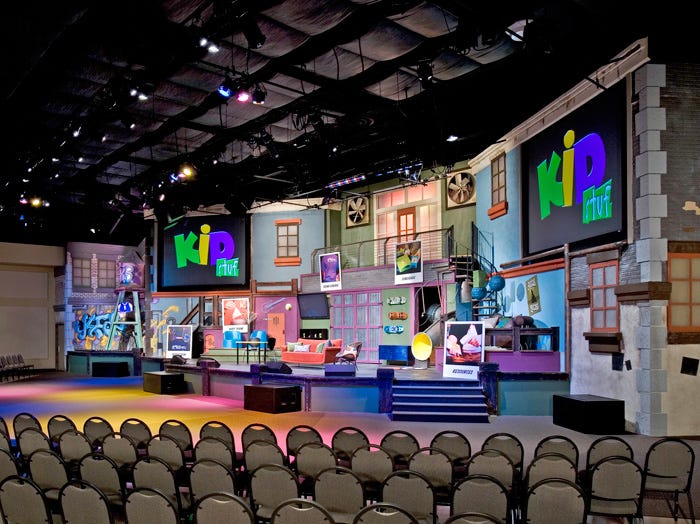
So, in Holy Orthodoxy, we’re celebrating our Lord and Master’s Childhood. And that’s actually a significant thing to do, because, in American Christianity, childhood is now seen as something that happens separately from the rest of the congregation. To be sure, most communities work hard to provide all sorts of programming for children: depending on a congregation’s size and budget, there will be dedicated facilities and ministries and staff people to support and nurture children from infancy to high school graduation.
But where you no longer find children is in worship—and worship is the beating heart of any Christian community.
As most readers of Come See Something Beautiful will recall, I grew up attending United Methodist congregations, and I served as a clergyman in that denomination for over a decade. That was back in the last century, and, at that point, most children still participated in the Sunday morning worship service. We had a children’s sermon and children’s choir, but Children’s Church—a service designed specifically for children and conducted separately from the main Sunday service—was something only really big congregations could pull off.
Apparently, though, that’s no longer the case, because, now, when young people in their twenties and thirties visit our Divine Liturgy, one of the things that they almost always talk about is the number of children in the service. Initially, I thought that was just because we do have a whole lot of children in our community. But, at some point, I realized that, as adults, most of these young visitors had simply never been in a worship service with children.
There’s no doubt that segregating children from the rest of the congregation has its practical advantages. You don’t have to worry about bawling babies or toddler tantrums; parents are able to take a break; everyone can focus on the message and the music during the service.
And in a contemporary Protestant context, where worship is basically an educational event embedded in a concert, it really doesn’t make any pastoral sense to have infants and young children hang around. I mean, sure, the kids might enjoy the music in the grown-up service, but they can’t follow along in their Bibles; they can’t keep up with the sermon. Eventually, the thinking goes, they’ll be old enough to pick up that skill set, but, until then, it’s better that they just head on off with the Children’s Coordinator and attend their own separate service.
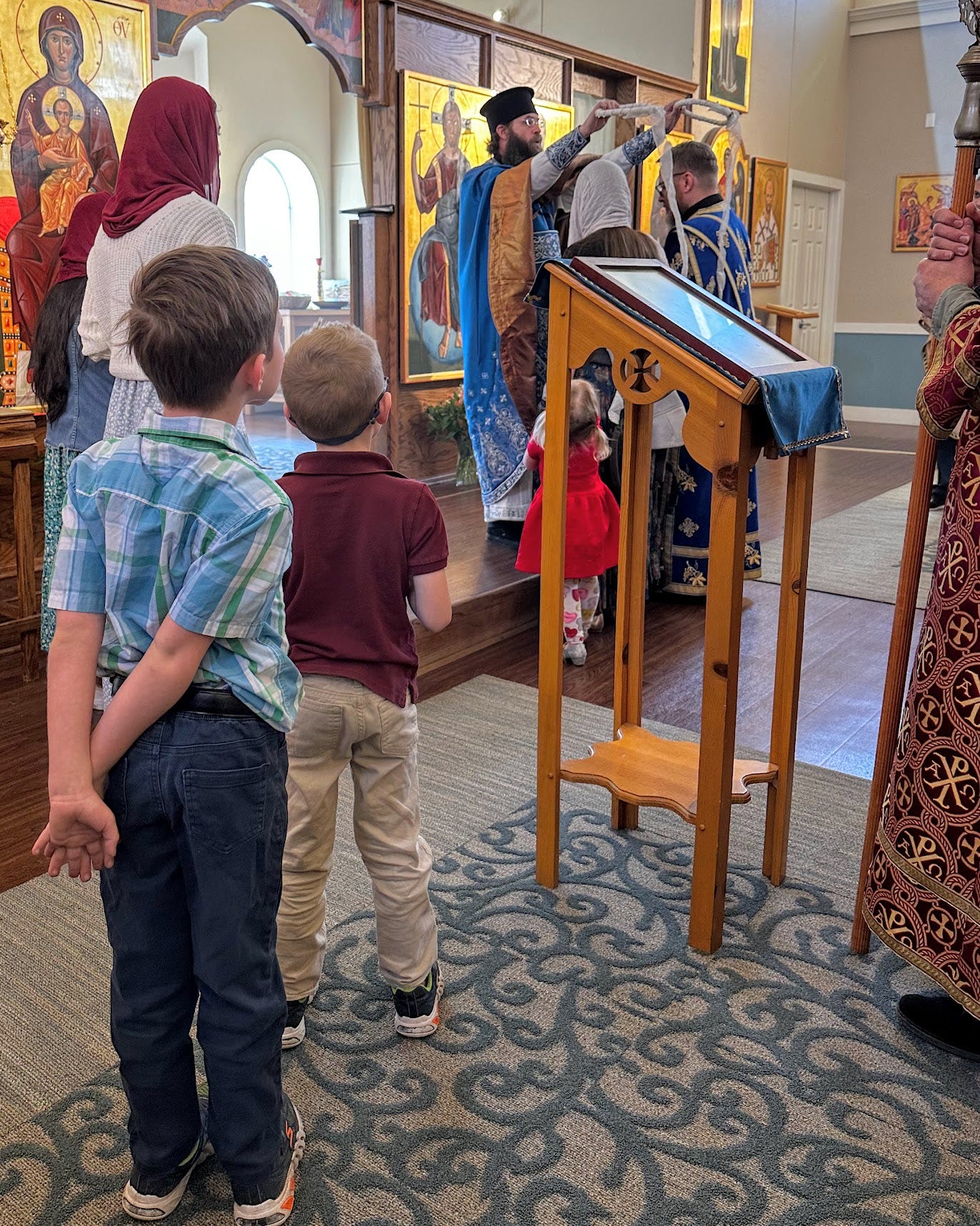
But in Holy Orthodoxy, we proclaim that, since our Lord and Master Himself became a Child, since “He increased in wisdom and stature” (St Luke 2.52), infants and children and young people are not somehow less spiritual than adults. Infants and children and young people are not Junior Members of the Faith. They are Christians. They are fully united to Christ Jesus, because, just like their moms and their dads, they have also been baptized; they also partake of the Holy Eucharist.
So, you would think we would absolutely insist that our children belong in the Divine Liturgy.
Unfortunately, that’s not always the case.
I don’t know of any Orthodox communities that have their children in completely separate services. However, it is common for parishes to have their children and young people go to Church School at some point during the Divine Liturgy. If the community has a tradition of infrequent communion, then that exit might happen as early as the homily (that’s what we call the sermon); if most people in the parish receive the Holy Gifts on a regular basis, the children generally leave right after they themselves partake.
I’ve never heard anyone try to justify these sorts of arrangements in theological terms, and I’m not at all sure what those arguments would even look like—you’d have to either adopt a Protestant take on our human nature (“You aren’t really a Christian until you understand what that means”) or you would have to try and make the case that the last twenty minutes of the Divine Liturgy don’t matter (“There’s no reason the kids need to hang around for the Prayer Behind the Amvon or The Dismissal or The Post Communion Prayers”).
But I have encountered Orthodox Christians who give all kinds of practical reasons why infants and young children should not be in the Divine Liturgy. And, in the weeks ahead, we’re going to address that topic in a series of posts.
To get you ready for that conversation, we’ll spin a little Joan Baez for you
The fact of the matter is, we believe that the Divine Liturgy is for everyone, no matter their age or their physical limitations or their mental capacity or their emotional maturity. If you’d like to support a community that has those sorts of values, then, by all means, join us in prayer (Akathist: PDF/video). If you’d like to help fund the temple in which that kind of liturgy is going to be offered, then, for sure, go ahead and make that donation.