

Becoming Children
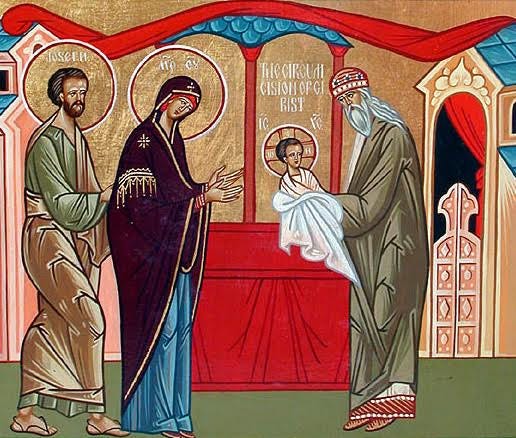
This evening, we will start celebrating the Feast of the Circumcision of our Lord and Master. We will also read prayers for the New Year, but the primary party will center around what happens to Christ Jesus eight days after His Birth (St Luke 2.21).
We’re also just a little more than a week into a festal season in which the Infancy and Childhood of our Lord and Master receive a lot of attention. We talked about some of the implications of that in our last post—how the fact that Christ Jesus was a baby and then a child sanctifies those stages of human development and how that means every baby and every child should have full access to the Divine Liturgy.
Of course, we acknowledged that’s not always easy to pull off. Infants get fussy; children have a very short attention span; parents are often at a loss about what to do in the face of those realities. But in response to those challenges, some Orthodox communities are falling back on an approach that Orthodox Christians in this country have often used: “Hey! Let’s do what the Protestants are doing!”
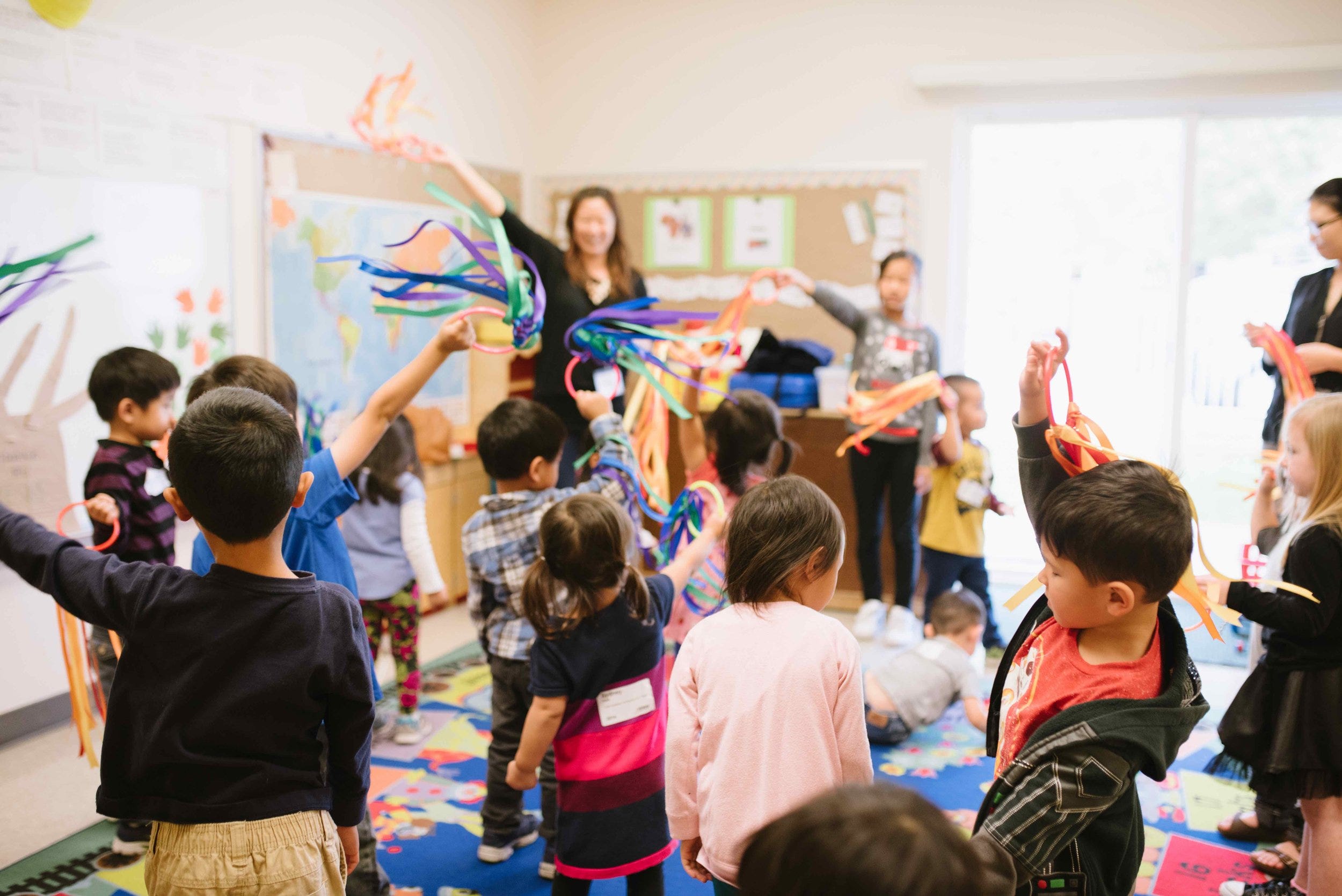
What the Protestants have done is created alternative worship services for children. I’m not aware of any Orthodox parishes that have come up with a ‘Liturgy for Littles’ (though I would not be at all surprised if someone, somewhere, is working on one). Most communities who take their children out of the Divine Liturgy do so for purposes of Church School.
Which is also, by the way, a Protestant invention.
Now don’t get me wrong: I’m a huge advocate for Church School, and I am super proud of the program that we have in place at St John’s. In fact, in a week or so, I’m going to be writing a few posts about how we do that work. But as important as Church School is, it’s not the Divine Liturgy. So, let’s take a moment and remind ourselves of the significance of that service.
And there’s no better description of that significance than the one provided by Archimandrite Zacharias Zacharou of St John the Baptist Monastery in the United Kingdom. He writes:
“The Liturgy is the very center of our life. We cannot forget for one moment that we are encompassing His holy altar, the throne of God, and every movement, every word and thought is conditioned by this consciousness that we stand before the King of Kings.”
Obviously, the archimandrite is a monastic, so some folks are going to insist that, while that sort of focused intensity is a reasonable thing to expect in that kind of community, a parish full of children is just going to be different. But that (common) observation actually puts the matter precisely backwards. Because Holy Scripture clearly teaches that we are to become like children.
Just think about it.
Our Lord and Master not only specifically invites children to be in relationship with Him (St Matt 19.13-15; St Mark 10.13-16; St Luke 18.15-17), He also states that we are to become like them (St Matt 18.3-5; St Mark 10.15; St Luke 18.17). Christ Jesus refers to the apostles as children (St John 13.33; 21.5); St Paul uses the same language for all Christians (Rom 8.16-17; 9.7-8; Phil 2.14-15), and St John’s letters are filled with references to his “little children” (1 John 2.1; 3.18). This language is obviously metaphorical, but it is metaphorical because it is a description of spiritual reality: When it comes to our relationship with the Incarnate Son of God the Father, in the Holy Spirit, we are all children.
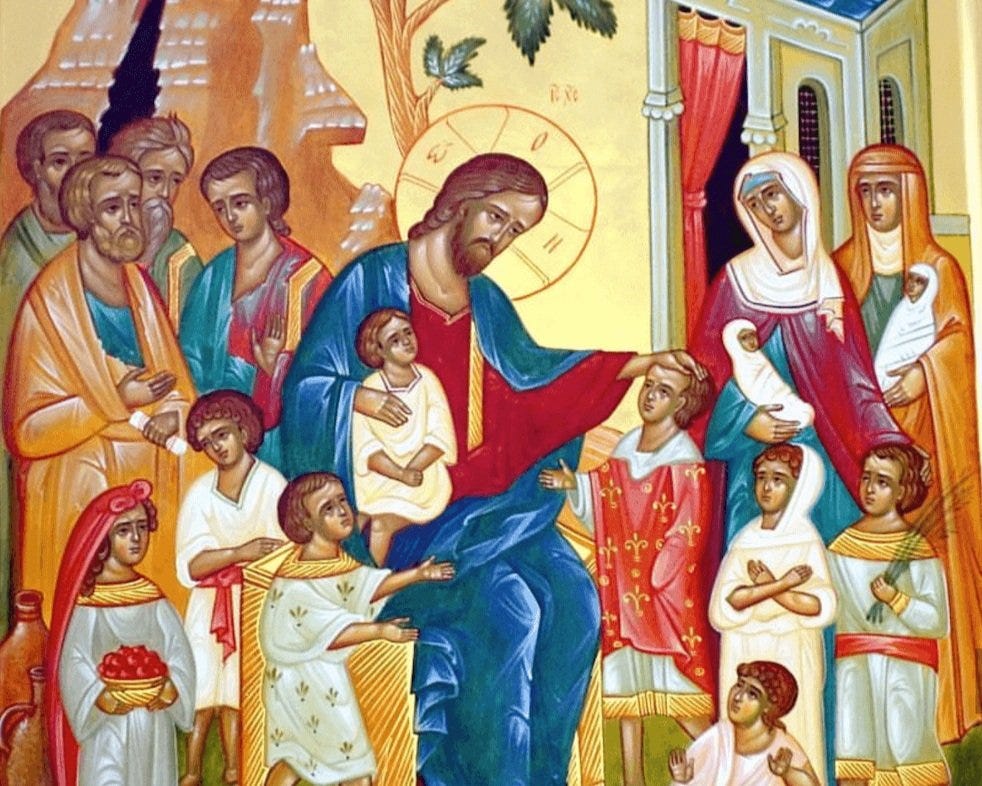
So, there’s a basic irony at work here: when we think about what kind of behavior is appropriate in the Divine Liturgy, we just automatically fall back on our adult expectations, when what we should be doing is using a standard that reflects the spiritual fact that we are all, finally, children.
Am I suggesting that we should not have any liturgical expectations for infants and children and their parents? Not at all. And I’m certainly not romanticizing any of this. The fact of the matter is that we have all been in Divine Services where babies were screaming and children were out of control and the parents were simply clueless as to what they were supposed to be doing.
But I’ll let you in on a secret.
And any experienced priest will tell you the same.
Serving during a liturgy in which the children are acting out can be a challenge. However, it’s an even greater challenge to serve in a setting where the adults don’t take their relationship with the Most Holy Trinity seriously.
Because while a baby may wail for what seems like forever before the dad finally takes the child out into the narthex, that’s nothing compared to the suffocating pressure that arises from a woman standing right in front of the iconostasis and thinking hateful thoughts about her daughter-in-law.
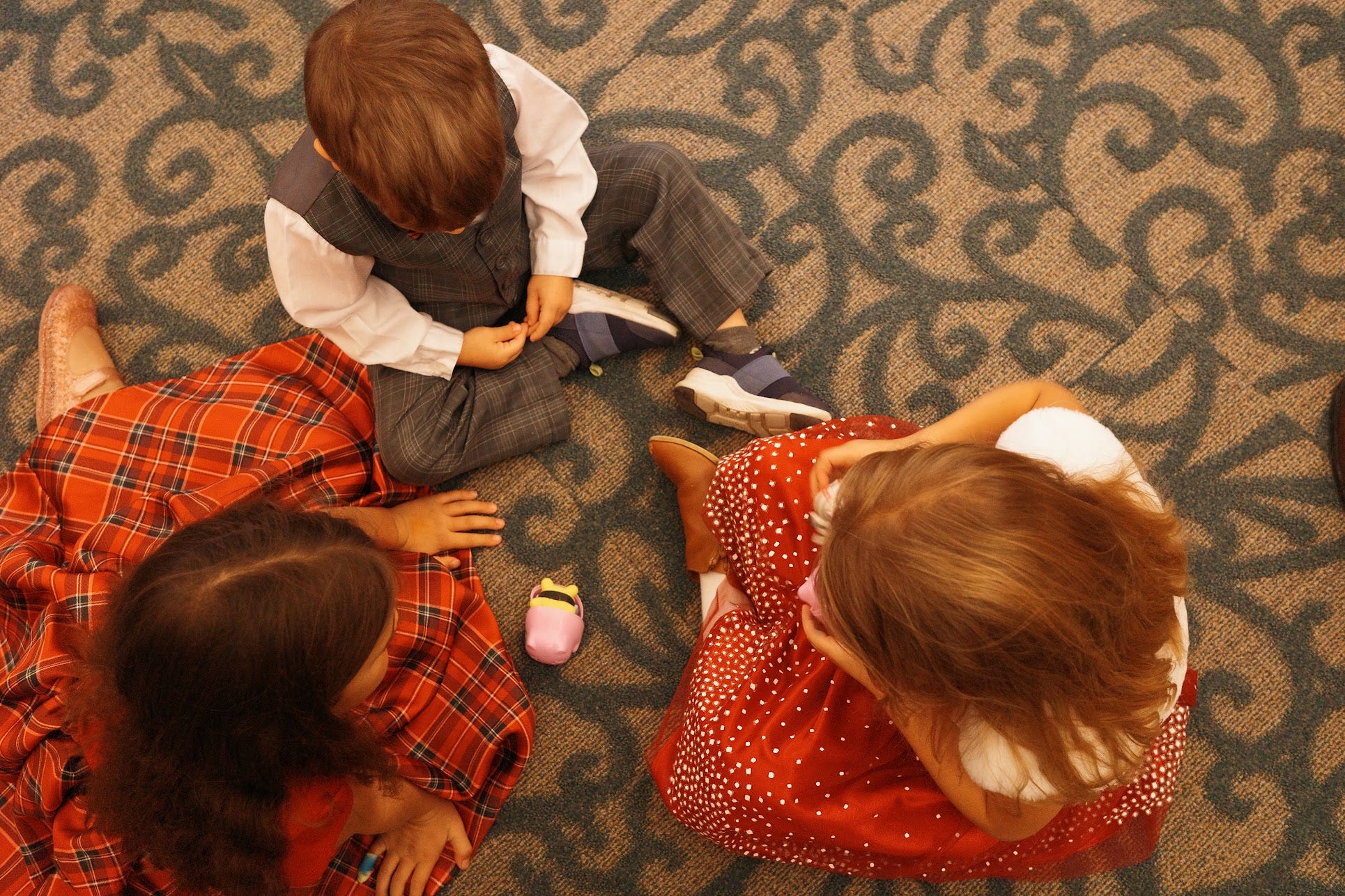
A toddler may spend a good part of the service darting between the candle stands and climbing up on the chairs along the wall, but it’s actually less distracting than the young man who stays put throughout the liturgy but mentally maps out his work schedule for the coming week.
An elementary school child may be lying on the floor, rolling back and forth and reading a chapter book, nevertheless, that’s nowhere near as disturbing as the older man who is sitting quietly on a bench and silently reviewing his mental collection of pornographic images.
What? You didn’t think we were aware of all that?
Remember, as Archimandrite Zacharias writes, in the Divine Liturgy, we’re in the presence of the “King of Kings”, and, in that setting, there simply are no secrets. So, that means when it comes to our behavior in the Divine Liturgy, we all have room for improvement. Children need to gradually become more like adults, but adults also need to become more like children. But neither group should be sent off to a separate service.
Most of us have a pretty good idea of what happens when a child grows into an adult. Where we need help is in figuring out how we should become more like children. So, we’ll be talking more about that next week.
But as a preview, we’ll leave you with a little classic rock and some classic rockers singing about that very dynamic:
In the meantime, we wish each and every one of you a Happy Feast and a Happy New Year. Please know that we are so very grateful for all your support in the past months. We hope that, in the coming year, you’ll join us in prayer on a regular basis (Akathist: PDF/video) and that you’ll help us spread the word about our project.
Convicting Father. Just last Sunday, during Liturgy, I told a sixth grader that he was being a distraction by teasing his younger brother. I have to reflect on what thoughts were running through my mind during the service!