

Praying and Playing
In this most recent series, we’ve been talking about children in the Divine Liturgy.
That topic always leads to a lot of discussion about how babies and toddlers should be taught to behave during the services—and whether or not those children should even be present in the services—but, as we pointed out at the end of our last post, when it comes to Divine Worship, we adults also have a great deal we could learn from our youngest brothers and sisters.
And G.K. Chesterton, the great Roman Catholic writer, has some really good things to say about that dynamic.
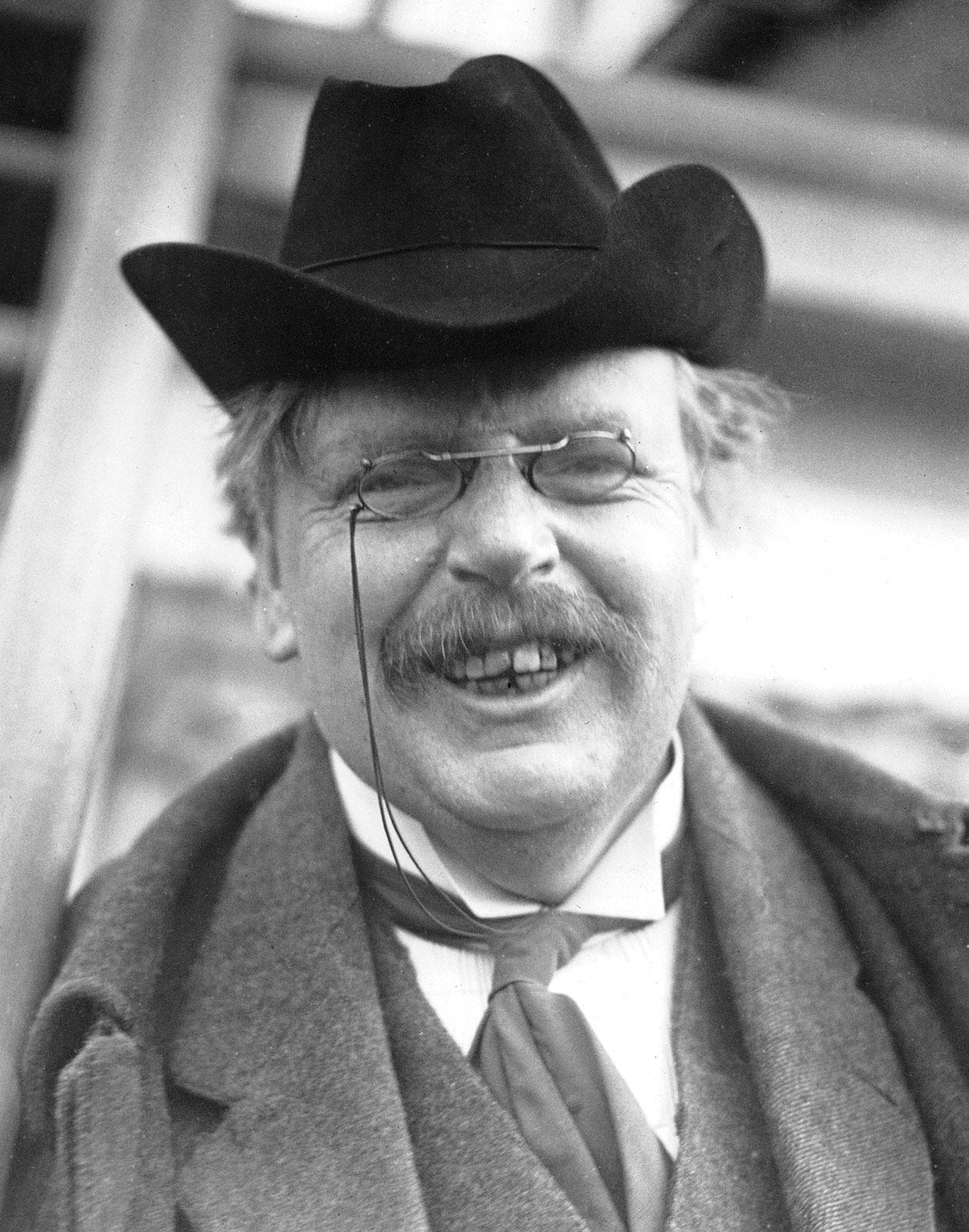
This quotation comes from his book Orthodoxy:
“Because children have abounding vitality, because they are in spirit fierce and free, therefore they want things repeated and unchanged. They always say, ‘Do it again’; and the grown-up person does it again until he is nearly dead. For grown-up people are not strong enough to exult in monotony. But perhaps God is strong enough to exult in monotony. It is possible that God says every morning, ‘Do it again’ to the sun; and every evening, ‘Do it again’ to the moon. It may not be automatic necessity that makes all daisies alike; it may be that God makes every daisy separately, but has never got tired of making them. It may be that He has the eternal appetite of infancy; for we have sinned and grown old, and our Father is younger than we.”
“…our Father is younger than we.”
Hang on to that thought, because we’re going to turn now to another long quotation; this comes from The Passion of Perpetua and Her Companions, the account of the martyrdom of a group of Christians in Carthage on March 7 in the year 202.
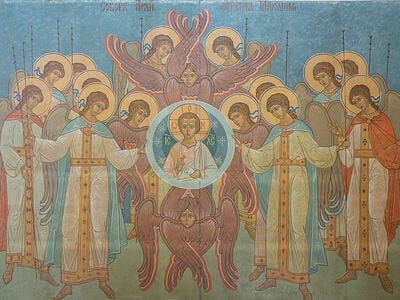
One of the martyrs, Saturus, has a dream before his death; here’s his description of that dream:
“And we came near to [a] place, the walls of which were such as if they were built of light; and before the gate of that place stood four angels, who clothed those who entered with white robes. And being clothed, we entered and saw the boundless light, and heard the united voice of some who said without ceasing, ‘Holy! Holy! Holy!’ And in the midst of that place we saw as it were an old man sitting, having snow-white hair, and with a youthful countenance; and his feet we saw not. And on his right hand and on his left were four-and-twenty elders, and behind them a great many others were standing. We entered with great wonder, and stood before the throne; and the four angels raised us up, and we kissed Him, and He passed His hand over our face. And the rest of the elders said to us, ‘Let us stand;’ and we stood and made peace. And the elders said to us, ‘Go and play’.”
Notice that the elders bless the martyrs to go and play. When we play, we focus completely and joyfully on the activity in which we are engaged, we tap into that “eternal appetite” that we share with God the Father, and we should also be doing the same thing when we participate in the Divine Liturgy.
Which is why we have located our playground as close to our temple as we can. As I’ve noted before on this site, we have an absolutely wonderful playground: it is situated in a large stand of trees; there is plenty of open space; the equipment is of the highest quality, and there are a number of picnic tables for families to use. But the fact that the whole area will be right next to our new temple (Plans for Our Temple) always generates more than a few questions: Is it just a convenience thing? Is this location due to some sort of site issue or municipal requirement?
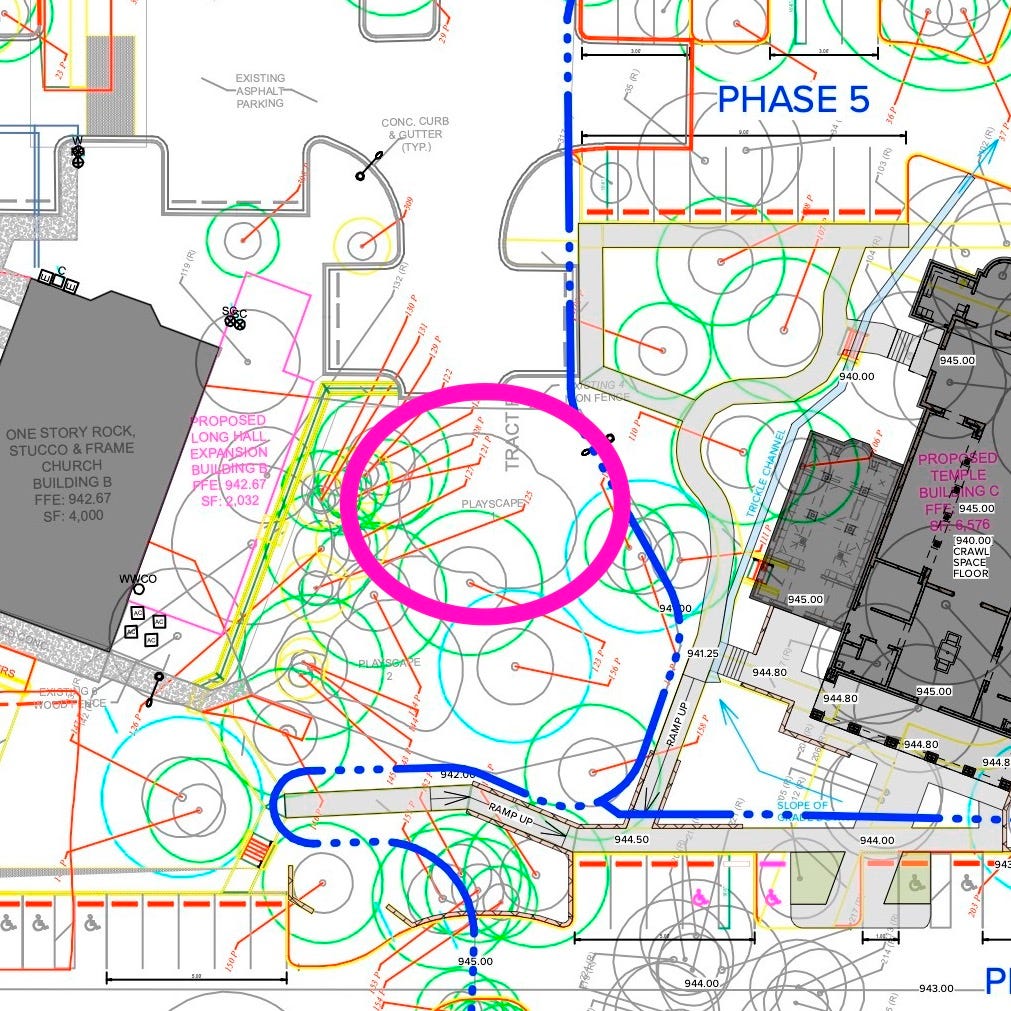
And we always just, politely, say, ‘No, no, and no.’ The reason we want the playground right up against the temple is because we want our children to understand that the absolute exuberance they experience there is also what they should experience in the temple, that the highest and most holy thing they do all week should be the kind of play the martyrs in Carthage were blessed to undertake.
Back in the last century, the renowned scholar Jan Huizinga actually wrote a book called Homo Ludens (that’s Latin for The Playing Man or Man at Play); in that book, Huizinga makes the point that liturgical worship is a form of play. He maintains that ritual can be seriously fun and that it is, in fact, a kind of divine game.
As you might expect, Huizinga’s book is for hardcore academics, but, a number of years ago, all this was brought home to me in a way that is much more down to earth. I was a deacon; I was attending the Parish Life Conference; I had been tasked with escorting our bishop, His Grace, Basil Essey from his hotel room to the ballroom where the Divine Liturgy was to be served.
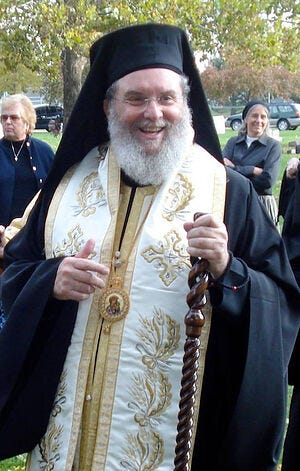
His Grace and I were on the elevator together, and I was looking for something to say, so I remarked that he must be tired after a week’s worth of meetings and activities. He responded by saying, “Yes, but all that will vanish when we get downstairs and start the liturgy because the Divine Liturgy is the playground of the Holy Spirit.”
So how can we become as young as our Father Who is in Heaven? How can we learn to empty ourselves out on the playground of the Holy Spirit? How can we become the children our Lord and Master has called us to be?
Those are actually much bigger challenges than the children’s behavioral issues that often occupy so much of our attention.
But, in our next post, we’re going to talk about a frequently overlooked liturgical activity that will address all of these topics. And we’ll even give you a hint of what we’re going to be discussing:
And while you’re getting your funk on, we will wish you a Blessed Theophany, and we’ll also invite you to pray with us (Akathist: PDF/video) and ask you to consider becoming a paid subscriber. In fact, why not celebrate the feast by making a donation to our new temple?
We will bless you for your support and generosity.