

Divine Dancing
Happy Feast to each and every one of you!
Here in Orthodox Land, we’re celebrating the Great Feast of Theophany. That celebration includes the Blessing of the Waters (both the Indoor and the Outdoor versions), and, in that service, we offer some of the most beautiful prayers of the entire year. Here’s a sample:
“Today the whole creation shines with light from on high. Today error is laid low and the coming of the Master has made for us a way of salvation. Today the celestials celebrate with the terrestrials, and the terrestrials celebrate with the celestials. Today the triumphant assemble of the Orthodox keeps this holy festival with great joy.”
And if you’re wondering exactly how that triumphant assembly of celestials and terrestrials keeps holy festival, that’s actually the overlooked liturgical activity that I promised to talk about in our last post. But this activity is overlooked because it is mentioned so very often and because it happens so much.
Let’s just take a random example from our vast hymnography. This is the Tone 8 Hiermos for the seventh ode of the canon:
“Long ago, the condescension of God threw the fire in Babylon into confusion. Therefore, the children danced joyfully in the furnace as though in a flowering meadow, and they sang, ‘Blessed art Thou, O God of our Fathers!’”
That’s right. Shadrac, Meshach, and Abednego danced. Lots of other saints do the very same thing. For example, on February 8th, we will commemorate Theodore the Commander, one of the great martyrs of the Church.
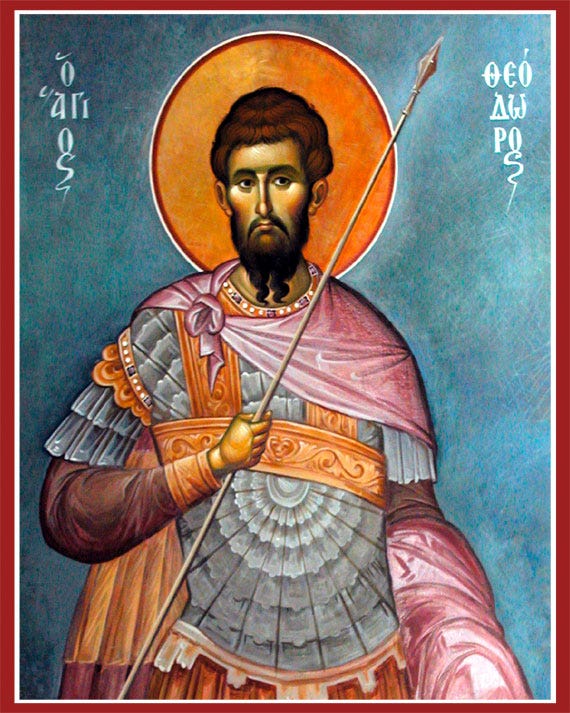
He endured horrible suffering for the sake of the Faith, but here is the very first hymn we will sing in his honor:
“Rejoice, most noble soldier of Christ, who with the weapon of true piety put to flight the ranks of the foe and who through torments obtained God’s celestial Kingdom after many pains. O Great Martyr Theodore, firm support of the faithful, as thou now dancest in the Kingdom…keep in remembrance them that laud thy glorious memory…”
Now, it’s easy to dismiss that as just so much poetry, until you realize that, in the Divine Services, we Orthodox actually dance a great deal. After all, dancing is just bodies moving in time, and since we don’t sit down during most of our services, and since we don’t have a lot of fixed seating, when we participate in Divine Worship, we get out on the Divine Dance Floor.
There’s all the entrances and all the processions we make throughout the year, at each and every Divine Liturgy, on the Sunday of Orthodoxy, and throughout Holy Week. There are the short processions we make around the font at a baptism and around the analogion (that’s a table) at weddings and around the Holy Table at ordinations. There’s the joyful procession that takes places when an infant is churched, and there are the solemn processions we make in connection with funerals.
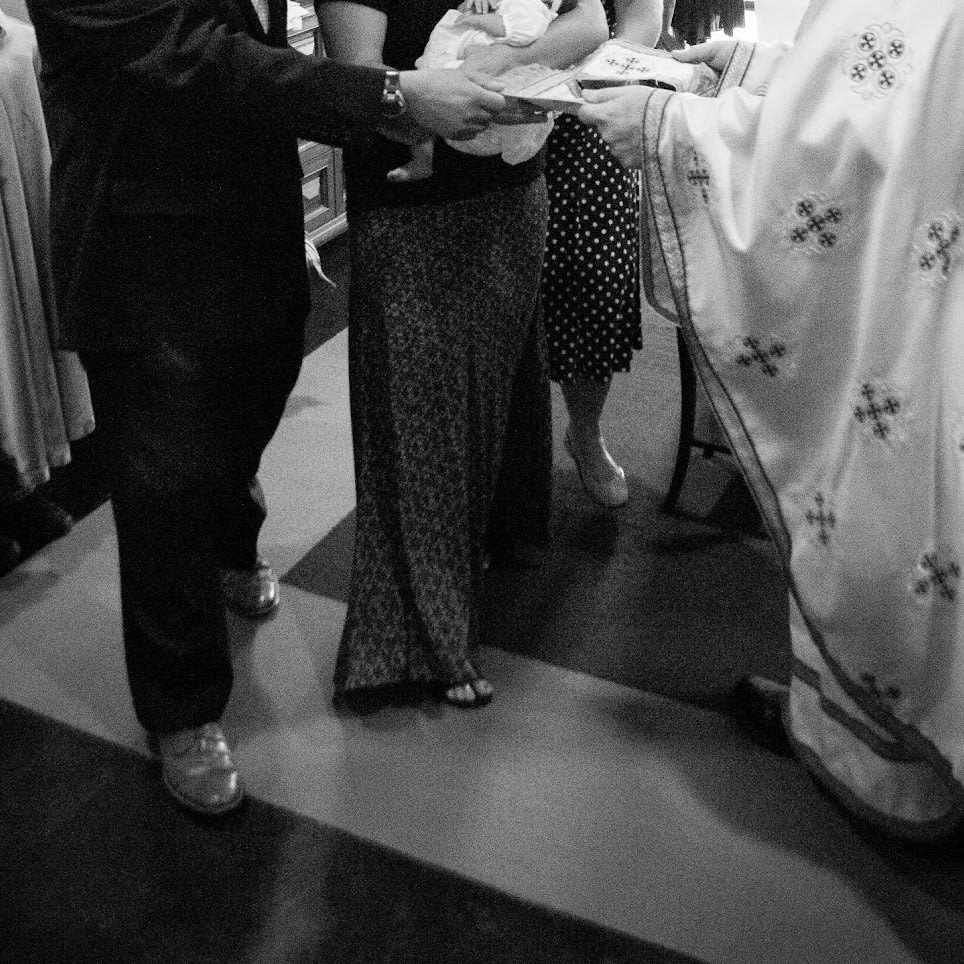
But there are also the dance steps we all do when we light candles and reverence the icons and line up for communion and kiss the cross at the conclusion of the Liturgy. Those are more informal, but the movement tends to be the same each and every week, and, if you watch closely, you’ll see the grace and the beauty that is made manifest in those simple actions, actions that are always accompanied by music.
And, sure, that’s not what most people think about when they first hear that we dance in the services. As long-time readers of CSSB know, I grew up in the Methodist tradition back in the last century. Back then, for all of us mainline folks, the word dance was always preceded by the adjective liturgical, and that meant women in leotards and flowing wraps waving wands with streamers on them. It was a change from the usual Sunday morning fare, but it only happened in big city congregations, and it was something you watched, not something you did.
But by the time I was in college, Pentecostal worship practices were making the transition into mainstream Protestantism and Roman Catholicism. It was known as the Charismatic Movement, and, when I first heard about it, I was genuinely excited. I even attended a number of charismatic services, but I didn’t stick with it very long. I thought it was going to be like this:
But it was more like an aerobics class at the YMCA: Lots of folks awkwardly hopping around to badly-done music. The whole vibe was of people desperate for some sort of spiritual experience.
And speaking of desperation, there’s the ‘rave in the nave’ experiment that’s been tried a few times at historic cathedrals in the UK.


The folks involved with those efforts appear to be sincere, but when you’re willing to turn cathedrals into night clubs then you have simply announced your own absolute and complete irrelevance.
So when we put on our Orthodox Boogie Shoes, we’re not looking for some sort of ecstatic encounter, and we’re certainly not trying to ‘reach the unchurched’. We’re just doing what adults and children have always done in the presence of the Most Holy Trinity: we are expressing the deep-down gratitude that we feel whenever we enter into that Divine Community; we are dancing for joy.
Why don’t you dance with us?
Look us up at St John’s here in Cedar Park or find an Orthodox parish close to you. Also, help us build a temple in which both adults and children will be Dancing with the Saints for hundreds and hundreds of years.
You can help us pray for that project (Akathist: PDF/video); you can make a direct donation to our project, or you can become a paid subscriber. Which ever way, we’ll be very, very grateful, and, just like The Contours, we’ll look forward to hitting the Divine Dance Floor with you.
Fun fact. Corey and I got married in a PCUSA church in Colorado. We were on the worship team and I, for a season, was on the liturgical dance team. It’s funny how, looking back on that, makes me cringe and laugh a little. But you’re right. We were looking for something more in our worship….we just weren’t exactly sure what that was!