

Fellowship Hour IV
Yeah, we’re still out here on the porch with Lyle Lovett.
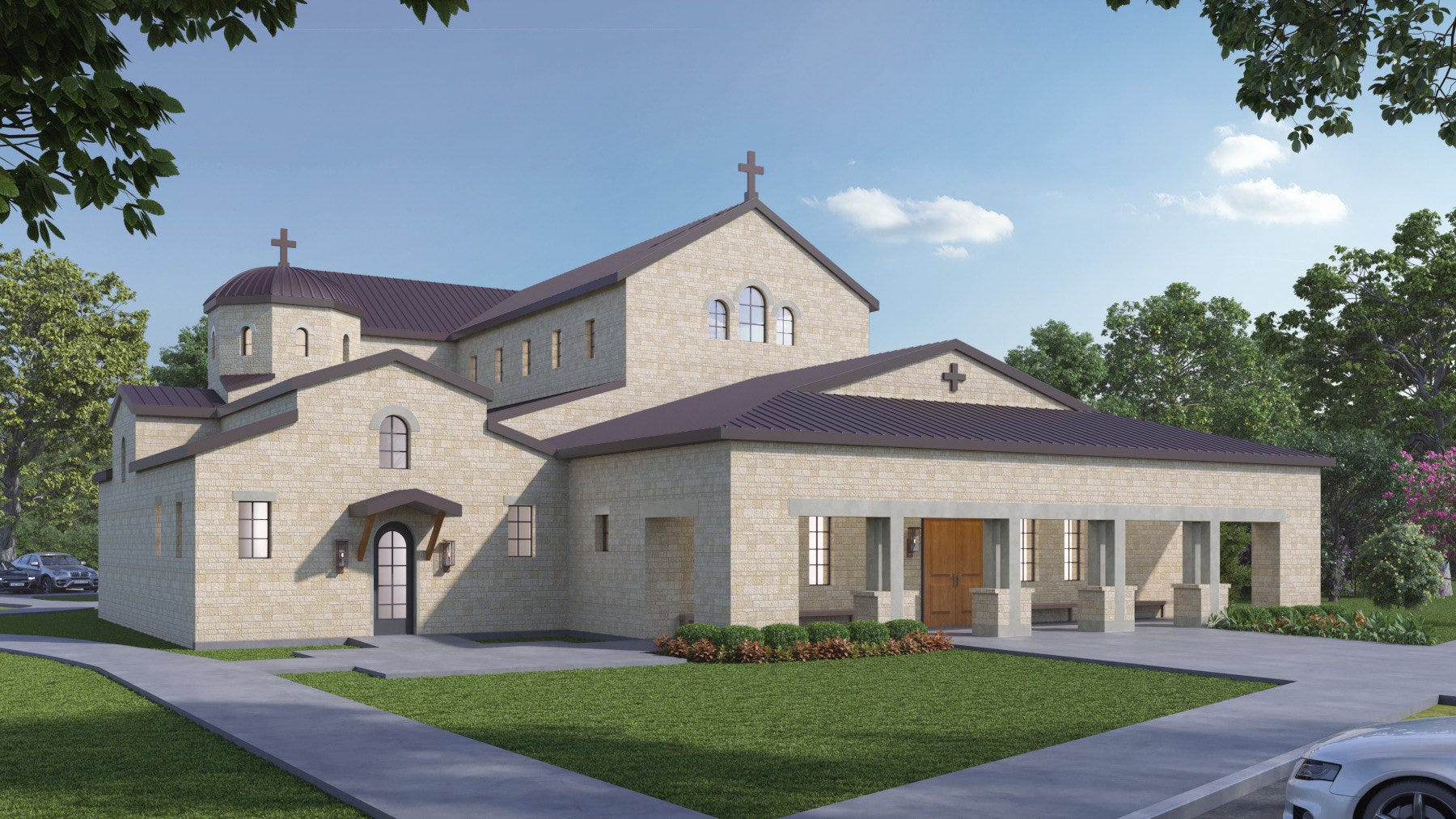
It’s a nice afternoon. Folks are starting to pick things up and gather the kids together for the ride back home.
And, while we’ve been talking about the importance of Fellowship Hour for the last several posts, I’m sure that some of you have been thinking that it’s just a whole lot of fancy words about what is basically a weekly meal.
It’s easy to look at it that way—especially if you’re trying to figure out how many tortillas you’ll need to feed 300 people. But we’ve taken several steps to make sure that we don’t fall into that kind of reductive thinking.
To begin with, before Fellowship Hour even officially gets underway, we offer a little service that’s called the Panagia. We mentioned that service in passing during our last post. Here’s how it works: During the Divine Liturgy, right after the Holy Gifts have been consecrated, the additional bread is brought, in baskets, to the Holy Table by the servers. The priest takes each basket, and, as he does so, he says, “Great is the Most Holy Trinity”; then the priest blesses the basket of bread over the Holy Table while saying, “Most Holy Theotokos, save us.”
Aside: That’s where the service gets its name—the Panagia—because panagia is a Greek word that means “all holy”, and it’s one of the titles of the Mother of God.
Monastic communities offer that same little service of blessing at their main daily meal, so, in our parish, we do the same thing at the conclusion of the Divine Liturgy and at the very beginning of Fellowship Hour: While the Post-Communion Prayers are being read, one of the priests takes a small basket of the blessed bread, and, along with all the servers, he processes into the kitchen. Along with the folks who have prepared the meal that day, he then blesses the food with the bread that has been blessed at the Holy Table, saying, “Great is the Most Holy Trinity.” And everyone responds by saying, “Most Holy Theotokos, save us.”
So, each and every Sunday, there is a concrete and tangible reminder that the fellowship that we will experience during the meal we share is sourced in the Divine Fellowship we have experienced during the Divine Liturgy.
And to further emphasize that connection, we officially wrap up Fellowship Hour the way all Orthodox folks end meals: with a blessing. Small groups from the choir fan out over the property; everyone stands, and then we sing this benediction:
So even if folks are unaware of what happens in the kitchen during the Post-Communion Prayers, they will, for sure, have the opportunity to stand and sing with the choir and be reminded that our parish community is an icon of the Divine Community of the Father, Son, and Holy Spirit and that fellowship works the same in both of those communities—it is nothing less than an “exchange of lives”.
But that dynamic is also something that guests will be able to experience. When folks participate in the Divine Liturgy for the very first time, they often come out of the service pretty disoriented. They know what they have seen and heard is beautiful and holy, but, nowadays, most folks don’t even have the language or the concepts to express what they have just witnessed. So, it helps to be able to “debrief” with people who are friendly and who remember what it’s like when they attended their first Divine Liturgy.
And, honestly, some folks are so blown away by the power of the Liturgy, they later don’t remember that they also ate a meal after the service. But that meal and that fellowship provides them with the support they need to start working their way towards the Kingdom.
Of course, not everyone who attends our services walks away happy. For example, some people disapprove of the fact that we Orthodox practice what is called ‘closed communion’. These folks insist that, since Christ Jesus eats with all sorts of folks in the Holy Gospels, we ought to admit everyone to the Holy Eucharist—and, at least in our part of the country, that’s an increasingly popular perspective among many Protestants and a good many Roman Catholics.
Our Lord and Master does, indeed, share meals with all sorts of folks, but that’s not what happens when He reveals the Mystical Supper: He is present with His Apostles, the Church. That is still what happens in the Divine Liturgy, and to fully participate in the Liturgy, folks must be united with the Church.
But explaining that distinction is a whole lot easier when we can invite folks to a meal that is the direct outgrowth of all those other gospel meals in which Christ Jesus participates. And let’s face it: it’s just easier to talk about those sorts of differences when you’re eating barbecue and drinking sweet tea.
Unfortunately, it’s also now the case that lots of folks are just hostile to the Faith. They are self-consciously oppositional in their lifestyle choices; they curate identities that invite rejection. And, from time to time, these sorts of people will show up in a parish with the expectation that they will be excluded.
Now, it’s true that some of these folks aren’t really aware of what they are doing. On the other hand, some are so mindful of what they are doing that they are prepared to document the whole experience on social media. But whatever their motivation or precise level of reflection, it’s going to be difficult for them to craft their chosen narrative if we are willing, Sunday after Sunday, to invite them to join us here on the porch for a meal.
I mean, it’s just hard to hate someone who’s offering you a Shiner Bock and a plate of hot links.
And it’s through those basic sorts of interactions that we begin to invest ourselves in others, that we start to participate in that “exchange of lives” which is the beating heart of all fellowship—both in our parish community and in the Divine Community of the Most Holy Trinity.
So we hope that you will think seriously about joining us, both in the Divine Liturgy, and out here on the porch.
If that’s not feasible, join us in prayer (Akathist for a New Temple: PDF/video), restack this post and share it with all your friends, or bump up your subscription to Paid.
You can also pick up a Come See Something Beautiful sweatshirt, commission an image of a departed pet for the Calming Room of our new temple, or make a direct donation to our temple fund.
Speaking of BBQ, we’ll wrap up this whole porch series with the final word on the subject from a good friend of Lyle’s, Mister Robert Earle Keen.
As usual. Perfect song:)