

I Like Those Arches

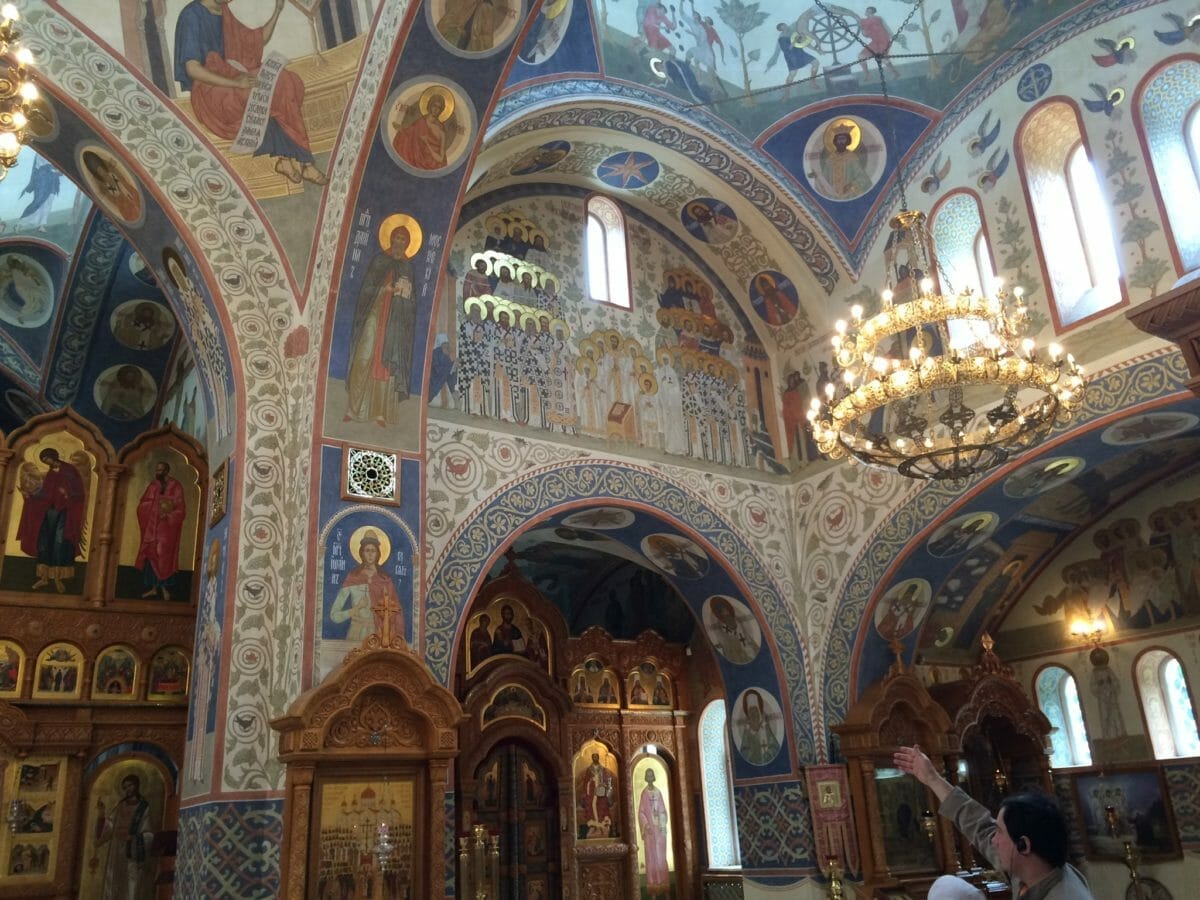
“I like those arches a lot.”
“Yeah, I think they really make the building look like a temple. Of course, they’re not really arches; they’re more like decorations.”
I was at an ecclesiastical meeting. A couple of clergymen were talking. The parish that one of those clergymen served had just wrapped up a building program, and that clergyman was proudly passing around the photos on his phone.
What struck me about that conversation was the sentence, “Of course, they’re not really arches….” Because what he was trying to explain is the fact that the arches in the temple his community had just completed were not a structural requirement.
Back before modern construction methods, arches were used to support and redistribute the weight of a structure. These features made it possible to create wide, open buildings without the use of lots and lots of pillars. But nowadays, we can put up even bigger structures with steel and reinforced concrete—and those materials are just about always cheaper than stone—so arches are no longer necessary.
So why put arches in a building when they don’t actually hold anything up?
Well, the priest said it himself: “They’re… decorations.”
In other words, we expect an Orthodox temple to look a certain way; we want that building to project a particular vibe, and so we add onion domes and gables and pillars and arches even when none of those are an essential part of the structure.
But what’s wrong with decorations?
Well, this is where it gets tricky, but I got a lot of help on this from an article by that Online Orthodox Sage, Father Stephen Freeman. In a post entitled Truth, Lies, and Icons, Father Stephen writes
“The nature of truth and lies becomes clear if they are thought of in terms of being. The Church describes God as the ‘Author of our being.’ In the writings of the Fathers, being itself, simple existence, is seen as a good thing, the first of all created good things. God brings us into existence saying, ‘It is good.’ More than that, the Fathers teach that it is God’s will that we grow towards ‘well-being,’ with the ultimately goal of ‘eternal being.’ This, in terms of existence, is the path of salvation. And this understanding reveals the nature of a lie: it has no true existence.”
Now, I’m not saying that we’re lying when we decorate our buildings with unnecessary architectural features, but think about it this way: Is a castle in a theme park real? There are actual castles in the world—in fact, there are lots and lots of them. But even though the theme park castle may feel and look like an authentic medieval fortress, it’s actually not. In fact, as Father Stephen writes, “it has no true existence.”
So, no, I don’t think we’re exactly being deceptive when we fill the nave with modulated plaster that’s designed to look like stonework, but we are pretending. I don’t think we’re being technically dishonest when we leave a hole in the roof and put a fiberglass dome over it, but we are playing make-believe.
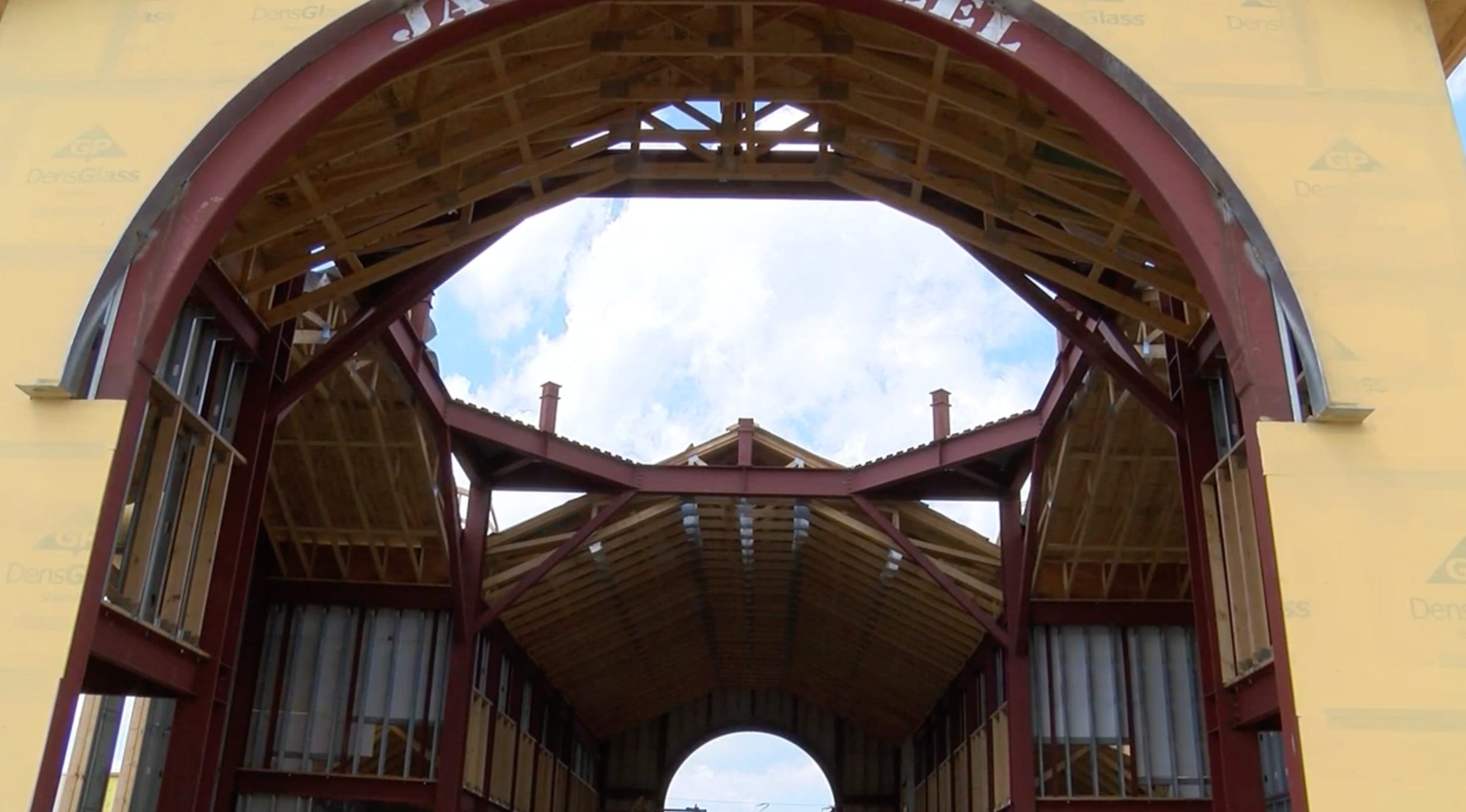
And that’s just not a good look when we’re supposed to be “the pillar and ground of the Truth” (1 Timothy 3:15).
Why, then, don’t we just build Orthodox temples that actually require all the architectural features that we like to see in those structures?
I think we all know the answers to that question.
We don’t want to take the time.
We don’t want to spend the money.
As far as the money is concerned, it does cost more to build an Orthodox temple in a traditional way—but please note that when I say ‘traditional,’ I’m not talking about dragging timber on sledges and splitting stones with wooden wedges; I’m talking about designing and building a temple in which the arches and the pillars and the domes are an integral and necessary part of the structure.
And, no, that doesn’t require an insane amount of money. The temple for which we are raising money on this Substack is going to cost between four and five million dollars, but here’s the hard truth: for that same amount of money you can put up a structure that makes use of all the tricks and all the shortcuts we’ve been talking about, and it will look a whole lot more imposing. It won’t, finally, be real, but it will look a whole lot more imposing.
But, actually, the real driver in all this is time.
It takes a good long while for most communities to raise the money for a temple. And if gathering the necessary funds is a slog, the last thing you are going to want to do is take extra time with the construction process itself.
And building a traditional Orthodox temple does not take an unreasonable amount of time. But a structure that makes exclusive use of modern construction methods and modern construction materials is just going to go up a lot faster.
But when we start using words like ‘faster’, well, that’s when our sense of zeal kicks in. We talk about how crowded our services are. We point out that we could serve so many more people in a new building. We insist that time is of the essence and that this moment, this opportunity, is unique.
We priests can get especially zealous in situations like this, but what we need to do is listen to the wisdom of an older priest. Earlier in this post, I quoted a contemporary Orthodox Sage; now I’m going to quote an ancient one. In his post, Father Stephen wrote that the “path of salvation” leads us to what is ultimately Real. Here’s what St Augustine of Hippo said about that path in a homily he offered back in the early fifth century:
“Wait, for He waits. Walk on steadfastly that you may reach the end. He will not leave that place to which you are moving.”
I think about those words every time I get to feeling zealous. And whenever I feel the need to speed things up, I remember that the Great High Priest Whom I serve is already waiting at the altar in the temple that we are going to build here in Cedar Park, Texas, because that temple is going to be Real in its every detail.
Won’t you help us with that effort? Offer the Akathist for a New Temple with us (PDF/video).
Become a paid subscriber. Donate directly to the project.
In the meantime, since we are both Waiting and Walking On, we’ll leave you with The Battlefield Band and a song about the fading of traditional ways—but notice, please, in the song (and here in Cedar Park) the boys are all headed Home.
I needed St Augustine’s words. I’m a terrible wait-er.