

Prayer
We’re thinking through the iconography for the Prothesis and the Oratory. As part of this process, we’re focusing on the activities that are going to take place in those spaces: offerings and prayer.
We focused specifically on offerings in our last post; we talked about how, when we participate in the Divine Liturgy, we don’t hold anything back; we bring all that we have and all that we are to that service. Today, we’re going to talk about how that works; we’re going to focus on prayer.
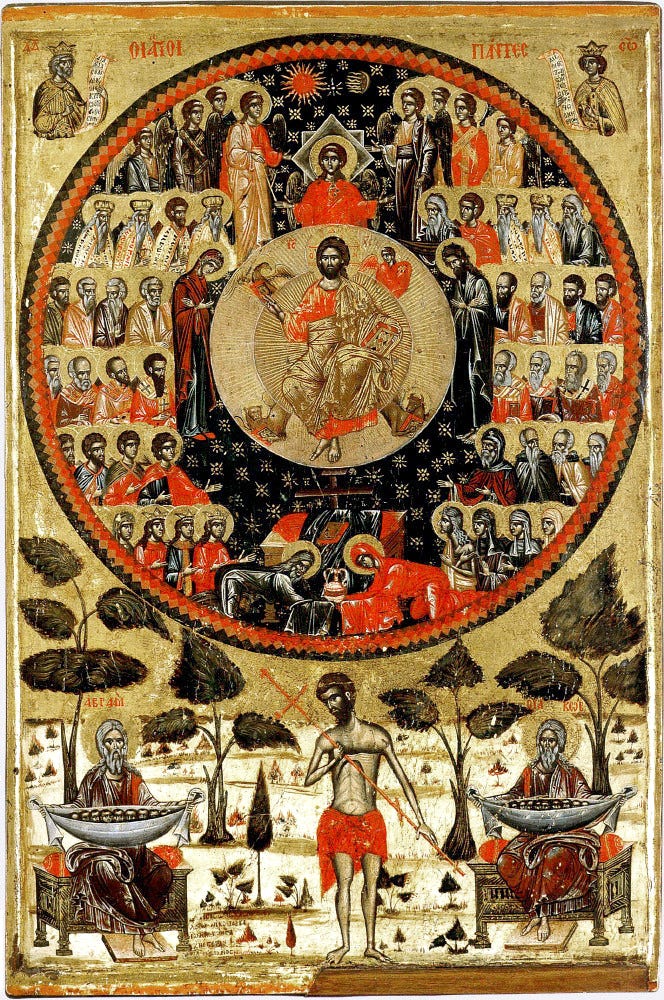
Some people regard prayer as something you do; an activity that has a beginning and an end. Others believe that prayer is kind of a vibe that you generate; a connection of which you are always, somehow, aware. But in Holy Orthodoxy, prayer is just who we are. It’s certainly something we do (and we do a lot of it), but it’s not, finally something that is external to us. It is simply Who We Are, and, for most of Orthodox Christians, that identity is formed and nurtured in the Divine Liturgy.
But, as you can imagine, it’s difficult to describe what happens in that service: You can’t really call it an experience; it’s more like entering into a specific a way of being, a particular form of existence.
When folks try to put all that into words, what they typically do is focus on the music in the Divine Liturgy—and that’s not a bad way to approach it, because, in our parish, we are blessed with an absolutely magnificent choir. Not only that, the facility in which we currently meet has amazing acoustics. So, visitors to our services report that they are just overwhelmed by the beauty of the singing.
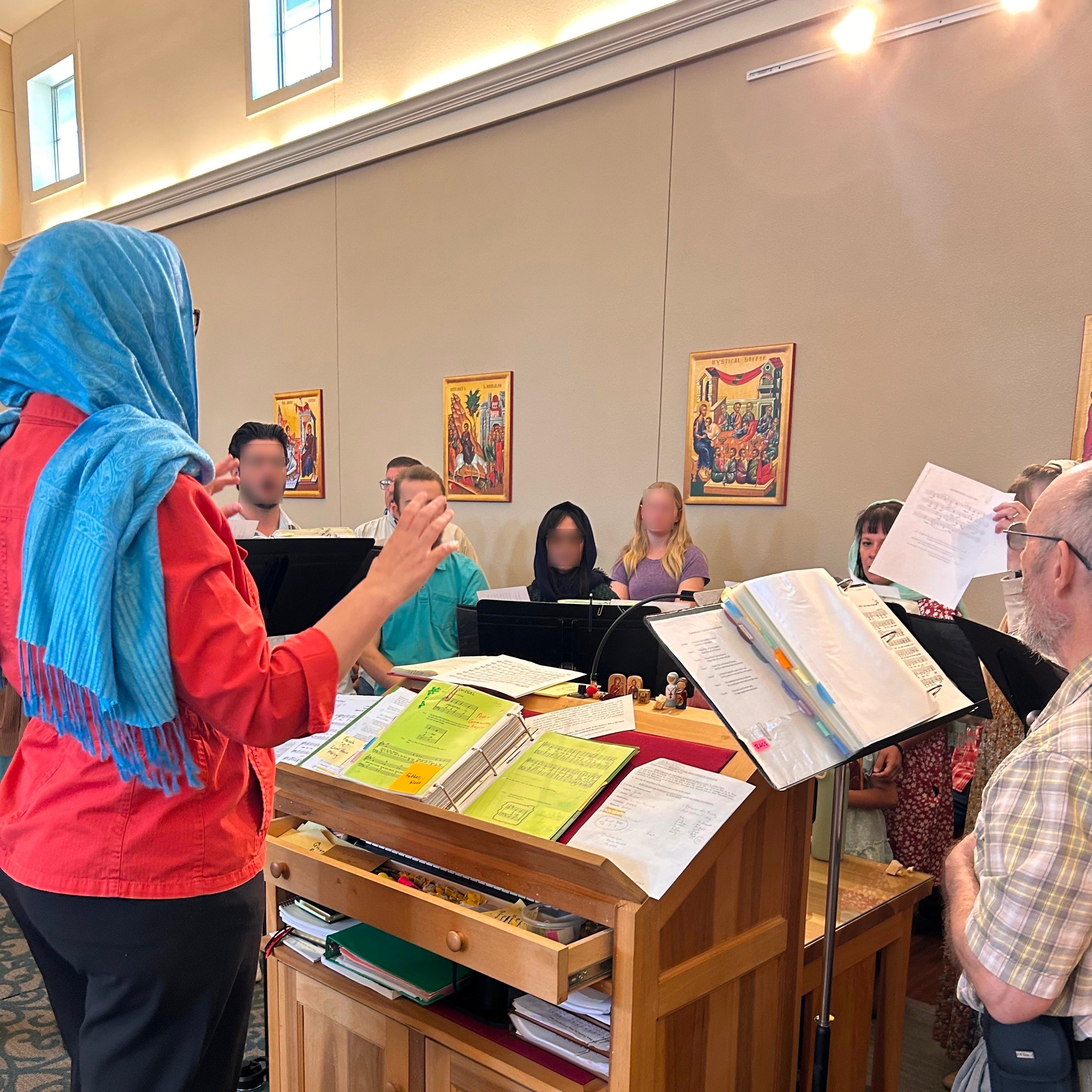
But, after they’ve been attending for a while, after they’ve learned a lot of the music themselves, something else happens: those same people report that they just feel like they are somehow inside the music, that it’s like they are part of a great instrument that’s being played by Someone Else.
Ultimately, though, it’s not the music; the music helps us enter into that specific way of being. So do the icons. So do the scripture readings and the homily. But what those people are trying to get a handle on, what they are trying to describe, is what happens when they become prayer, when they are able to offer up everything to the Most Holy Trinity and stand before the Father, Son, and Holy Spirit with a heart that is completely open.
And this goes beyond any sort of intellectual engagement. This goes way beyond any sort of emotional expression. Our minds and our feelings are essential to our humanity, but they can only take us so far, because, again, the goal is a heart that is transparent to the Source of All That is Good and True and Beautiful.
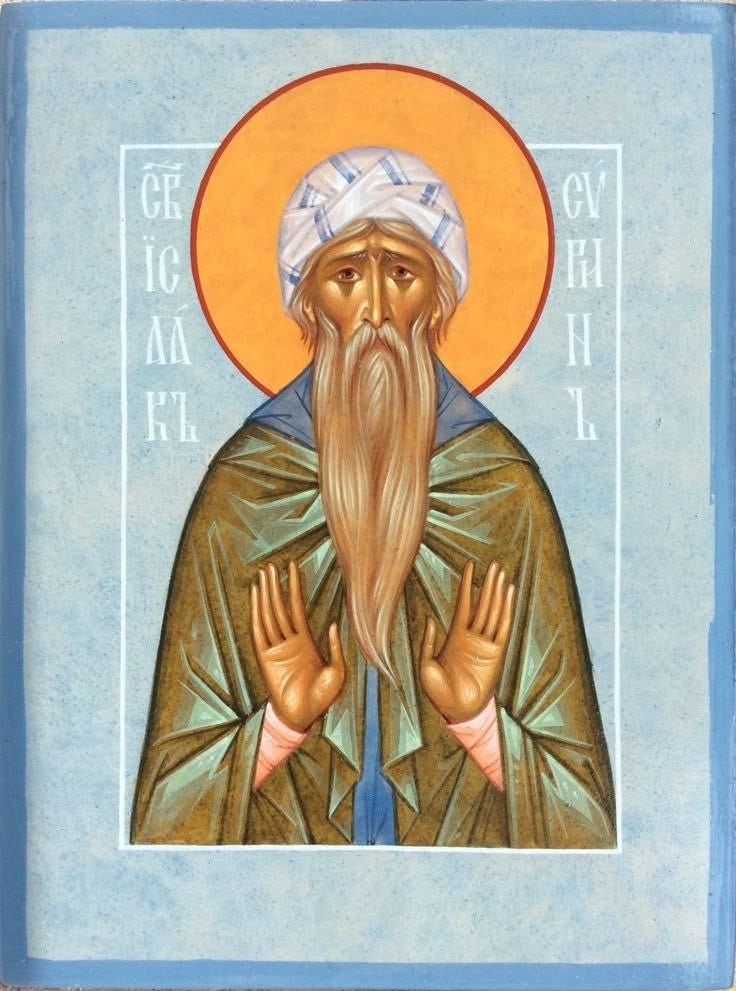
I think St Isaac the Syrian comes as close as any human can to describing what that’s like:
“When…the divine vision within his heart is raised to the sublime gate leading to the Holy of Holies, wherein is He Whose dwelling place is darkness which dims the eyes of the Seraphim and Whose brilliance awes the legions of their choirs and sheds silence upon all their orders…then he dares only to speak and pray thus, ‘May it be according to Thy will, O Lord.’” (p 350)
And, yes, that can actually happen—it happens all the time—on a Sunday morning during a crowded Divine Liturgy.
The key is preparation.
And that preparation is what will be going on in those two rooms we’re talking about: the Prothesis and the Oratory.
In the Prothesis, the clergy take the lead in this preparatory work. In that space, they offer a service called the Proskomedia. During that service the clergy get the bread and the wine ready for the Divine Liturgy; we will talk specifically about what that looks like in our next post. But what also happens in the Proskomedia is that the priests and the deacons offer prayers of intercession.
Those intercessions look different in different communities. But in our parish, the clergy pray for each and every member of our parish, both the living and the dead, and they also pray for anyone who has ever been a part of our parish. So, what that means is that, as folks in our community work throughout the week to make their own hearts transparent to the Most Holy Trinity, a foundation for that work has already been put in place, through the intercessions that the clergy offer during the Proskomedia.
The Oratory is where the people in our parish will build on that foundation. There are many different things that we Orthodox Christians do in order to prepare for the Divine Liturgy: We keep the fasting days. We keep our prayer rule. We give alms. We bring specific gifts—bread, wine, oil, flowers. We make our confession.
All of those activities will be anchored in the Oratory, and, in the coming weeks, we will walk you through each and every one of them.
And all of those activities have the same goal: to help us gradually and thoroughly empty ourselves of all that comes between us and the Most Holy Trinity, so that when we show up on Sunday morning at 10am, our hearts will be fully and completely open to the Father, Son, and Holy Spirit, and we will, ourselves, be the prayer that we offer.
It’s the original “Sunday Kind of Love”.
If that sounds like something you want to get in on—and why wouldn’t you? Join us at St John’s—or look up your nearest Orthodox parish. You can also join with us in offering the Akathist for a New Temple (PDF/video). But if what you’re reading about here is helpful to you, why not help us out by becoming a paid subscriber or purchasing a Come See Something Beautiful T-shirt or commissioning an image for the Calming Room of our new temple or making a donation to our building fund?
And since we’re talking about love on a Sunday (“not a Monday or a Tuesday…”), you know what we need to do next: So, here she is…Ladies and Gentlemen…Miss Etta James