

Altar Connection
When you’re talking about Orthodox architecture, sometimes, that’s just the only appropriate reaction.
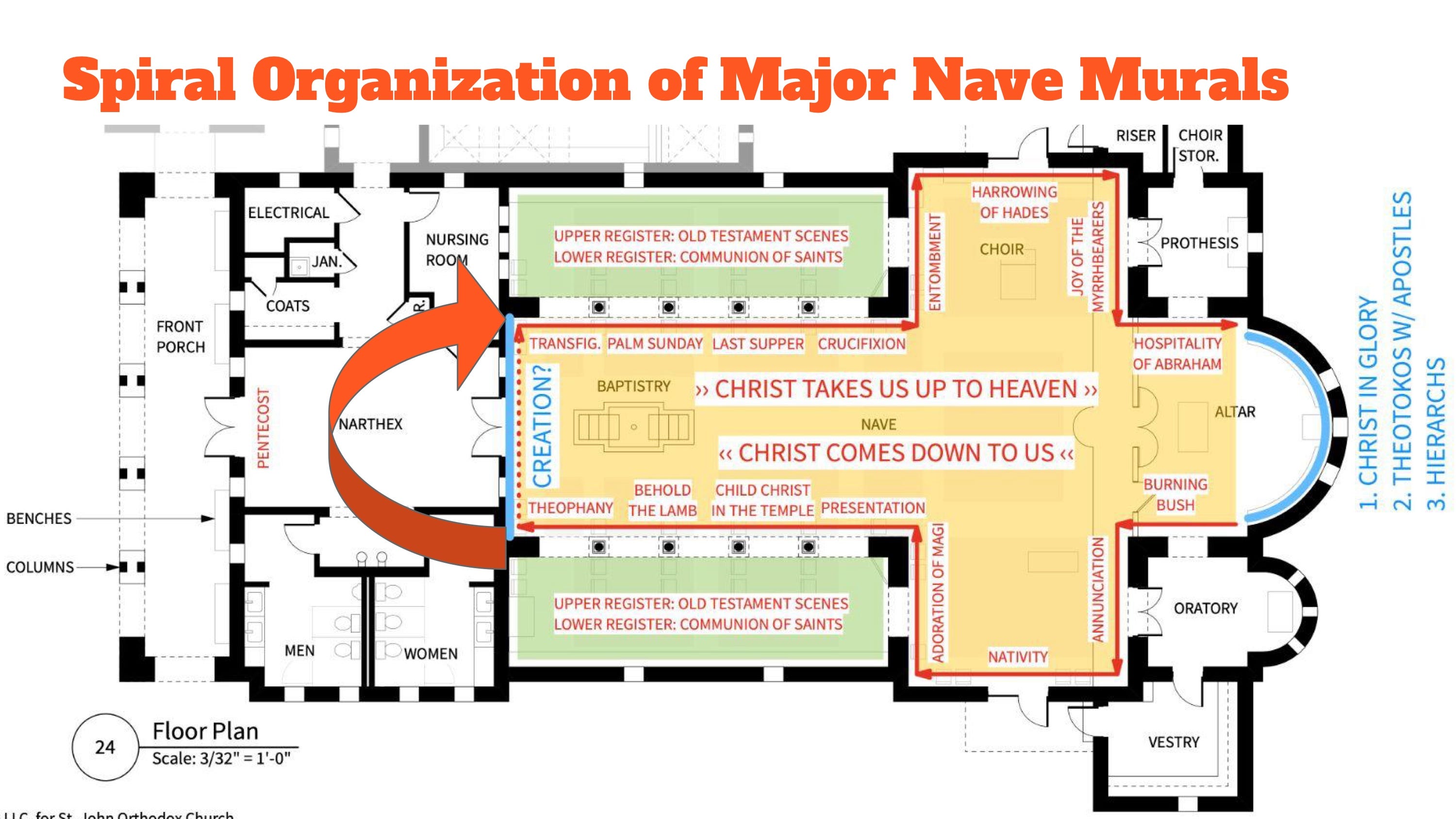
Because, for the last several posts, we’ve focused on the Prothesis and the Oratory, the two rooms that will be on either side of the Altar in our new temple.
Here’s how we summed up that discussion when we were last together: we said that everything that happens in those two rooms has the same goal: to help us gradually and thoroughly empty ourselves of all that comes between us and the love of the Most Holy Trinity, so that when we show up on Sunday morning at 10am, our hearts will be fully and completely open to the Father, Son, and Holy Spirit, and we will, ourselves, be the prayer that we offer.
Now, hopefully, if you’ve been reading Come See Something Beautiful for a while, that statement reminded you of a series of posts we put together back in December (Entering the Joyful Vision-The Apse). We were talking about the apse—how it is an icon of what our hearts will be like once they are fully healed—and here’s how we summed up that discussion:
So, when our heart becomes a Holy Place, it will not only be fully open to the Kingdom of Heaven and to everyone Who dwells in that Kingdom, it will also still be the center point of our human nature, the place where we are most truly ourselves—only the shame and the secrecy and the sorrow and the suffering will be missing. Everything else will be transfigured; everything else will be transformed.
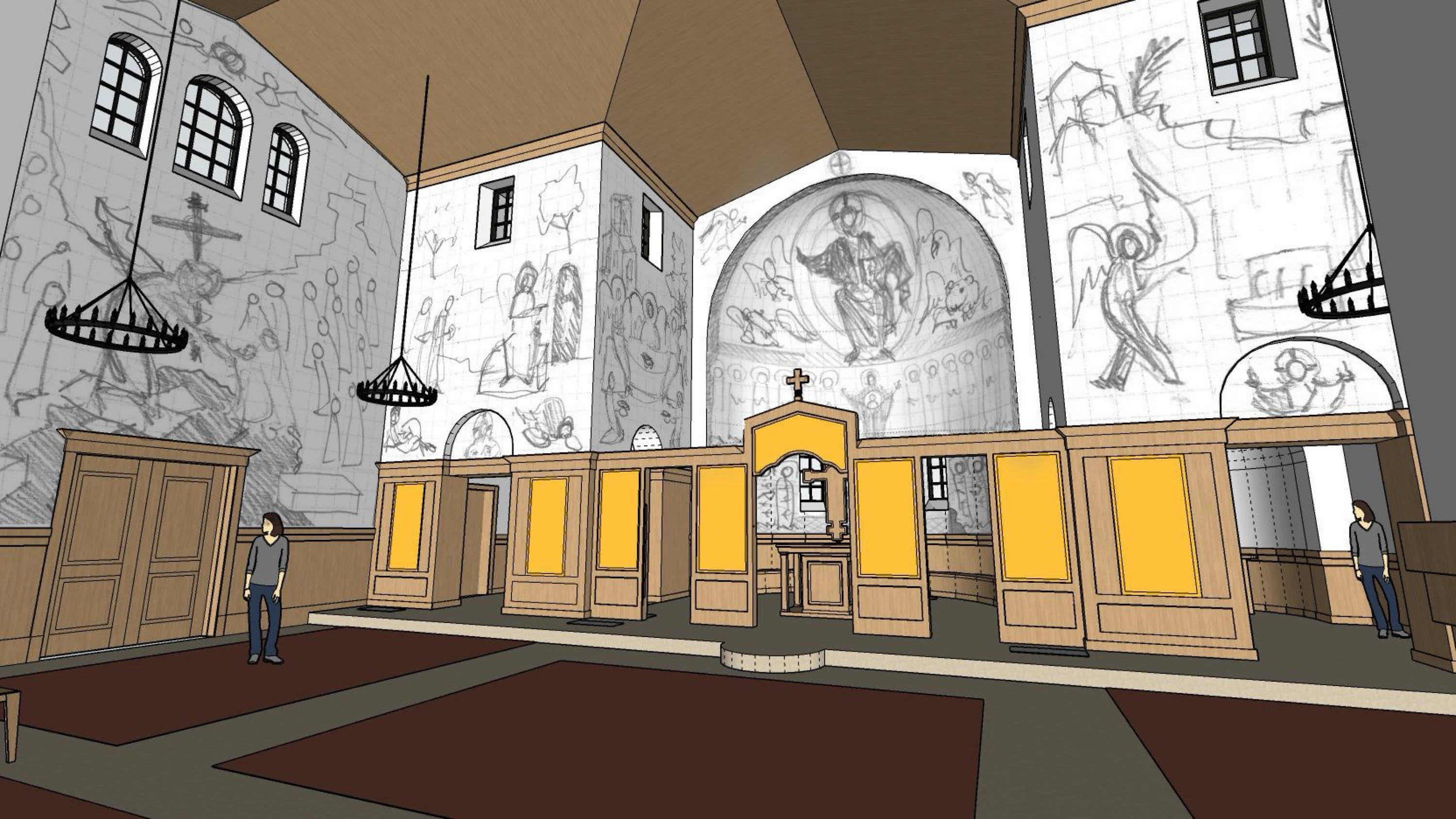
Which means the space in our new temple, which is an image of what our heart will look like once we are completely transparent to the Father, Son, and Holy Spirit, is adjacent to and enfolded by the two spaces in which we will be preparing our hearts for that transfiguration.
We’ll pause here while you do your best Jim Nabors’ imitation.
Take your time.
Pretty cool, huh?
But since we’re bringing up the direct and intimate connection between the Altar and the Prothesis and the Oratory, we probably also ought to go ahead and deal with a question that folks just about always ask at this point. There are a number of different versions of this question, but, basically, it boils down to this: “Why can’t I go in the Altar—or even see inside it?”
And, in our American context, it’s not unreasonable to wonder about that. After all, most modern worship facilities operate with the same assumptions that drive the entertainment industry: everyone must feel like they have a good seat; everyone must believe that they have a direct line-of-sight; everyone must be able to hear every single thing that is said.
So, when folks figure out that there is going to be a significant portion of our temple that they will not be able to directly access, that seems exclusive and unfriendly.
But that’s not the case, and, like everything else in the liturgical life of the Church, there are practical reasons why we have an enclosed altar and there are spiritual reasons why we have an enclosed altar.
Let’s start with the practical stuff.
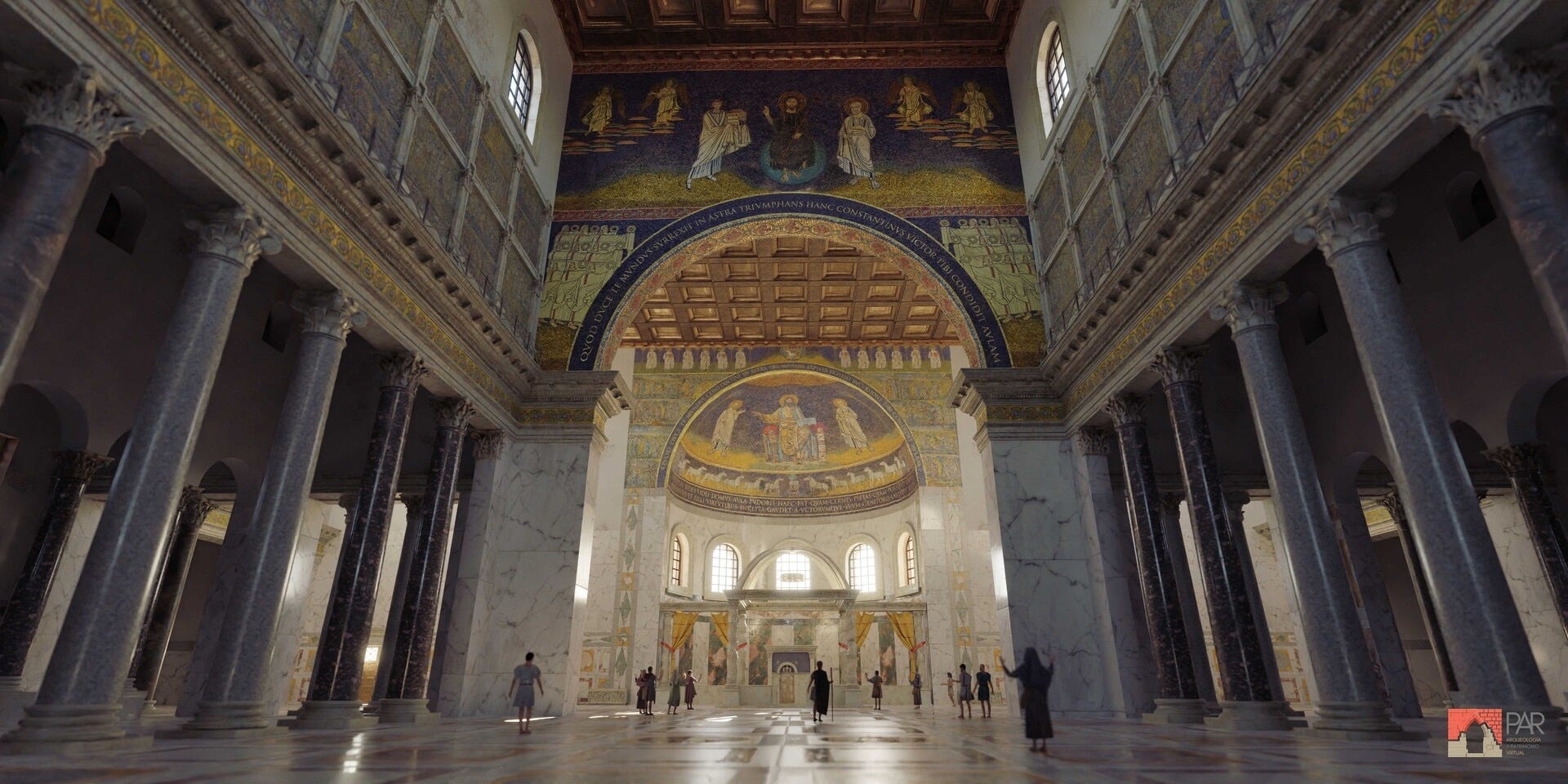
In the early centuries of the Church, what we call the Altar was almost entirely open and visible. There was generally a rail around that area, but folks could see everything that was going on.
But, eventually, the Church decided that people just really didn’t need to see everything that goes on in that space. Because, from time to time, an altar server will set his robe on fire. In just about every service, a clergyman will need to adjust his vestments in some way. Frequently, a subdeacon will spill the water that he was transporting from one point to another.
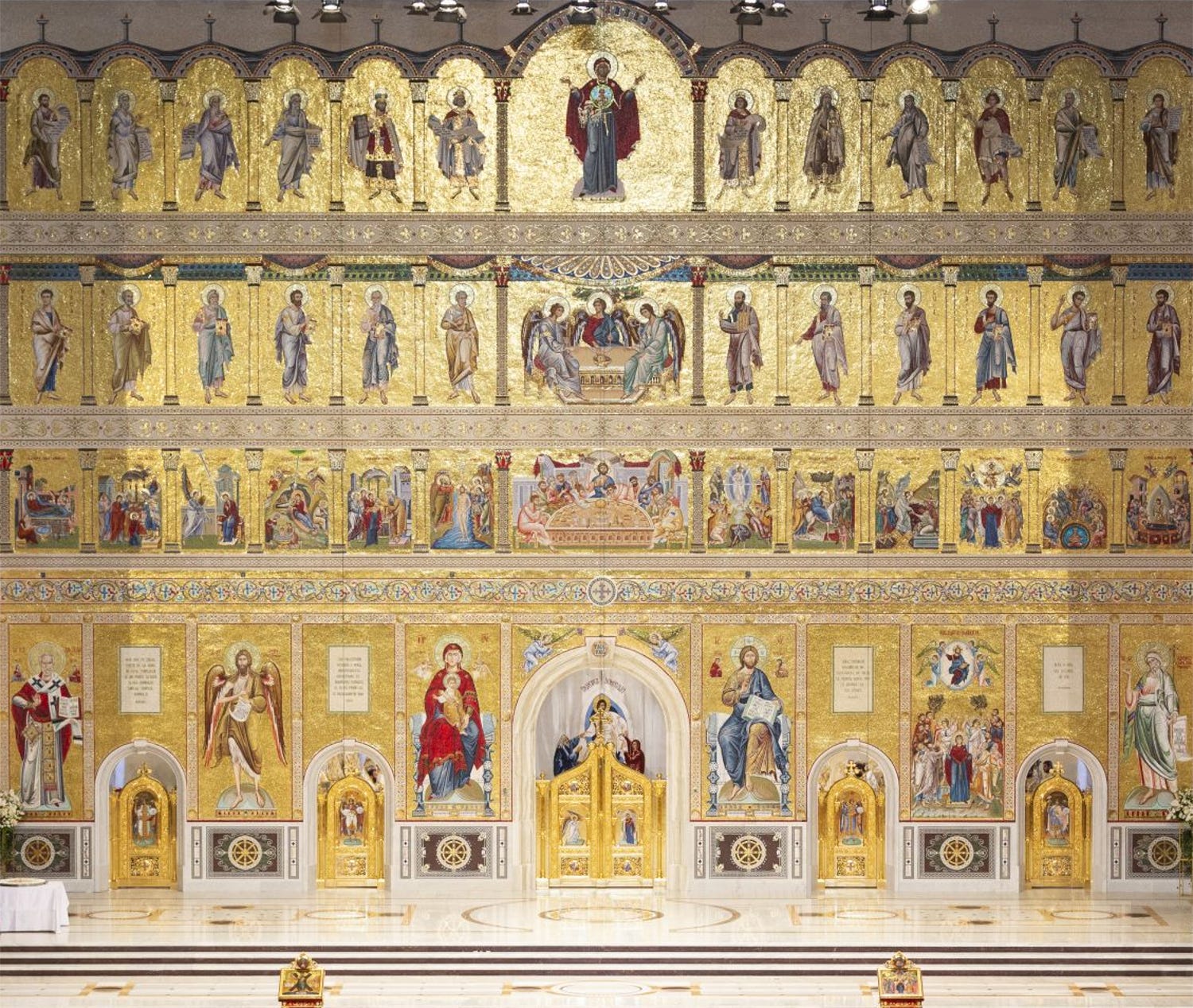
And none of that contributes to helping folks stay focused on the Father, Son, and Holy Spirit. So, the Church put a wall of icons between all that liturgical chaos and the folks who are trying to become the prayer they are offering.
Now let’s turn to the spiritual reasons.
Think about the language that we have used to describe the Altar: it is the icon of what our hearts are going to look like once they are completely open to the Most Holy Trinity. But the key word there is icon. And an icon is an image—an image that connects us to the reality it depicts, but it is not, finally, that reality.
So, the reason the Church doesn’t allow just anyone and everyone access to the Altar is because she doesn’t want us to somehow mistake that space for what is actually and truly and fully present in our hearts. And, in the final analysis, that means each and every one of us—women, men, children, folks who are neurodiverse, people who are mentally ill, all of us who struggle with psychological damage and emotional baggage, each and every one of us who are anxious and fearful and distracted and ashamed—every last one of us is able to go, not only where the priests and the deacons and the subdeacons and the altar servers go, but we can go even further.
We can enter into the Kingdom.
We can do that every Sunday morning.
We can do that from the nave or the narthex or the calming room because, as our Lord and Master, teaches, “the Kingdom of God is within you” (St Luke 20.21).
If you’d like to enter the Kingdom along with us, join us this Sunday.
But that entrance will be a whole lot more joyous in a new, beautiful temple.
Won’t you help us build that new facility?
You can join us in offering The Akathist for a New Temple (PDF/video); you can take out a paid subscription or purchase some of our Come See Something Beautiful clothing; you can commission an image in the Calming Room of our new temple, or make a direct donation to our building fund.
But since we’ve been talking about our hearts, it’s worth saying, once again, loud and clear: that entrance to the Kingdom we make on Sunday morning is open to all kinds of hearts…even (actually, especially) those that are weary.