

Standing Church
That’s how the children in a visiting family once referred to our parish. It’s a fun phrase, and the kids came up with it because we stand for most of the services and because we don’t have any fixed seating.
That particular family normally attended a congregation known as Cowboy Church. In that community, not only do folks sit for a good portion of the service, but everyone is encouraged to bring their own seating. So, the worship space is filled with old couches, recliners, rockers, and lawn chairs.
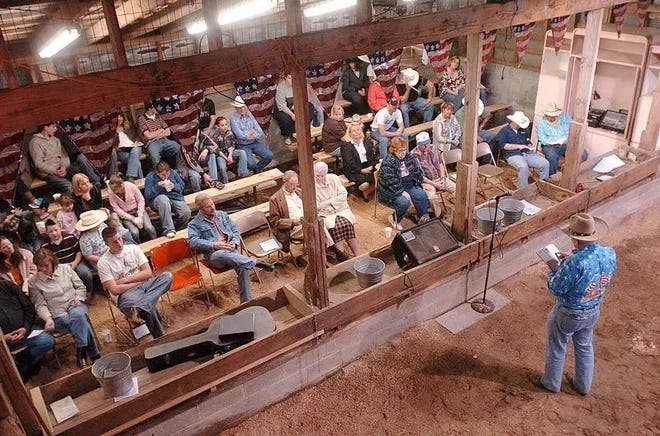
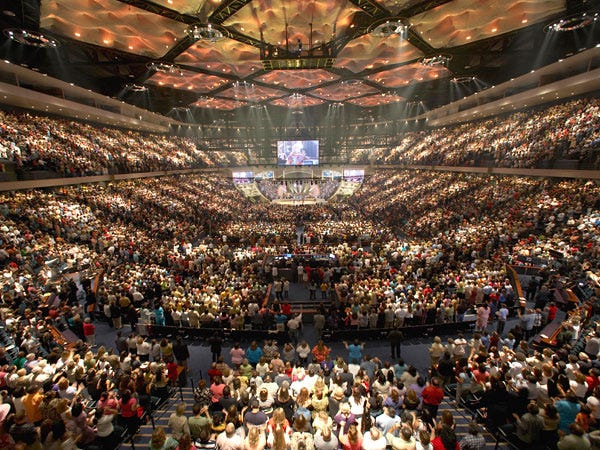
Of course, what Cowboy Church is doing is nothing new. It’s simply a Texas Take on an approach that a great many communities have been using for quite a while now. In fact, the largest congregations offer ergonomic theatre seating that features cup-holders and flip-up chair pads.
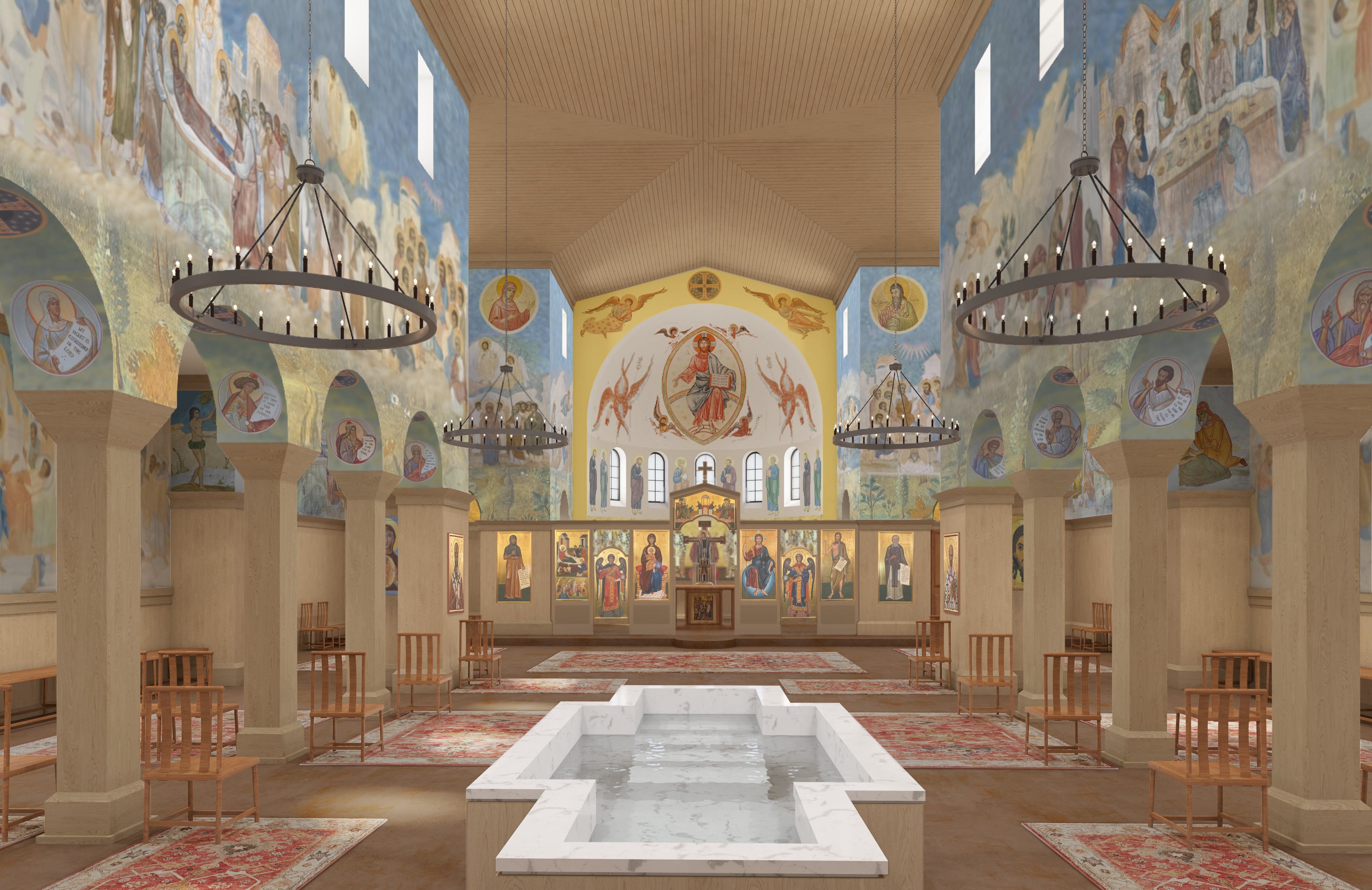
But if you’ll look at the plans for our new temple, you’ll see that, while we do have benches that run along the length of the wall, and a few chairs beside each of the pillars, most of the space in the nave is open. That’s because we will be standing throughout most of the services that will be offered there.
And there are a number of reasons for that. We’ll start with some history: The earliest Christian worship spaces did not have any fixed seating. Often there were benches along the walls, and sometimes those benches were brought out on to the floor. However, it was not until the Protestant Reformation that pews were introduced on a wide-spread basis; this appears to have been done to help people pay closer attention to the sermon.
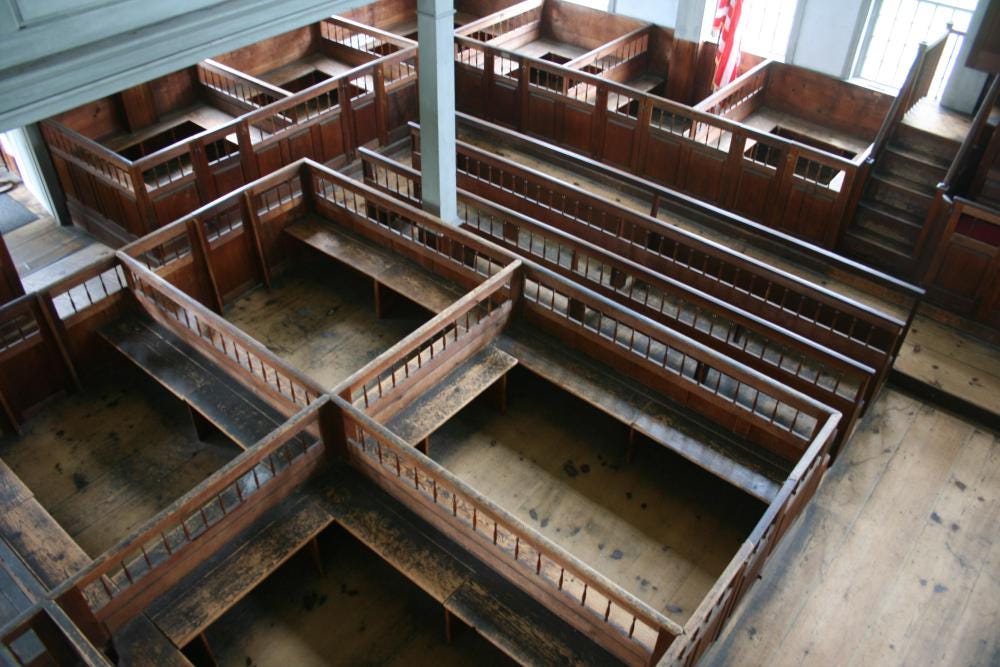
But what was a total innovation in the sixteenth century is now considered ancient in the twenty-first century. So, nowadays, if congregations have pews, they are regarded as really old-school, but, in most new worship spaces, the preference is for the sort of seating you find at a concert or a sporting event. Nevertheless, for the first fifteen hundred years of Christian worship, everybody stood during the services.
Now let’s talk about Scripture. Think about all those passages in the Bible that describe what people do during worship: in The Psalms, in Exodus and Numbers, in The Chronicles, in The Book of the Holy Prophet Isaiah, in the Book of the Holy Prophet Daniel, in The Book of the Apocalypse, people sing and move around and make prostrations, but what they don’t do is sit.
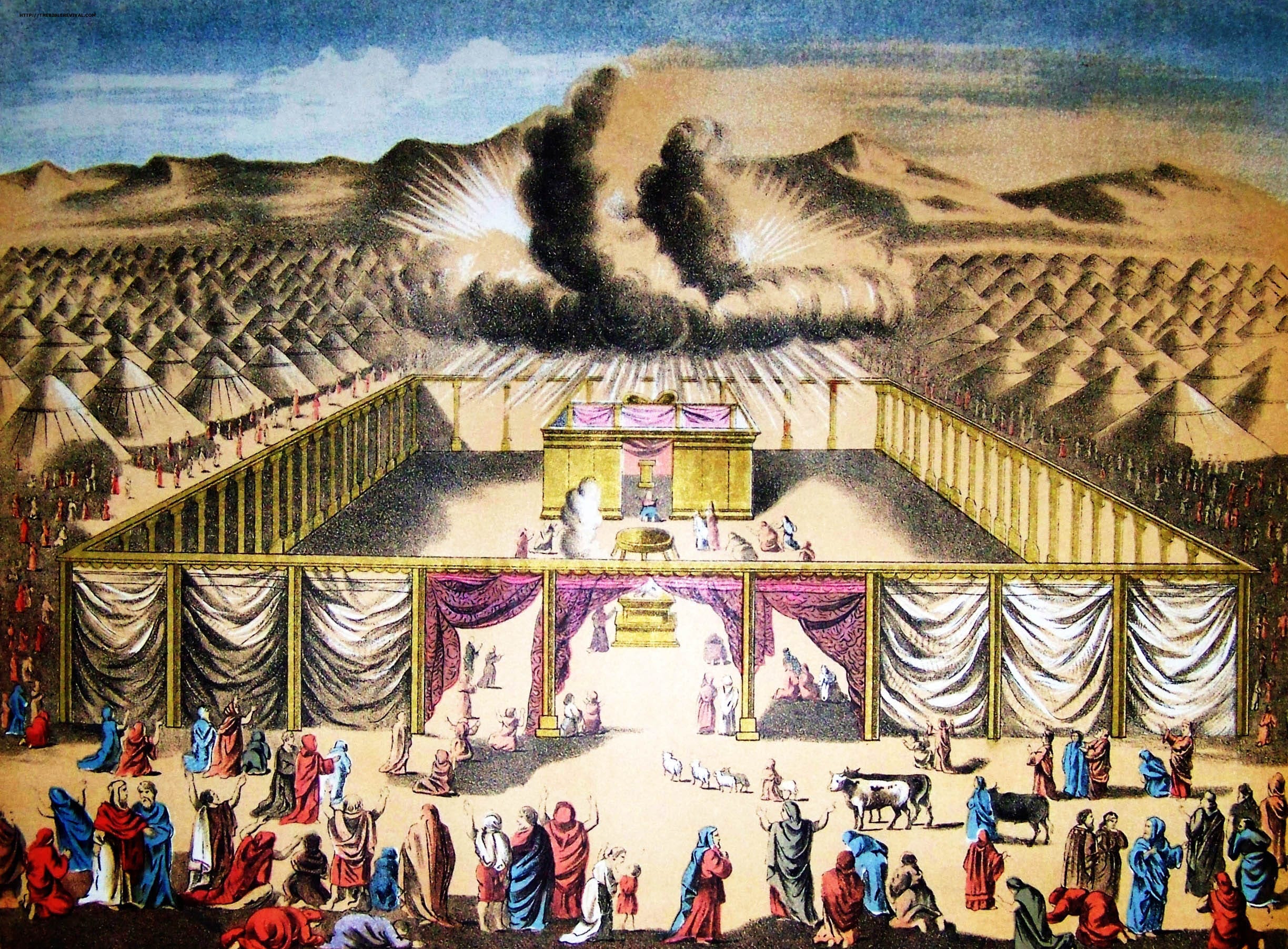

To be sure, that’s not a hard and fast rule. In Holy Scripture, there are some moments of extraordinary intimacy and particular communion when certain folks actually sit in the presence of the Most Holy Trinity. But the vast majority of people stand, because that is the posture that expresses respect and humility.
And that brings us to the spiritual dimensions of standing. If you spend much time at all on your feet—and it’s not unheard of for Orthodox Christians to wind up standing through a service that runs between two and three hours—at some point, your ankles are going to swell, your lower back is going to throb, and your knees are going to ache. That’s no fun, but it is an opportunity, an opportunity to practice something called asceticism.
Asceticism is a Greek word; it means self-discipline. But in Holy Orthodoxy, our self-discipline is always oriented towards others. So, when I’m in the second hour of a three hour Divine Liturgy, and my legs start to cramp, I offer up that discomfort for all the people I saw that week in the hospital, for all the couples that aren’t getting along, for all the folks that are unemployed, for all the young people that just can’t seem to grow up, and my body actually becomes part of my prayer, a prayer I offer with the rest of our community, in union with the intercessions of all the saints, to the Father, Son, and Holy Spirit.
So, we have good reasons for standing during worship. But I’m absolutely sure that there are folks who are going to read this post and think, “Well, yeah, but why can’t you have pews or chairs and still stand? Why put sitting and standing in such opposition to one another?”
That’s a pretty common response, but, before I get to the answer, I need to go ahead and invoke our standard Controversy Context Clarification. This is where I point out that, since the online world is such a whack-a-doodle place,
I'm not suggesting that fixed seating is part of some ecumenist, globalist, masonic, zionist conspiracy to corrupt Holy Orthodoxy.
I'm not saying that pews are demonic.
I'm not saying that the Most Holy Trinity cannot speak to us while we are sitting down.
However, I will insist that sitting and standing are two positions that are, finally, opposed to one another. That’s because sitting is the more defining posture. Thus, even if you stand for part of the service and sit down for part of the service, when you are sitting you are an audience member who is watching the service—and, therefore, even when you stand up, you are still a member of the audience; you’re just taking a little more active role in the service before you, once again, take your seat.
Sitting even has a significant impact on the design of our worship spaces. Because if we are sitting, then it becomes important for everyone to have what’s called a ‘good seat’—a clear line of sight to the service. Consequently, our temples are becoming more and more like auditoriums: pillars are avoided; corners are removed; open lines of sight are emphasized because our congregations are becoming audiences, and what audiences want, more than anything else, is ‘a good seat’.
Of course, as you can see in the plans on this site, we want to build a temple that has pillars. We want to build a temple that has corners. We want to continue to be Standing Church because that’s what we find in history and that is what we know from Holy Scripture and that is what we have confirmed in our own spiritual experience.
And we invite you to stand with us and help us build that kind of temple. In fact, we’ll spin a little R.E.M. for you while you hit that donate link, and we’ll be deeply appreciative of your generosity.
You can donate here: Give Now.
This brought back memories of my "emergent church" days. We would arrange couches in a semi-circle and the one giving a talk ("talk," generally, not "sermon," certainly not "homily") might lean against a stool in front of the TV where the PowerPoint slides would be projected. That setup wasn't about being an audience at all. In fact this "home church" arrangement was a rejection of the church-as-concert arrangement of the mega church, seen as lacking the depth of true community. The seating suggests a family sitting around talking through the Gospel together, a far cry from "when you are sitting you are an audience member who is watching the service." The difference seems to be the awesome mystery of the Eucharist. The thing uniting us is not simply a shared life, but shared participation in the Body and Blood of Christ. And how could you not stand in the presence of a miracle? It would be like staying seated at a birth or a death; like the elder brother in Rembrandt’s Return of the Prodigal Son who cannot be bothered to stand up. As Rigel points out, this is its own image of church-as-family, but in a different mode. We just save the sitting for fellowship hour!
One of the first things I noticed about visiting our church is it was hard to tell who belonged to who. There are little clusters of families and godparents, a child bolts to the front—picked up by another parishioner. A four-year-old orbits his mom, who’s holding an infant who's making eyes at an elderly man behind her—little galaxies interconnected by laughter and crying, and incense soaked in imperfect singing. It’s alive. It also kinda redefines the modern conception of “family.”