

The Oratory and Worry
We’re going to start out today with some classic Flatt and Scruggs.
What Clarence and Lester are singing about is the next kind of offering that we need to discuss: our anxieties.
We’ve been talking about how we prepare for the Divine Liturgy by making our hearts transparent to the Most Holy Trinity. We do that by offering up absolutely everything that we have and everything that we are. And, truth be told, some of the hardest things to offer to the Father, Son, and Holy Spirit are our worries.
That’s because our anxieties pretty much define us: We stress over our jobs. We are fearful about the future. We lose sleep over our children. We get worked up about our health. We obsess over conflicts.
And all that anxiety drives us to do all sorts of crazy stuff: We exercise too much. We become workaholics. We lose ourselves in video games or sports or politics. We eat (a lot). We drink (way too much). We take drugs. We look at porn.
So you’d think we’d be looking for a way to offload that anxiety, but our worries are so much a part of us, we are so completely invested in them, that, apart from our cares and concerns, we just really aren’t sure who we would be or what our life might look like.
But if we are going to come before the Father, Son, and Holy Spirit with absolutely open hearts, then we need to be able to offer up our anxiety.
That’s where the Oratory comes in.
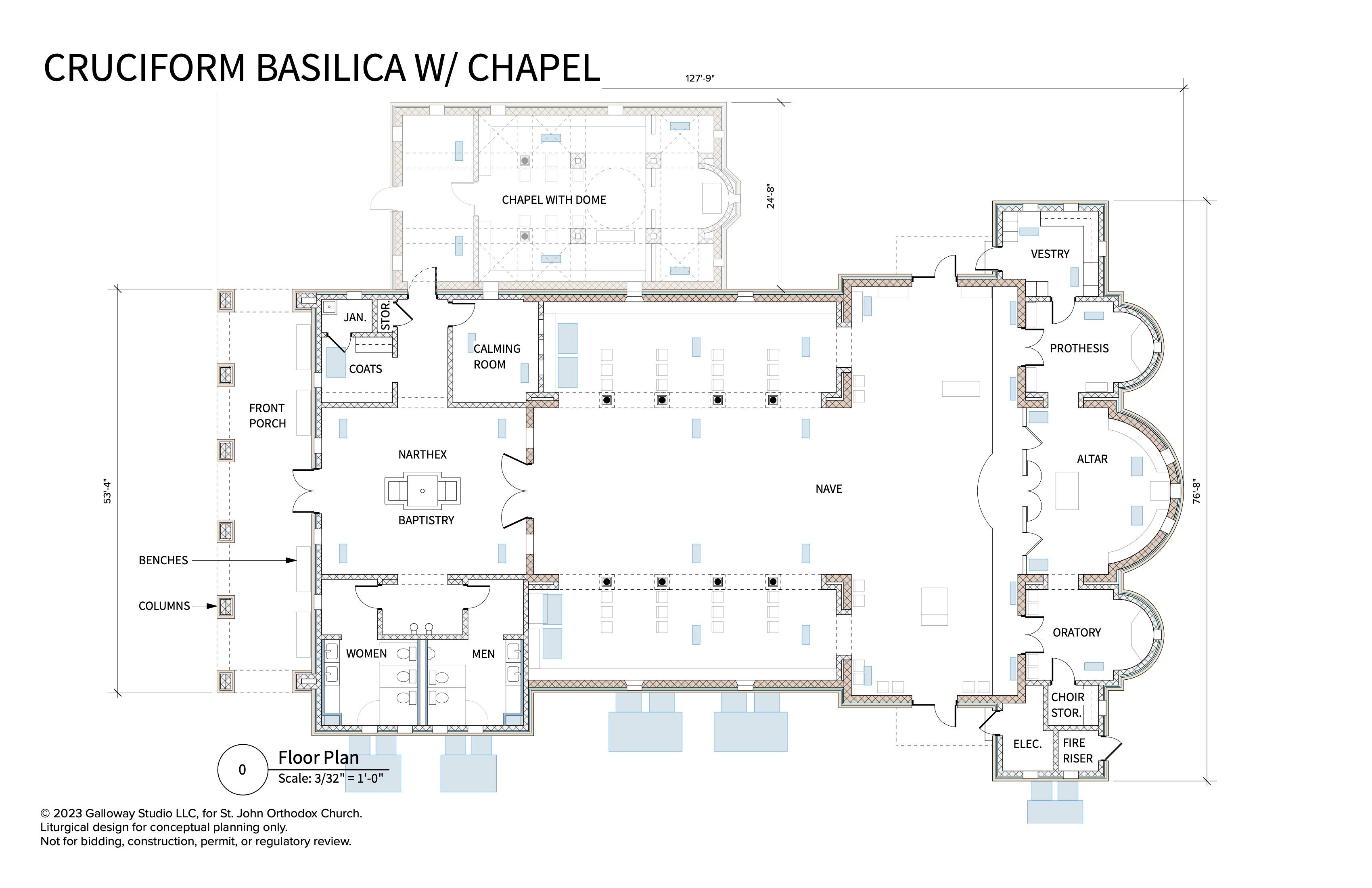
The Oratory is a room in our new temple. We’ve been talking about it for a couple of weeks now because it’s one of the rooms that we will use to prepare for the Divine Liturgy. And the way we will offer up our worries in that room is by reading different akathists.
Yes, akathist is a Greek word; it means “not sitting”; that’s because an akathist is a long hymn, and when we sing that hymn—or read through it—we stand. There are lots and lots of different akathists, but the two that are most popular in our parish community are The Akathist to the Mother of God, Nurturer of Children and The Akathist to the Mother of God, The Inexhaustible Cup.
The Akathist to the Mother of God, The Nurturer of Children is a hymn that is offered to the Father, Son, and Holy Spirit for children or stepchildren or grandchildren or godchildren. Here’s one of the stanzas of that hymn
Having seen our diligent supplication rising like incense to Thy glory, turn not Thy face away from our children, though they turn away from Thee, but all the more, hear the cry of our lips, singing to Thee:
Raise our children to be poor in spirit, that they May inherit the Kingdom of Heaven.
Raise our children to weep, that they may be comforted.
Raise our children to be meek, that they may inherit the earth.
Raise our children to hunger and thirst after righteousness, that they may be filled.
Raise our children to be merciful, that they may obtain mercy.
Raise our children to be pure in heart, that they may see God.
Raise our children to be peacemakers, that they may be called the sons of God.
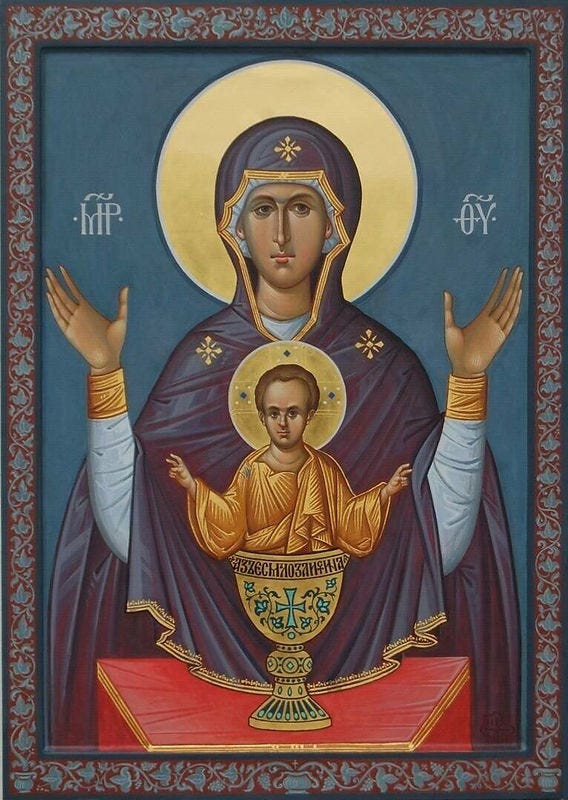
The Akathist to the Mother of God, The Inexhaustible Cup is a hymn that is offered to the Most Holy Trinity for folks who struggle with any sort of addictive behavior. Here’s one of the stanzas of that hymn
Upon seeing the sorrow and tears of parents, spouses and children whose family member is possessed by the passion of addiction, the Lord gave us your icon, O Theotokos. All that come to it receive consolation and spiritual joy. We therefore cry out to you with tears of gratitude:
Rejoice, lamb, for you gave birth to the Lamb of God.
Rejoice, ladle who draws up joy from the source of immortality.
Rejoice, alleviation of the grief of sorrowing mothers.
Rejoice, abundant hope of the hopeless.
Rejoice, for you compassionately bestow joy upon those in grief.
Rejoice, for you graciously protect those that show you reverence.
Rejoice, for your helping hand is there for those that seek it.
Rejoice, for your heavenly protection shelters mortals in distress.
Rejoice, Theotokos, the Inexhaustible Cup who quenches our spiritual thirst.
Again, there are other akathists that folks use—if someone is going through treatment for cancer or any other life-threatening illness, if a couple is dealing with infertility—and, right now, people will get together and read through those hymns wherever they can find a corner on the property. But, in our new temple, they will be able to offer those akathists in the Oratory.
Now, eventually, we do hope that we will have a chapel connected to our temple, and that space could most certainly be used for an akathist. But when you have a parish like ours—a community where folks really do take their prayers seriously—then it’s often the case that, on a Sunday morning, several different groups can be looking for a room in which to read one of those hymns.
And, notice: Here at St John’s, this is community work. This is something we all do together. We don’t try to face down our anxieties all on our own; we deal with them as brothers and sisters, and we offer them, as a parish, to the Father, Son, and Holy Spirit.
So, ultimately, this isn’t about logistics or space utilization. It’s about preparing our hearts to come before the Most Holy Trinity, and a key to that preparation is being able to offer up all our worries and all our fears.
That’s why we need the Oratory.
But to make that room—and the rest of the temple—a reality, we, for sure, need your help. Because getting all that built is also going to be community work.
So won’t you join with us?
Join us in offering the Akathist for a New Temple (PDF/video). Upgrade your subscription to paid. Pick up some of our Come See Something Beautiful merchandise. Commission an image of a departed pet for the Calming Room of our new temple. Make a direct donation to our Building Fund.
And, on the subject of worry, we’ll sign off with something just a little more contemporary: Mr. George Ezra