

Cars I
Yep, that’s our hometown: Austin, Texas.
And as much fun as we had traveling from Pascha to Pentecost, who are we kidding? When it comes to life on the road, that clip from the last century is still pretty accurate.
Which means we need to talk about our vehicles and our parish community.
And admit it: You’ve been wondering about that, haven’t you?
In fact, for quite a while now, you’ve been thinking to yourself, “Hey, these folks talk a pretty good game—all that stuff about being Greener Than Oz and taking care of the trees and remembering departed animals and processing with big lizards—but I’ll bet they drive just as much as the rest of us.”
And, of course, you’re not wrong. In fact, here in the Lone Star State, we probably drive more than most folks.
And, like most people, we Orthodox are pretty conflicted about all that.
Some of us are just adamantly opposed to automobiles and automotive culture. These are the people who champion public transportation and cycling and walking. And not only is the greater Austin community actually supportive of these sorts of approaches, a lot of folks in our community have intentionally purchased homes within walking (or biking) distance of our parish.
On the other hand, some of us view any discomfort with or opposition to automotive culture as simply an expression of climate hysteria.
This is Texas, after all.
But, truth be told, the vast majority of us Orthodox are just like everyone else: we fall somewhere in between those two poles. We acknowledge the very real problems that automobiles and automotive culture generate, but we don’t think that there’s any sort of actual, practical solution to those problems.
Here’s the real kicker: since most of us are highly conflicted about this whole topic, we just don’t talk about it much.
I mean, after all, it’s one thing to do the whole Ron Livingston Thing and spend a significant amount of time each day in the car or the truck traveling to and from work. That’s tiring; that’s frustrating, and it might, from time to time, make us feel just a bit guilty, but—hey, you gotta make a living, right?
But driving long distances to participate in the Divine Services… that’s something else.
Because we are the High Priests of the Creation. When we stand in the presence of the Most Holy Trinity, we are doing so on behalf of the entire natural world. That means we are leading the Baobab Trees and the Puffins and the Sakura blossoms and the Prairie Dogs in worship.
But if we have to degrade and deface and, possibly even, destroy, the world in order to do that work, then you have to wonder about the entire project.
Paul Kingsnorth has actually helped us with this issue.
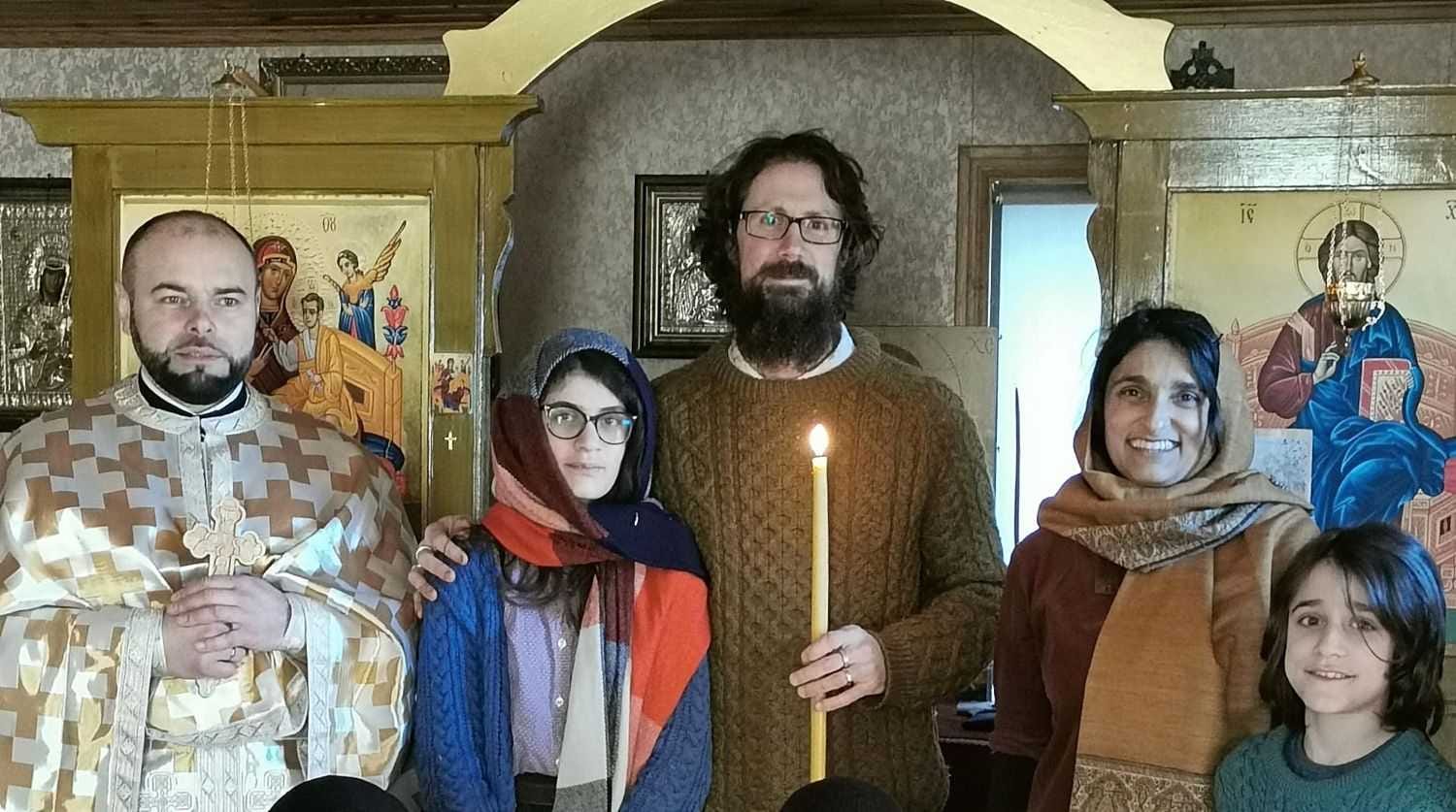
We posted an Open Letter to him some time back (and we’d still like to hear from you, Mr. Kingsnorth!)— but in his “Dark Mountain Manifesto” he does a good job of identifying what we’re really up against.
We hope that vast and deeply entrenched vest interests, ‘fossil-fuel conglomerates; loggers; automobile corporations; the ‘military-industrial complex’; political parties; unions; all the wide and winding alleys of a global economy built on cheap fossil energy’ can somehow be overcome in a very short time. We hope that an economy built on the need for constant growth can be somehow reattuned, also in a very short time, into some kind of fluffy, harmless, ‘steady-state’ system. We hope that this is possible in a world with a rapidly-expanding human population with rapidly-expanding appetites; appetites which need to keep expanding in order to keep that economy on the rails.
We hope that the ‘consumers’ of the rich world—that’s us—will be prepared to make radical changes to their lifestyles; either through personal choice or because their governments will force them to. This requires us also to hope that democracies which are predicated on giving their voters what they want, and promising more of it, will suddenly be able to turn around and tell them they must want less of everything.
In other words, this particular issue is inextricably connected with a whole lot of other issues, and that entire complex of issues is so integrated and so vast there are just no ready solutions.
At least, our culture has none to offer.
But Mr. Kingsnorth was received into Holy Orthodoxy a while back, and, apparently, it was because he realized that, while the Church does not offer solutions, it does offer the only realistic approach to these sorts of intractable problems.
And, believe it or not, that approach is liturgical.
That’s right.
That priestly job we feel guilty driving to? We need to keep doing it.
In fact, it’s the only way forward.
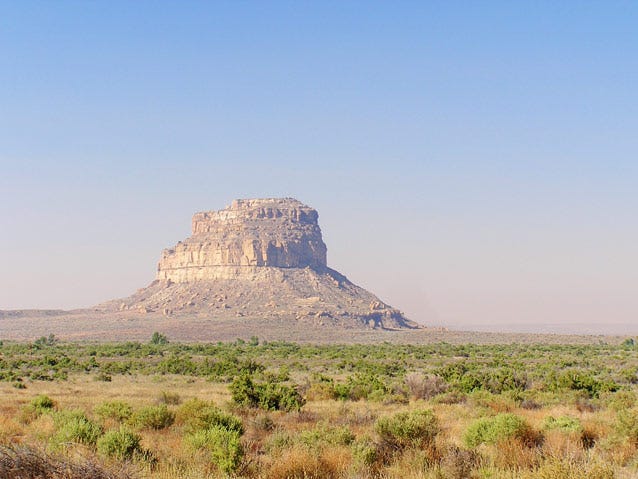
The European Seabass and the Pink River Dolphins and the Blue Russian Diopsidite and the Colorado Plateau are depending on us.
So, what does that even mean? What does that even look like?
We’ll cover that in the next post. Right now, we’ll just put on the Fab Four (“beep-beep-beep-beep-yeah”).
And while you’re singing along, why not also download the Akathist for a New Temple and offer it with us each week (PDF/video)? You can also kick your subscription up a notch to Paid. You can buy one of our Come See Something Beautiful T-shirts, commission an image for the Calming Room of our new temple, and even donate directly to our building fund.
Don’t forget the Typica communities! We’re driving to another city every time we attend liturgy. And sometimes I still drive to liturgy on Typica days.