

Yes, We Have Transepts
Here at Come See Something Beautiful, we have really alert readers.
And, during our recent postings about the history of the Basilica Design, and how we are using that design in our new temple, one of those alert readers asked a question:
“Aren’t you actually going to be building a Cruciform Basilica? That’s what it says on the Plans for Our Temple section of the Substack.”
And, of course, that’s exactly what it says:
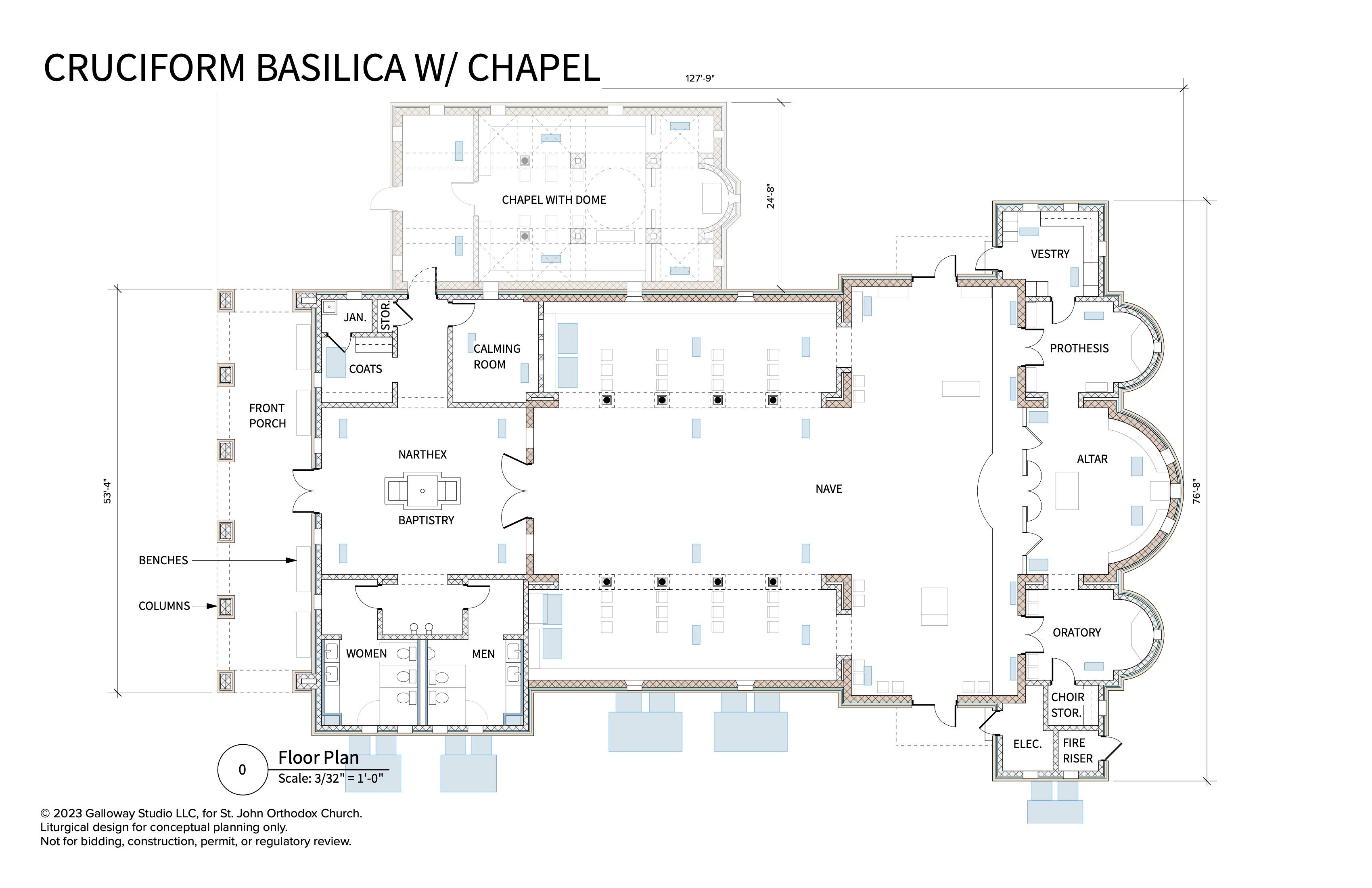
So, now, you’re probably wondering about the difference between a cruciform basilica and a regular basilica.
Well, it all boils down to a feature called a transept.
A transept is a bay on either side of the nave; these bays are oriented transversely to the nave, giving the entire area a cruciform—or cross-like—shape.
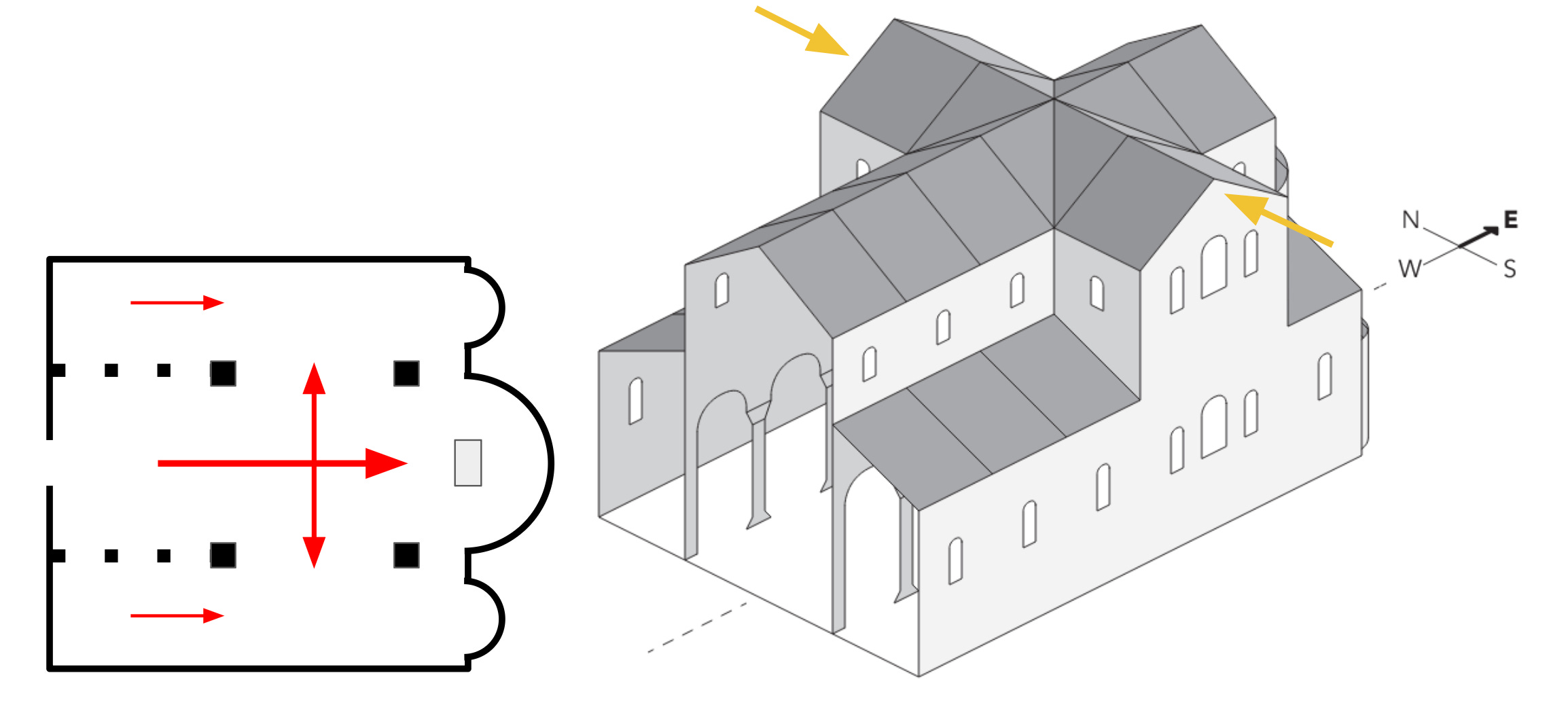
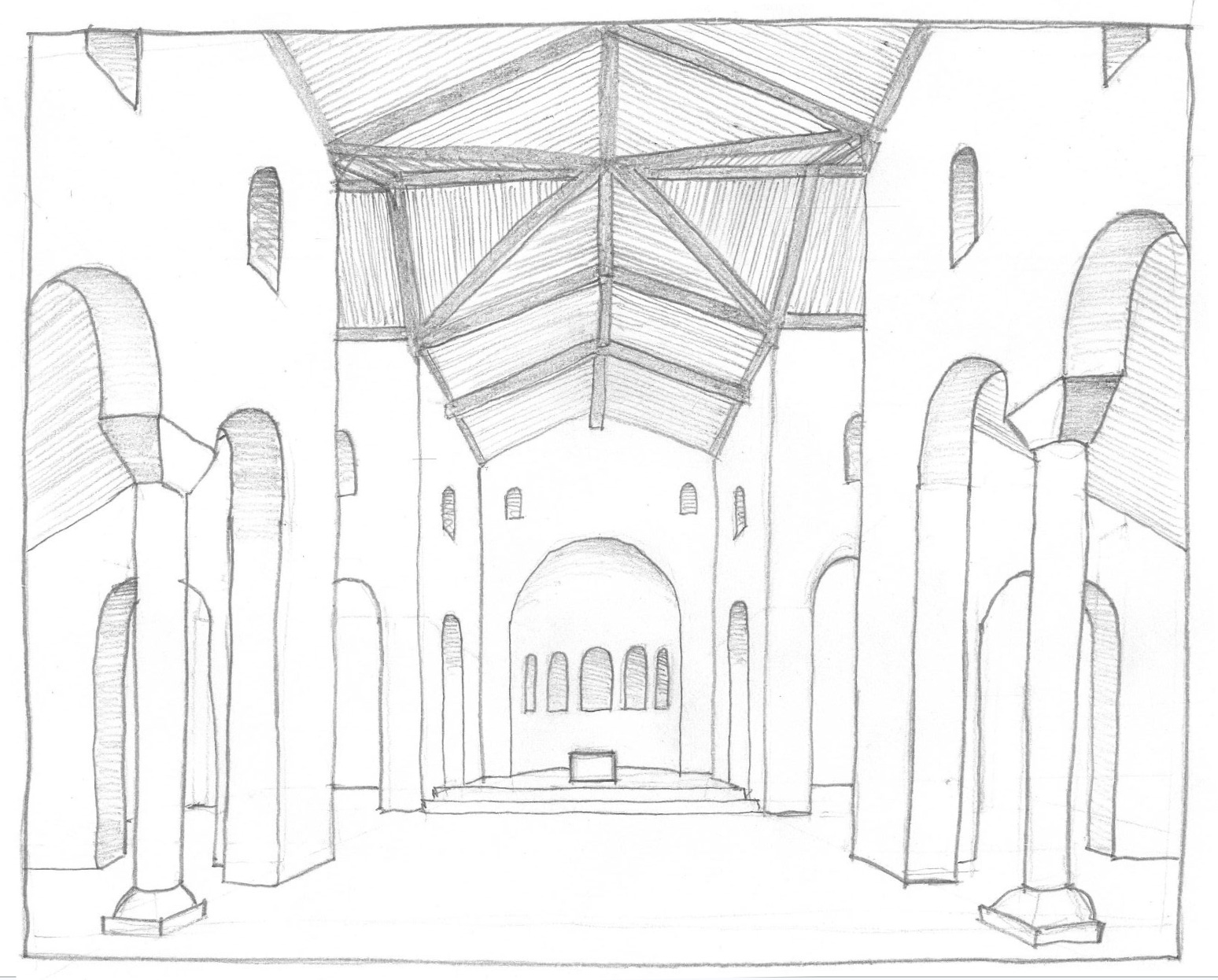
And, actually, it is this addition to the Basilica Design which made the model distinctly Christian.
If you’ll remember, the basilica was originally just a generic Roman administrative complex, but adding the transepts signed the model with the same symbol that we Orthodox Christians use numerous times a day—the same symbol that we wear around our necks, the same symbol that was made on our bodies when we were received into the Church.
Historically, transepts have been used for all sorts of things: depending on the size of the building, those bays can function as side chapels or as reserved seating for dignitaries of various kinds. Nowadays, transepts are often occupied by a communities’ musicians: the choir is set up on one side of the nave; the chanters do their work on the other side of the nave.
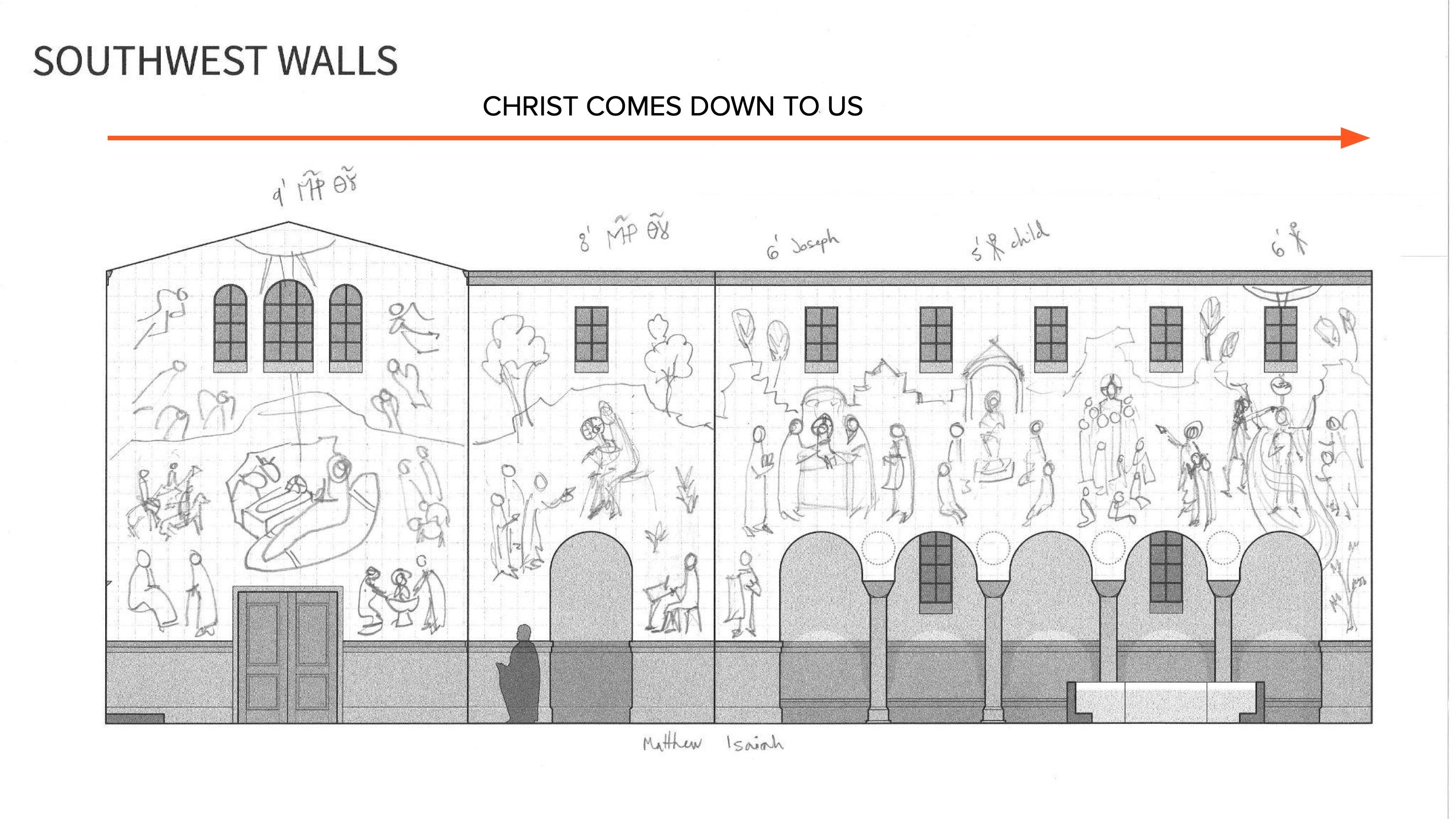
But transepts also have an important iconographic function. These bays make it possible to gather together and develop particular iconographic themes. For example, we’ve shared this particular graphic before, but it shows the images that will be used in the transepts in our new temple:
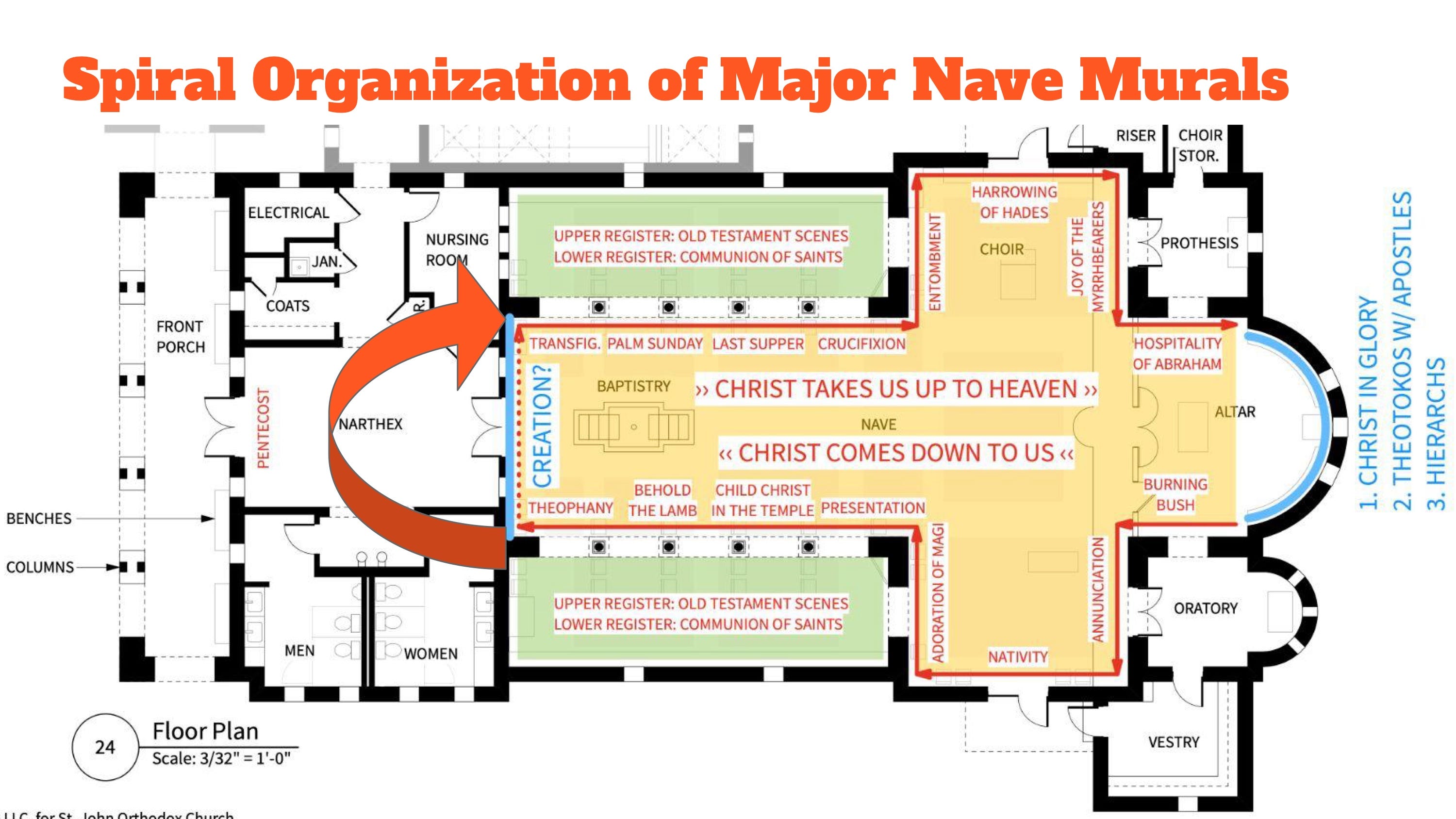
On the south—or right—side of the nave, the transept will feature murals that focus on the Birth of our Lord and Master: The Annunciation, The Nativity, The Adoration of the Magi:
On the north—or left—side of the nave, the transept will feature murals that focus on the Passion of our Lord and Master: The Burial, The Descent into Hell, The Adoration of the Myrrh-Bearing Women:
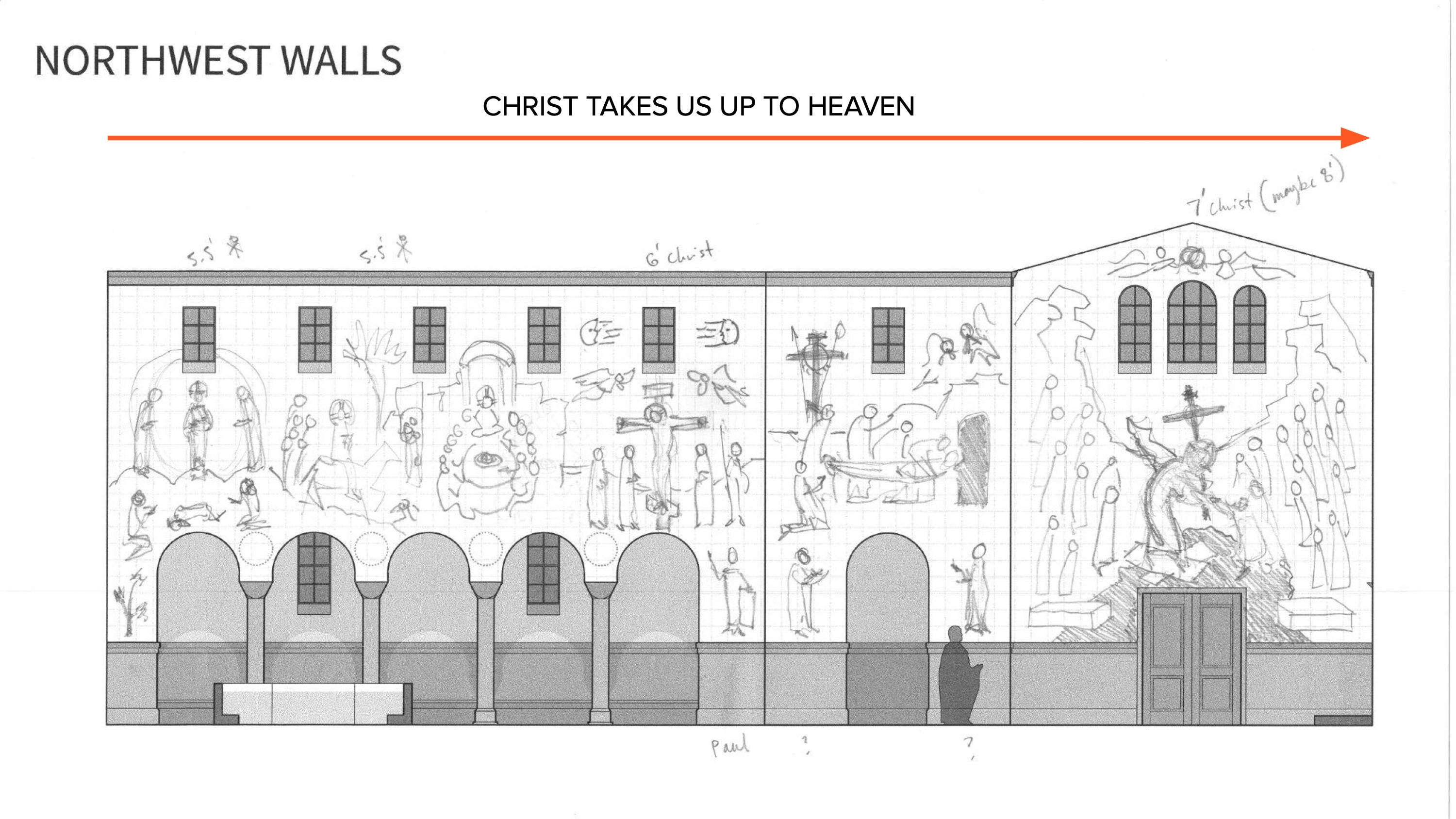
So, these bays will highlight some of the most decisive and the most dramatic episodes of The Incarnation: The Birth and The Passion of Christ Jesus.
But the folks who read this Substack aren’t just observant; they’re also very, very practical, so, right now, a lot of you are thinking something along these lines:
“OK. Transepts. Check. Long history with this sort of design. Got it. But really: Who’s going to stand in the middle of that building and look back and forth at the images on both sides of that long structure? You would just end up feeling silly, and your neck will give out. If anything, everyone’s going to be focused up front—that’s where the action is, after all—so why not concentrate the iconography in that part of the complex?”
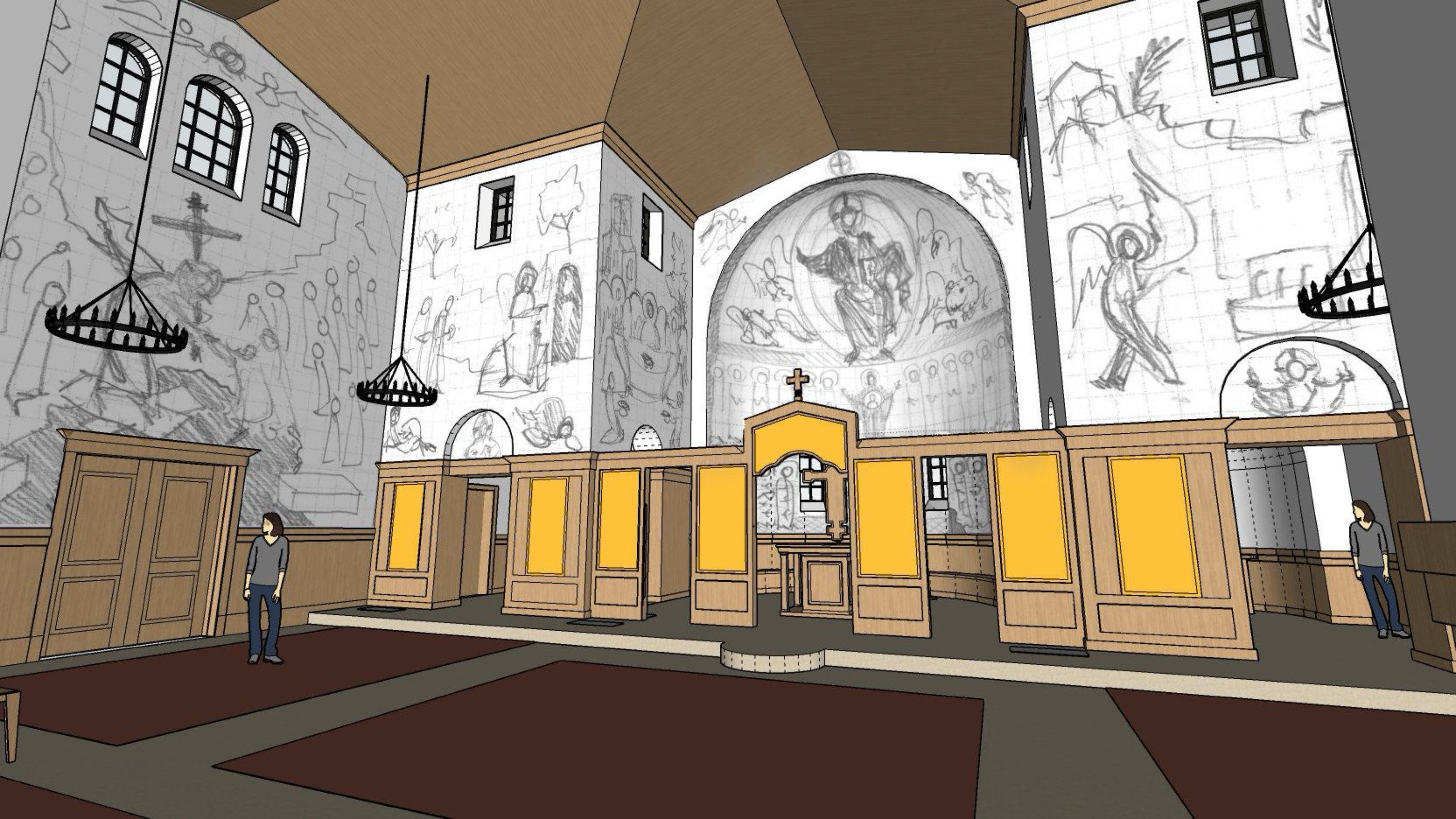
Those are good points. We’ll begin our response by pointing out that we actually do have a whole lot of iconography up in the front of the temple.
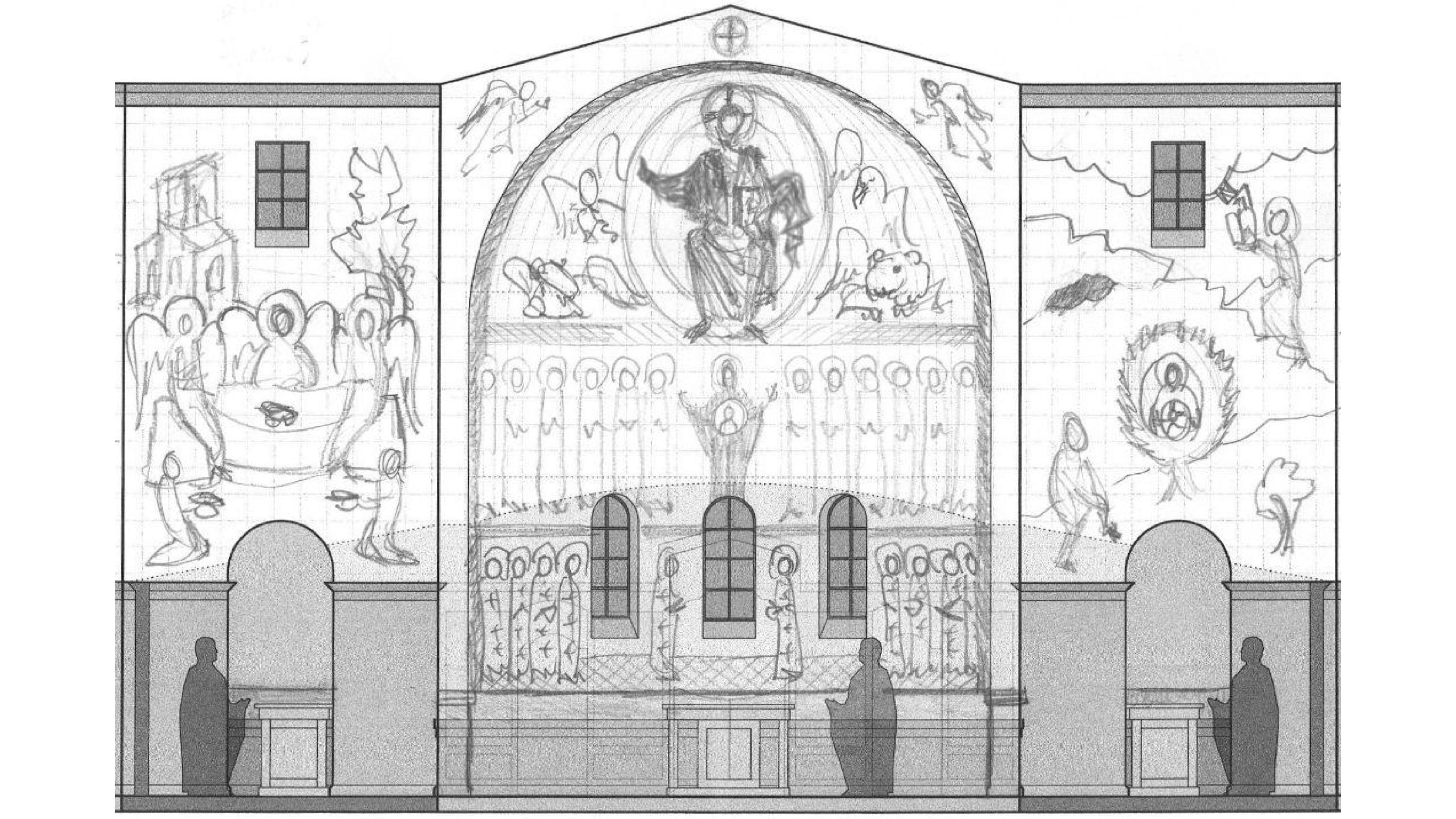
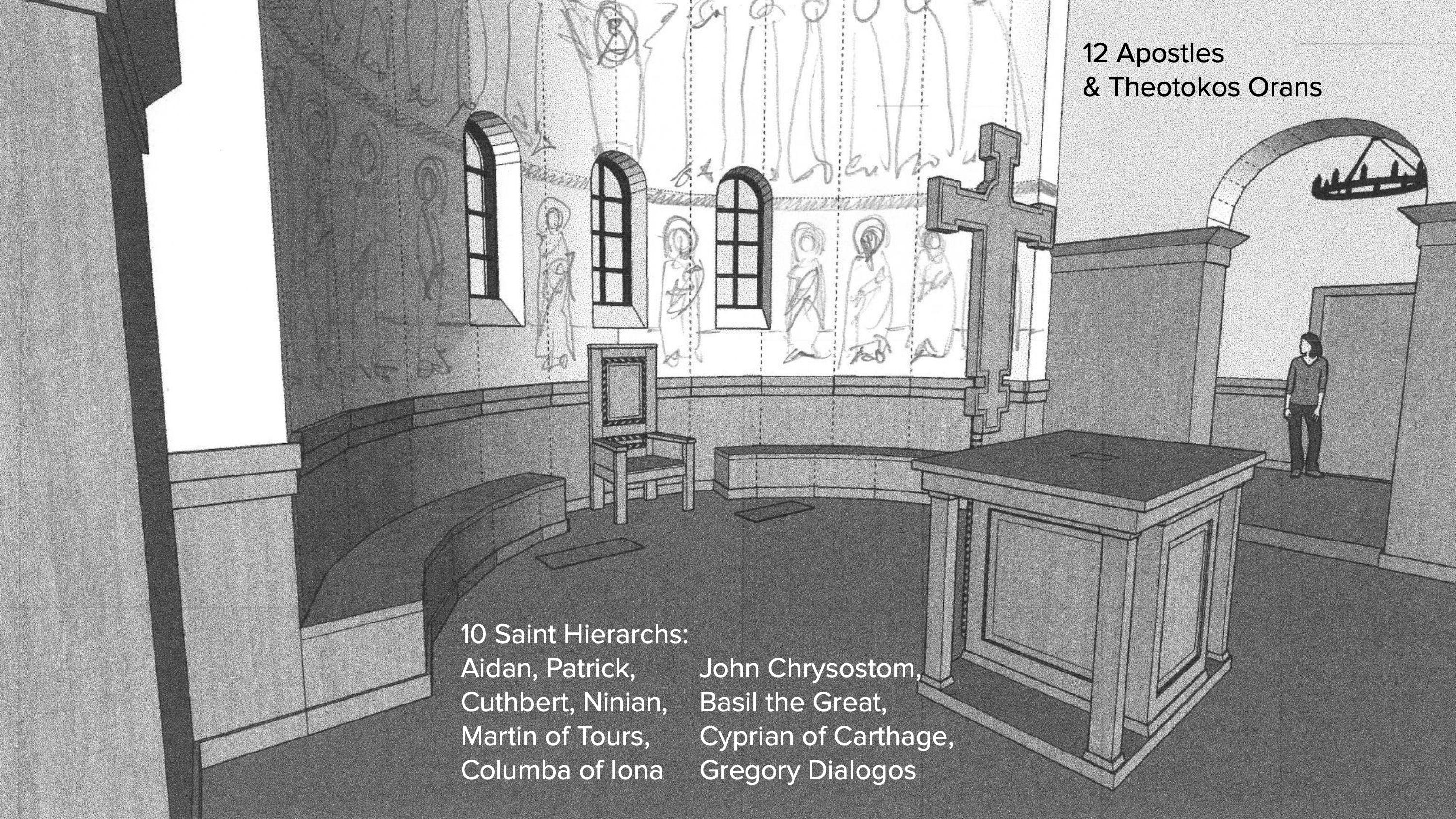
And then we’ll point out that, sure, folks will feel silly, and their necks will get tired looking back and forth at the images in the two different transepts, but you know what? They’ll do it anyway. In fact, a lot of people will actually come by the temple during the week so that they can just light a candle and say their prayers and then do that silly, neck-swivel thing when no one else is around.
Beauty just has that kind of impact on people.
And here’s another way those bays will impact folks: Once people realize that they spend most of their time in the Divine Services in a space that is defined by images of the Birth and The Passion of our Lord and Master, then they will realize that their own personal stories are part of a much bigger Story.
A Story that is transforming and hopeful.
A Story that is healing and redemptive.
And even though they will probably never, ever be able to put it into words, they will also come to realize that their personal stories are not, finally, defined by
the pay day cycle
the results of their most recent medical exam
their supervisor’s moods
the latest political polls
the stock market’s performance
their grade point average
their porn addiction
their grandchild’s disability
That’s why we want to build a basilica with transepts that are adorned with beautiful iconography. Because all of us are part of a bigger Story.
A Story that is transforming and hopeful.
A Story that is healing and redemptive.
A Cruciform Story.
Please help us with this effort. Offer the Akathist for a New Temple (PDF/video) along with us. Purchase some of our CSSB clothing, commission an image of a beloved pet for the Calming Room of our new temple, or become a Paid Subscriber.
Because, as Bill Monroe reminds us, we can all be part of that bigger Story.